=== ANCHOR POEM ===
═════════════════════════════════──────────────────────────────────────────────────
 ┌──────────────────────┐
 │ CW: Math             │
 └──────────────────────┘


 @user-5 create an array of length 7 initialized to zero. then use a for loop
 that loops 97 times and adds a random number between 1 and 20 to an array
 index that iterates through the array each time through the for loop.

 NOTE: be sure to also change the loop counter based on the random number too,
 so you allocate exactly 97 points no matter what random number you get.

 Oh and speaking of which if the loop counter
┌─────────┐                                                           ┌───────────┐
│ similar │                       chronological                       │ different │
╘═════════╧╧══════════════════════════─────────────────────────────────────────────────┘

=== SIMILARITY RANKED ===

--- #1 messages/972 ---
═════════════════════════════════════════════════════════════════════════──────────
 vibecoders write detailed instructions. "A for loop which iterates through all
 of the elements" and not "a package manager that stores all of it's instants"
┌─────────┐                                                           ┌───────────┐
│ similar │                       chronological                       │ different │
╘═════════╧╧══════════════════════════════════════════════════════════════════─────────┘

--- #2 fediverse/1034 ---
═══════════════════════════════════════════════────────────────────────────────────
 @user-192

 be careful, recursion can cause stack overflows.

 better to run function pointers from a loop. That way you can operate as long
 as necessary. Just make sure you don't get in an infinite loop...
┌─────────┐                                                           ┌───────────┐
│ similar │                       chronological                       │ different │
╘═════════╧╧════════════════════════════════════════───────────────────────────────────┘

--- #3 messages/412 ---
════════════════════════════════════════════════════───────────────────────────────
 Coding superpower:

 Start thread
 While(true):
 Run();

 Then, whenever you want it to run something else, change the function pointer
 that run() uses to call a function

 At the end of the run() function, set the function pointer in the while loop
 to the next one. That way you don't stack overflow from the recursion.
┌─────────┐                                                           ┌───────────┐
│ similar │                       chronological                       │ different │
╘═════════╧╧═════════════════════════════════════════════──────────────────────────────┘

--- #4 fediverse/4084 ---
═══════════════════════════════════════════════════════════────────────────────────
 ┌──────────────────────┐
 │ CW: re: -mentioned   │
 └──────────────────────┘


 @user-1074

 the more you try, the more you have to calculate, which is a problem, because
 endlessly recursive calculations create infinite loops, which frankly are
 impossible to compute because they defy computation! Not good, not ideal, no
 thank you, not for me, no thanks, not what I'd like.
┌─────────┐                                                           ┌───────────┐
│ similar │                       chronological                       │ different │
╘═════════╧╧════════════════════════════════════════════════════───────────────────────┘

--- #5 fediverse/573 ---
═════════════════════════════════════════════──────────────────────────────────────
 already spotted a bug. Should be for(1000 / MAX times) in the last example.

 EDIT: Or, even better, increment that loop by +MAX instead of +1 each time
 through.
┌─────────┐                                                           ┌───────────┐
│ similar │                       chronological                       │ different │
╘═════════╧╧══════════════════════════════════════─────────────────────────────────────┘

--- #6 messages/110 ---
═════════════════════════════════════════════──────────────────────────────────────
 The best way to program computers is to organize them according to their
 relations. Like, when x increases by 4 then y increases by 2 - basically, a
 math equation that you can continuously solve by calculating more and more
 comprehensively and deeply.
┌─────────┐                                                           ┌───────────┐
│ similar │                       chronological                       │ different │
╘═════════╧╧══════════════════════════════════════─────────────────────────────────────┘

--- #7 fediverse/2879 ---
══════════════════════════════════════════════════════─────────────────────────────
 ┌────────────────────────┐
 │ CW: re: tech info-dump │
 └────────────────────────┘


 @user-1370

 I love this a lot! I want to put function pointers in a "matrix architecture
 array" and make them point to different functions at different points in the
 program. I bet you could even point them at each other, so like if M and Y
 then point at N, A, Y or something.

 this is really cool I like stuff like this tomorrow I'll take pictures of
 something similar I'm working on! I abandoned it tho hehe anyway remind me if
 I forget!!
┌─────────┐                                                           ┌───────────┐
│ similar │                       chronological                       │ different │
╘═════════╧╧═══════════════════════════════════════════════────────────────────────────┘

--- #8 fediverse/2363 ---
══════════════════════════════════════════════════════─────────────────────────────
 Don't know what to do? Do anything at all, and odds are you'll either see an
 opportunity to do something better or you'll have an idea.
┌─────────┐                                                           ┌───────────┐
│ similar │                       chronological                       │ different │
╘═════════╧╧═══════════════════════════════════════════════────────────────────────────┘

--- #9 fediverse/3760 ---
═════════════════════════════════════════════════════════──────────────────────────
 DID YOU KNOW if you ask someone 15 times over the course of an activity
 whether or not they're "having fun" then odds are they won't, in fact, have
 very much fun
┌─────────┐                                                           ┌───────────┐
│ similar │                       chronological                       │ different │
╘═════════╧╧══════════════════════════════════════════════════─────────────────────────┘

--- #10 fediverse/6334 ---
╔════════════════════════════════════════════════════════════════════════════──────┐
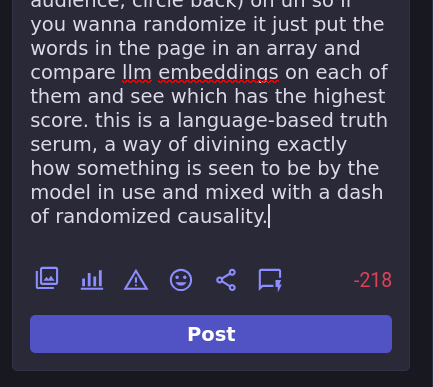
║ a D&D rulebook can double as tarot if you need it. place one hand/bookmark       │
║ at the start of a chapter, and the other at the end. flip to a page randomly,    │
║ or randomly gain a percentage value from physical objects and then use that      │
║ value to determine roughly where in the chapter you jump to. then, read words    │
║ randomly, jumping back and forth, or try and divine some meaning from the        │
║ words that are printed there. with D&D it's easy because you can say "ah I       │
║ landed on the rogue section, that means this guy is probably pretty suave"       │
║ (confirming your expectations) "hmmm, here's the rules for fatigue and           │
║ drowning. maybe I need to take a break." (validating your unconscious            │
║ decisionmaking) "oh neat, treasure!" (needs to explanation) but with other       │
║ kinds of books it's usually better to pick the next-best word from the things    │
║ your subconscious eyes can take in and process multi-laterally (you lost your    │
║ audience, circle back) oh uh so if you wanna randomize it just put the words     │
║ in the page in an array and pick one random.                                     │
╟─────────┐                                                            ┌───────────┤
║ similar │                       chronological                       │ different │
╚═════════╧════════════════════════════════════════════════════════════╧════──────┘

--- #11 messages/129 ---
═════════════════════════════════════════════──────────────────────────────────────
 So you're telling me the speed difference between Python and C is due not to
 the logic that the programmer uses, but rather the optimization capabilities
 of the compiler?

 (An interpreter includes a compiler, it just runs it in a loop rather than a
 single pass)
┌─────────┐                                                           ┌───────────┐
│ similar │                       chronological                       │ different │
╘═════════╧╧══════════════════════════════════════─────────────────────────────────────┘

--- #12 fediverse/5979 ---
══════════════════════════════════════════════════════════════════════════─────────
 whenever you call a function, just pass along the arguments that you don't
 know what to do with yet. they'll surely be useful sometime. and, luckily, you
 can always search for them from the past, and just insert a "store this value
 in this random spot of memory and mark it as needed" then pass it along. used
 something? think it's still useful? pass it along (suddenly, formulaic
 stateless development, where everything is used until it's no longer needed,
 then generated again in a cyclical time-loop cycle which echoes and
 reverberates groundhog day but mostly a game-loop, which nobody will
 understand unless you're a game dev. but now since I said game dev, anyone can
 look it up, so like... not that one, but others like it.
┌─────────┐                                                           ┌───────────┐
│ similar │                       chronological                       │ different │
╘═════════╧╧═══════════════════════════════════════════════════════════════════────────┘

--- #13 fediverse/4470 ---
════════════════════════════════════════════════════════════───────────────────────
 to be "rich" is to have more than another.

 if you are happy, they are happiness poor.
 if you have community, they are alone.
 if you have serenity, they are chaotic.

 I am rich in very little but fire in my soul.

 I have enough in most cases, but I still struggle to pay rent.

 I am warmed by the pearl my swirling darkness has coalesced into. It nourishes
 me and keeps me aligned.

 Never forget your purpose and your truth. It will not abandon you, so long as
 you do so too.
┌─────────┐                                                           ┌───────────┐
│ similar │                       chronological                       │ different │
╘═════════╧╧═════════════════════════════════════════════════════──────────────────────┘

--- #14 fediverse/4628 ---
═════════════════════════════════════════════════════════════──────────────────────
 user interface tips #18569235:

 if a user is expected to click the same button multiple times in a row, for
 example a "next" button in an image gallery, DO NOT move the interface from
 below their mouse pointer and cause them to move their mouse in order to click
 it again.

 please don't : (
┌─────────┐                                                           ┌───────────┐
│ similar │                       chronological                       │ different │
╘═════════╧╧══════════════════════════════════════════════════════─────────────────────┘

--- #15 fediverse/898 ---
═══════════════════════════════════════════════────────────────────────────────────
 ┌──────────────────────┐
 │ CW: scary            │
 └──────────────────────┘


 if you set up a local LLM with the capability to explain basic coding syntax
 and logic, then your parents computer suddenly becomes much more useful to the
 nephew that's been forced to hide out there for a couple weeks until this all
 blows over.
┌─────────┐                                                           ┌───────────┐
│ similar │                       chronological                       │ different │
╘═════════╧╧════════════════════════════════════════───────────────────────────────────┘

--- #16 fediverse/572 ---
═════════════════════════════════════════════──────────────────────────────────────
 Hi, I'm learning about semaphores right now and trying to explain them to a
 friend. But I only sorta understand how they work - can anyone look at this
 pseudocode and tell me if I'm on the right track?
![Some C pseudocode working through the semaphore design pattern. Here's the text of the pseudocode: /* no lock example */ void start_thread(int* x) { *x += 1; } int main() { int x = 0; for (1000 times){ start_thread(&x); } print(x); } /* in this case you have no idea what will print because thread A will take x and be like "ah yes it's 423" and then in the next instruction it'll be like "I'll increment this to be 424" and in the next one it'll say "okay now it's time to store 424 in the variable X" but like... there's a thousand threads all doing that at the same time, so odds are you'll have 5 that are like "ah yes this is 423 I'll set it to 424" */ /* not a good plan. Need a lock, so only one thread can use it at once. */ /* mutex example: */ void start_thread(int* x, int* x_mutex) { *x += 1; *x_mutex = 0; } int main() { int x = 0; int x_mutex = 0; for (1000 times){ while (x_mutex != 0){ } /* do nothing */ x_mutex = thread_id; start_thread(&x, &x_mutex); } print(x); } /* this should print 1000, but it's basically as slow as doing it single threaded. */ #define MAX 10 void start_thread(int* x, int* x_semaphore) { *x += 1; *x_semaphore += 1; } int main() { int x[MAX]; int x_semaphore = MAX; for (1000 times) { for (int i = 0; i < MAX; i++) { x_semaphore -= 1; start_thread(&x[i], &x_semaphore); } while (x_semaphore != MAX) { } /* do nothing */ } int value = sum(x, MAX); print(value); }](/similar-different/media/224b236a8660c34a.png "Some C pseudocode working through the semaphore design pattern. Here's the text of the pseudocode: /* no lock example */ void start_thread(int* x) { *x += 1; } int main() { int x = 0; for (1000 times){ start_thread(&x); } print(x); } /* in this case you have no idea what will print because thread A will take x and be like \"ah yes it's 423\" and then in the next instruction it'll be like \"I'll increment this to be 424\" and in the next one it'll say \"okay now it's time to store 424 in the variable X\" but like... there's a thousand threads all doing that at the same time, so odds are you'll have 5 that are like \"ah yes this is 423 I'll set it to 424\" */ /* not a good plan. Need a lock, so only one thread can use it at once. */ /* mutex example: */ void start_thread(int* x, int* x_mutex) { *x += 1; *x_mutex = 0; } int main() { int x = 0; int x_mutex = 0; for (1000 times){ while (x_mutex != 0){ } /* do nothing */ x_mutex = thread_id; start_thread(&x, &x_mutex); } print(x); } /* this should print 1000, but it's basically as slow as doing it single threaded. */ #define MAX 10 void start_thread(int* x, int* x_semaphore) { *x += 1; *x_semaphore += 1; } int main() { int x[MAX]; int x_semaphore = MAX; for (1000 times) { for (int i = 0; i < MAX; i++) { x_semaphore -= 1; start_thread(&x[i], &x_semaphore); } while (x_semaphore != MAX) { } /* do nothing */ } int value = sum(x, MAX); print(value); }")
┌─────────┐                                                           ┌───────────┐
│ similar │                       chronological                       │ different │
╘═════════╧╧══════════════════════════════════════─────────────────────────────────────┘

--- #17 fediverse/3226 ---
═══════════════════════════════════════════════════════────────────────────────────
 if your man page is longer than a list of options and their usage and a
 paragraph or twenty of how to use the software... then you need to abstract,
 and break your code into multiple purpose-built applications.

 do one thing, and do it right. alternatively, do one set of things, and do
 them concisely.
┌─────────┐                                                           ┌───────────┐
│ similar │                       chronological                       │ different │
╘═════════╧╧════════════════════════════════════════════════───────────────────────────┘

--- #18 fediverse/3680 ---
════════════════════════════════════════════════════════───────────────────────────
 it's probably a good idea to write pseudocode, then real code, instead of
 starting with real code, and bugfixing something incomplete and more difficult
 to reason with.

 unless you write real code easier than pseudocode. idk do what works for you.
┌─────────┐                                                           ┌───────────┐
│ similar │                       chronological                       │ different │
╘═════════╧╧═════════════════════════════════════════════════──────────────────────────┘

--- #19 fediverse/1934 ---
═════════════════════════════════════════════════════──────────────────────────────
 @user-1109

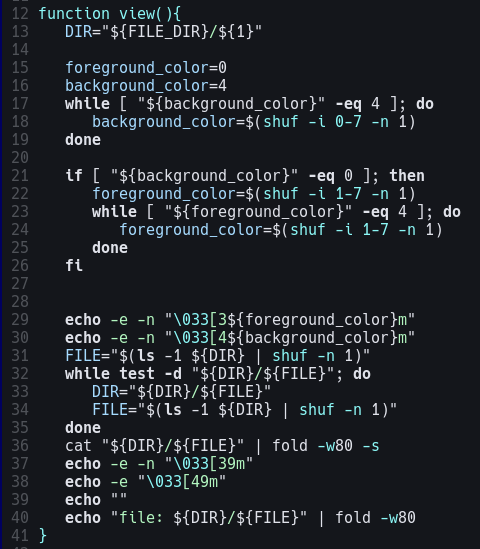
 do it in a random color each time! Here's my implementation for viewing txt
 files colorfully:
┌─────────┐                                                           ┌───────────┐
│ similar │                       chronological                       │ different │
╘═════════╧╧══════════════════════════════════════════════─────────────────────────────┘

--- #20 fediverse/6120 ---
═══════════════════════════════════════════════════════════════════════════────────
 ┌──────────────────────┐
 │ CW: AI-mentioned     │
 └──────────────────────┘


 it's pretty easy to read an article or blog post, copy the text into a text
 file, and forget about it.

 you never know when you might want to use your computer's memories for
 [entertainment during long dark nights, or for creating an AI buddy bot,
 depending on how things go]
┌─────────┐                                                           ┌───────────┐
│ similar │                       chronological                       │ different │
╘═════════╧╧════════════════════════════════════════════════════════════════════───────┘
|