=== ANCHOR POEM ===
════════════════════════════════════════════════════════════───────────────────────
 there is a requirement for a simple, easy to set-up, and easily replacable
 system which can be used for comms.

 Specifically running a variety of different services, such as fediverse
 instances, matrix for text-comms, VoIP, and distributed computing using Chapel
 or DistCC or other such capabilities. In addition, it should be able to run a
 file-server and a web-server which hosts an HTML page for the user.

 All of this functionality should be operational out-of-the-box, with minimal
 configuration required. No more than adding a checkbox to a config file in
 order
 to activate each individual service.

 This box should be cheap, and easy to provision. An image must be made, and
 some bash scripts should be written to easily configure it.

 In addition, there should be rudimentary programming capabilities included,
 just
 in-case a user is left with no other options. It should come pre-configured
 with
 SSH access out of the box, so it can be remotely controlled, and the languages
 included should be:
    C/C++
    Python
    Lua
    Bash
    Rust
    Chapel
 This should cover most surfaces in terms of programming capability
 requirements.

 In terms of hardware, it need be little more than a SoC such as a Raspberry Pi
 or other such hardware. It needs at a minimum an ethernet port, and USB ports.

 The box itself should cost no more than 40$, excluding provisioning and the
 cost
 to pay back whatever capital investments are necessary to create such a thing.
┌─────────┐                                                           ┌───────────┐
│ similar │                       chronological                       │ different │
╘═════════╧╧═════════════════════════════════════════════════════──────────────────────┘

=== SIMILARITY RANKED ===

--- #1 fediverse/1121 ---
═══════════════════════════════════════════════────────────────────────────────────
 @user-812 @user-826

 there should exist either the assurance that the default configuration does
 not overheat or crash your computer (as Windows and Mac claim to offer) or the
 OS should provide the capability to solve any configuration problems that may
 prevent a user for utilizing their system as they desire. (as does Linux)

 they're all Turing machines after all, why would they not be interoperable?
 Even if there's a translation layer, as long as the functionality of the
 software is the same, why would there ever be considerations as to whether or
 not a program would be able to be run on a particular computer?

 lack of hardware capabilities I can understand, that just means you need a
 better computer. But why, if the code is visible, would your computer not
 develop understandings about how to run each and every conceivable program
 written using known languages like C or Python? Seems like pretty basic stuff
 to me. (endless sufficient backwards compatibility)
┌─────────┐                                                           ┌───────────┐
│ similar │                       chronological                       │ different │
╘═════════╧╧════════════════════════════════════════───────────────────────────────────┘

--- #2 fediverse/4596 ---
═════════════════════════════════════════════════════════════──────────────────────
 @user-1707

 hey, I'm working on a project. Might need some python, I tend to prefer Lua
 but it's pretty similar. It uses fediverse software and cheap hardware, think
 raspberry pi's except risc-v

 also it might use distributed local LLMs not to generate text, that's garbo
 and lame and stupid. Instead it uses them to transform text, maybe even
 translate text, into a more summarized form. Intentionally losing data, like a
 jpeg compression but for text.

 Might need some python for that. To glue it all together. The "distributed"
 part is a whitelist, so we'd need to write that too. Various small little
 utilities like that for connectivity.

 oh also there's a one-way ethernet cable that connects two of the boards so
 we'd need to store some information (easy) and send some UDP packets (hard)

 anyway it's pretty neat, lmk if you want my contact details and I can tell you
 about it. I might even be able to pay you.

 (everything open source, no telemetry, no backdoors, everything private is
 encrypted, etc etc)
┌─────────┐                                                           ┌───────────┐
│ similar │                       chronological                       │ different │
╘═════════╧╧══════════════════════════════════════════════════════─────────────────────┘

--- #3 fediverse/849 ---
╔══════════════════════════════════════════════────────────────────────────────────┐
║ wish there were ascii characters that took up more than one line of code         │
║ vertically.                                                                      │
║                                                                                  │
║ wonder if we could use a sorting algorithm, or markup language, or something     │
║ like that to organize less structured data along user-customizable rules.        │
║ Like, a code editor that worked with your ideas, rather than the strict          │
║ expression of your text. You could pretty much write in any language, even       │
║ pseudocode, and the LLM behind the scenes would translate whatever you wrote     │
║ into whatever result you needed. Writing Rust, but need to fit in with C code?   │
║ No worries it'll translate for you. As long as the end result is functionally    │
║ the same, which could be verified by running two separate VMs that ran           │
║ interpreters every time you saved. And as long as their translation layers       │
║ matched completely, then odds are they're the same. And if not, well, the        │
║ programmer can always debug it. It's not like this would be running on           │
║ something that needed to perform in the moment? Like, improv instead of          │
║ tragedies, or battles instead of strategies                                      │
╟─────────┐ ┌───────────┤
║ similar │ chronological │ different │
╚═════════╧═══════════════════════════════════─────────────────────────┴──────────┘
--- #4 fediverse/3907 ---
══════════════════════════════════════════════════════════─────────────────────────
kinda wanna make a linux distro that has all the capabilities of a GUI distro
and isn't so minimal (like screen recording, calculator, screenshot, wifi
manager, etc etc) but with i3 instead of a desktop.
they could literally just be symlinks (shortcuts) to scripts that are in your
/usr/bin or whatever directory
seriously it's not like there's THAT many ways to use ffmpeg, why not just
write a script for them? that's what you're going to do when you use it for
the first time, anyway, so...
┌─────────┐ ┌───────────┐
│ similar │ chronological │ different │
╘═════════╧╧═══════════════════════════════════════════════════────────────────────────┘
--- #5 fediverse/5291 ---
═════════════════════════════════════════════════════════════════════──────────────
the most important skill I can think of for a linux software engineer is the
ability to connect multiple systems together and turn windows and macintosh
devices into Linux devices so that datacenters can be built out of whatever's
on the around.
there's this programming language I like called Chapel for distributed
computation computing which is also cool, if you're more of the programming
type.
networking security I believe often has hardware solutions, so getting the
crypto-graphy boys and the PCB girls together to work on some jams is a good
and productively useful gathering of insightful events
"but ritz computers should only be used to solve problems that people have,
not make more problems!" ah yes but have you considered that problems find
you, and the computers help you work through them
┌─────────┐ ┌───────────┐
│ similar │ chronological │ different │
╘═════════╧╧══════════════════════════════════════════════════════════════─────────────┘
--- #6 fediverse/2947 ---
╔══════════════════════════════════════════════════════────────────────────────────┐
║ the downside of Proton and Lutris is now the ONLY games that work on Steam are │
║ either continually updated (untenable) or playable on Lutris or Proton. Same │
║ thing with Wine, though there's always at least one decent substitute. │
║ │
║ kinda makes me want to write a manager-style program which runs programs using │
║ whichever version of their git repository would work best for their system / │
║ configuration / purposes. Idk how I would start working on that though. │
║ │
║ I bet you could make one that acted like a shop, but where you didn't charge │
║ any dollars. You could like... "swipe" through UI options, and pick whichever │
║ felt most useful for your setup. Like, how some people use i3 and some use dwm │
║ │
║ with maybe inspectors that are modeled off of video-game style "options" GUIs │
║ that mainly correspond to flags on the command/terminal line or compilation │
║ flags │
║ │
║ I feel like that kind of abstraction would make it a lot easier for users to │
║ adjust their system. they're noobs, after all. gotta show them all the choices │
║ in one place... │
╟─────────┐ ┌───────────┤
║ similar │ chronological │ different │
╚═════════╧═══════════════════════════════════════════─────────────────┴──────────┘
--- #7 fediverse_boost/5981 ---
◀─╔═══════════════════════════════[BOOST]════════════════════════════════────────╗
║ ┌────────────────────────────────────────────────────────────────────────────┐ ║
║ │ Some programming languages I’ve tried and liked and would recommend to others:C (especially C89/C90/“ANSI C” and C99)posix shell, bourne shell, and similar shells (bash, ksh93, mksh)PHPScheme (depending on the vibes I’m getting from someone I might recommend)Common Lisp (Same caveat as Scheme)Emacs Lisp (Same caveat as Scheme and Common Lisp)Motorola 68000 assembly │ ║
║ │ │ ║
║ │ Some languages I’ve tried and liked but would not recommend to others:Hewlett-Packard RPL (Actually I might recommend it to someone but it has to be a very specific kind of person)FORTH (same as RPL)Commodore BASIC (Microsoft BASIC) for the VIC-206502 assembly (so bad it’s good)Z80 assembly │ ║
║ │ │ ║
║ │ Some languages I’ve tried, did not like, and would not recommend to others:COBOL (maybe I could get used to it? I can at least read it. Just it’s so painfully like writing SQL statements without being as generally useful as SQL database queries)Kotlin (Like that feeling when you read words that alone you understand, but together in a sentence they make zero sense)JavaClojure (a.k.a. “Let’s make Common Lisp but make it worse”)Rust (stands for “Ridiculous Use of System Time” or something as far as I am concerned, heavy on memory and storage and super slow to compile and reads like Kotlin)TI BASIC (TI-82/83/84 style; TI-89 is a little bit better but still not good)C++ (unless you’re just writing almost completely C and building it with a C++ compiler)x86 assembly (I kind of like it but mostly don’t, there are better and more coherent CISC processor ISA’s if you’re into that) │ ║
║ │ │ ║
║ │ I should put Javascript somewhere, so I’ll say that it’s possible to write javascript code that I like and can read. Just no one chooses to do it anymore. There was a window between the time JQuery started to fade and all these stupid fucking “web frameworks” took off that it was somewhat tolerable. │ ║
║ └────────────────────────────────────────────────────────────────────────────┘ ║
╠─────────┐ ┌───────────╣
║ similar │ chronological │ different ║
╚═════════╧════════════════════════════════════════════════════════════┴───────╝─▶
--- #8 fediverse/281 ---
╔═══════════════════════════════════════════───────────────────────────────────────┐
║ ┌─────────────────────────────┐ │
║ │ CW: cursed-game-engine-idea │ │
║ └─────────────────────────────┘ │
║ │
║ │
║ a game engine which won't let you import custom assets unless you complete a │
║ few simple tasks using the interface - "build a green capsule collider" "make │
║ this soldier unit shoot three bullets per shot" or "enable the automatic linux │
║ support" - using the interface, writing some code, and changing configurations. │
║ │
║ why would anyone do this? well it could be useful to increase the difficulty │
║ of importing external resources. plus it helps the user learn a bit over time, │
║ and it slows the pace of output such that the user's skills are encouraged as │
║ the output of the programming and not the program itself. │
║ │
║ an inverse curse (an evil one) would be where the requirements to complete │
║ basic tasks are hidden behind unapplicable skills. like, do you know exactly │
║ which buttons to press? engage with the skinner box, please. yes yes this is │
║ what we need - unintuitive software that completely disarms the populace from │
║ using them! suddenly they're worthless, and can't do anything on any surface. │
║ it sucks │
╟─────────┐ ┌───────────┤
║ similar │ chronological │ different │
╚═════════╧════════════════════════════════────────────────────────────┴──────────┘
--- #9 fediverse/1116 ---
╔═══════════════════════════════════════════════───────────────────────────────────┐
║ ┌──────────────────────┐ │
║ │ CW: eye-contact │ │
║ └──────────────────────┘ │
║ │
║ │
║ It's important to build self-hostable computing components of video games (as │
║ in, old style games where you could host a server on any machine instead of │
║ just the ones owned by the corporation) (as in, your machine, yes yours) │
║ (something you can control and observe, something within your control) │
║ │
║ ======================= stack overflow ===================== │
║ │
║ there are two ways to play Unreal Tournament (capture the flag) gamemode. The │
║ first is to run past all your enemies and fire at them as you pass, which is │
║ what some of the bots are designed to do. The rest stay on defence, and defeat │
║ any enemies that approach. │
║ │
║ however, they never push the borders of their "territory" forward - each │
║ according to the different "lanes" or "directions of approach" │
║ │
║ I like the use 32 bots, to simulate a more consistent gameplay experience. It │
║ feels more like ww1, fighting over ground, pushing forward and attempting to │
║ outmaneuver your foes. │
║ │
║ some allies will approach from behind, and you let them pass forward while │
╟─────────┐ ┌───────────┤
║ similar │ chronological │ different │
╚═════════╧════════════════════════════════════────────────────────────┴──────────┘
--- #10 fediverse/1238 ---
╔═══════════════════════════════════════════════───────────────────────────────────┐
║ did you know you can run runescape classic offline, locally, just for your own │
║ server? You can keep several computers ready for a LAN party, each with their │
║ own accounts ready to go. │
║ │
║ "Oh we're level 30 this time because so-and-so is hosting and this is how far │
║ their computer has levelled up." │
║ │
║ vim ~/games/runescape-classic/credentials.txt │
║ │
║ at least, I think you can. I know it's singleplayer, so worst case scenario │
║ you can all be doing the same things at the same time in your own games. Maybe │
║ split up for a mission or two, but it can get hectic if everyone's in the same │
║ room. │
║ │
║ = │
║ │
║ a game jam where everyone works on the same project, uses the same asset list, │
║ but builds their own collection of minigames. │
║ │
║ common functions could be shared, and art references distributed and together │
║ they could design a whole land. Like, there's no reason minigames can't be │
║ fully fledged experiences. You can have as many as you want, all in the same │
║ engine and built from a massive (yet sandboxed) environment. │
║ │
║ an all in one game. │
╟─────────┐ ┌───────────┤
║ similar │ chronological │ different │
╚═════════╧════════════════════════════════════────────────────────────┴──────────┘
--- #11 fediverse/5765 ---
╔═══════════════════════════════════════════════════════════════════════───────────┐
║ Lua is the most fun language to write code in! The reason is because it's so │
║ simple, it distills programming down to it's basics, and there's very few │
║ surprises. Plus, you can use it like a bash script, meaning it's great for │
║ writing little utilities. │
║ │
║ why are we so attached to monolithic massive programs without shared memory? │
║ we could just write to the hard drive by file.io'ing a file and opening it │
║ later in a different program. What's the deal with databases, whatever │
║ happened to just loading things into a datastructure? │
║ │
║ oh, is your filesize too massive? what if we redundancied and abstracted and │
║ concentrically inter-co-acted and thus our familiar forces are defined. │
║ │
║ who are your true foes, in [checks notes] computer programming? um, probably │
║ complexity, probably logical incongruities, probably │
║ future-technical-debt-style incomprehensibilities, probably stuff that doesn't │
║ really have anything to do with the hardware but instead is mostly software. │
║ │
║ essentially, organization, but done on a whim. │
║ │
║ "but $?" │
╟─────────┐ ┌───────────┤
║ similar │ chronological │ different │
╚═════════╧════════════════════════════════════════════════════════════┴──────────┘
--- #12 notes/internet-privacy-is-withheld-by-this ---
═══════────────────────────────────────────────────────────────────────────────────
Recently, there's been a ton of buzz in the news about internet privacy.
From the many lawsuits against Facebook, to the rise of Duck Duck Go and the
creepy nature of apps and IoT devices that listen to your every motion and
record and transmit endless amounts of data to a central server somewhere to
be processed. The traditional argument against privacy online is that the
infrastructure was designed to accomodate rapid adoption of the new tech,
rather than efficient design for distributed throughput. So we were told to
accept the minor downsides associated with centralized servers - downsides
that we neither understood nor truly accepted. Well, the technology has
advanced to the point that those arguments are no longer valid - we have mesh
networking and 5g internet access, and now that big tech is in control of the
industry (wrenching it from the people, I might add) they seek to maintain
their hold by any means necessary.
Luckily, there is a way out - self hosting.
If we hosted our own email server, then theoretically Gmail couldn't read your
messages. If we hosted our own social media websites, then theoretically
big data processing corporations couldn't scrape your personal information
and distribute it as they please. If we hosted our own videos, software, art,
and anything else we see fit to use a computer for, then we'd be unshackled
from the dominion of the silicon valley powers that be. The liberation of the
computer is the liberation of us all.
The problem, of course, is the difficulty involved.
People are conditioned to desire and only accept a level of accessibility that
can only be provided by massive corporate think tanks leveraging all the
marketing prowess that the markets of capital provides. That is to say,
essentially infinite eyes examining the interactions of man with machine, to
find the most generally applicable font, color scheme, layout, and style of
each and every website they host. Every function will be scrutinized to death
and optimized to extract the most profit while subtely conforming the minds
of those who use it. This is the era of group think, fake news, and
journalistic fraud. We have no windows to the outside world that are truly
and completely untainted by the bias inherent in the system.
A self perpetuating rhythm of continuous dissatisfaction.
But I believe the only person who can truly design a tool is the person who
the tool is intended to be used by. And by increasing the accessibility of the
tools themselves, rather than the products of those tools, we can raise the
tide that lifts all ships - we can put more tools that use less time to use
and are easier to learn into the hands of as many people as possible. The
crossbow was originally no more devastating than a longbow, yet it rapidly
outpaced the latter by reducing it's difficulty curve. The screwdriver is the
same - stronger joints can be made with nails or traditional joinery, but
once someone understands how a screwdriver works they can pretty much force
two pieces of wood to be permanently fixed together without understanding the
angles of nails or cuts. The capabilities are the same, while ease of access
increased.
So, to truly liberate the internet, we must develop tools that allow people to
host their own content as easily, cheaply, and flexibly as possible, while
being aesthetically pleasing, affordable (free), and accessible to
as many people as possible - inertia is important, after all. It seems to be
an insurmountable task, but that's what free and open source software
developers fight for. Raspberry Pis can host email servers, Mastodon can host
a facsimile of Twitter, and torrents can be used to exchange any type of file
to be presented in whatever way the user sees fit. These are all free (or very
cheap, in the Raspberry Pi's case) and accessible to anyone with access to the
internet. But they aren't easy. They aren't always flashy. And sometimes it's
hard to even describe what problem you're trying to solve.
But still you try, because to fail in this fight is to fade from this earth.
┌─────────┐ ┌───────────┐
│ similar │ chronological │ different │
╘══════───┴╧───────────────────────────────────────────────────────────────────────────┘
--- #13 fediverse/634 ---
═════════════════════════════════════════════──────────────────────────────────────
@user-192
I'd agree with that. it's not designed for performance, not really. Mostly
ubiquity, which is it's strength. As long as something can be compiled to a
binary, BASH can execute it. That's why it's good, for accomplishing diverse
tasks that you cannot have the capacity to program yourself. Scientific
computations or cultural approximations, things that are beyond your intuitive
understanding as a human on this earth, but which compel and align your
thinking.
I'm sure someone could create a more intuitive or accessible syntax, but
syntax isn't the point - the capabilities, what you can do with it, has always
defined the purpose of programming paradigms. And BASH is (currently) at the
forefront of it's niche, the "terminal" language that handles "command line"
applications. Powershell is good, yes... but it's not as good as BASH. Neither
is Fish or... the one that starts with a z? zfs? something like that. The
acronyms are hard to keep straight sometimes.
┌─────────┐ ┌───────────┐
│ similar │ chronological │ different │
╘═════════╧╧══════════════════════════════════════─────────────────────────────────────┘
--- #14 fediverse/5180 ---
═══════════════════════════════════════════════════════════════════────────────────
it's trivial to run a C compiler inside of a lua interpretation of a script.
And vice versa - you could totally run lua functions from C. Just point to the
spot in memory where they're stored / operating, and call
"update_class_exhibitor_type_d()" and the linker will come along and say "huh
this looks like something from this library that's part of the requirements up
above" (the "includes" section is where you say which files include the
functions you're going to be calling) and in this particular case it would see
that you need to start up a lua interpreter inside of the [either compiler or
running program I can't remember] to properly execute the function of the
function that you're pointing at with a lua-pointer style data object which is
part of a struct that stores all the other lua functions in a spot in memory.
this would enable you to write computer programs in whatever language you
choose, and build them into one large project. Essentially opening up software
development to ANYONE WHO CAN PROGRAM
┌─────────┐ ┌───────────┐
│ similar │ chronological │ different │
╘═════════╧╧════════════════════════════════════════════════════════════───────────────┘
--- #15 fediverse/619 ---
╔═════════════════════════════════════════════─────────────────────────────────────┐
║ ┌──────────────────────────────────┐ │
║ │ CW: drunken-ramblings-about-bash │ │
║ └──────────────────────────────────┘ │
║ │
║ │
║ Most of the functionality of most consumer programs could be accomplished with │
║ a bit of BASH scripting... For example, shuffling a music library, or writing │
║ a text document, or downloading the text of a web page, or sending a message │
║ to a friend, etc... │
║ │
║ All accomplish-able with fewer than 10-20 lines of code in clear, POSIX │
║ compliant and easily understood text that even a beginner could understand. │
║ │
║ Well, it would be understandable, if we actually taught our children how to │
║ compute in school. Why are they not taught BASH? It's not like it's │
║ complicated. With it, a sufficiently motivated high school student could │
║ develop skills that rival or exceed many of the university graduates we │
║ currently develop for our industry... Such a shame. │
║ │
║ Even an unmotivated student would be prepared for the world with the ability │
║ to solve problems logically. Break down the problem, identify relationships, │
║ understand procedural ordering of mechanics, and develop solutions to │
║ problems. Its not too hard │
╟─────────┐ ┌───────────┤
║ similar │ chronological │ different │
╚═════════╧══════════════════════════════════──────────────────────────┴──────────┘
--- #16 fediverse/5405 ---
══════════════════════════════════════════════════════════════════════─────────────
can't stop thinking about a visual programming editor that can be interacted
with in the same way that people are used to (think chromebooks dragging and
dropping icons in a web UI) but produces a text-file full of code and all the
required compilation scripts for any language the user requires...
seriously, programming is not THAT different between the different languages.
especially the main ones. they're all essentially variables and function calls
at the end of the day, so why not abstract away all the extra details and
build something that n00bz can actually use to build things.
I technically could make this but I don't have the bandwidth and I don't think
it's important really? who can say, the tools tend to co-create the solutions
in my experience.
┌─────────┐ ┌───────────┐
│ similar │ chronological │ different │
╘═════════╧╧═══════════════════════════════════════════════════════════════────────────┘
--- #17 fediverse/2821 ---
══════════════════════════════════════════════════════─────────────────────────────
┌─────────────────────────────────────┐
│ CW: re: politics-violence-mentioned │
└─────────────────────────────────────┘
the neat thing about tech is that it scales really well.
The price of TVs is through the floor, everyone has a smartphone, and
raspberry pi's are less than 100$
solar panels will be next. Trust.
we should still dismantle coal and oil, obviously we should, but at a certain
point it will be inevitable. They're just too expensive for too little gain.
the neat thing about tech is that it scales in a way that is just impossible
for infrastructural projects like housing and hospitals.
building a home is hard to do, especially when you make them out of sticks and
glue. think like a dwarf - stone never fades.
sunlight, moss, underground, endless in the shade
have I mentioned that the most difficult problem facing mechanical engineers
at the moment is universal recycling?
I want to work on those kind of problems, not resolving tickets.
nobody even gave me a chance to do them, instead demanding... labor. great.
the one thing I suck at.
[you suck at a lot of things, actually]
┌─────────┐ ┌───────────┐
│ similar │ chronological │ different │
╘═════════╧╧═══════════════════════════════════════════════────────────────────────────┘
--- #18 fediverse/4865 ---
════════════════════════════════════════════════════════════════───────────────────
┌─────────────────────────┐
│ CW: computers-mentioned │
└─────────────────────────┘
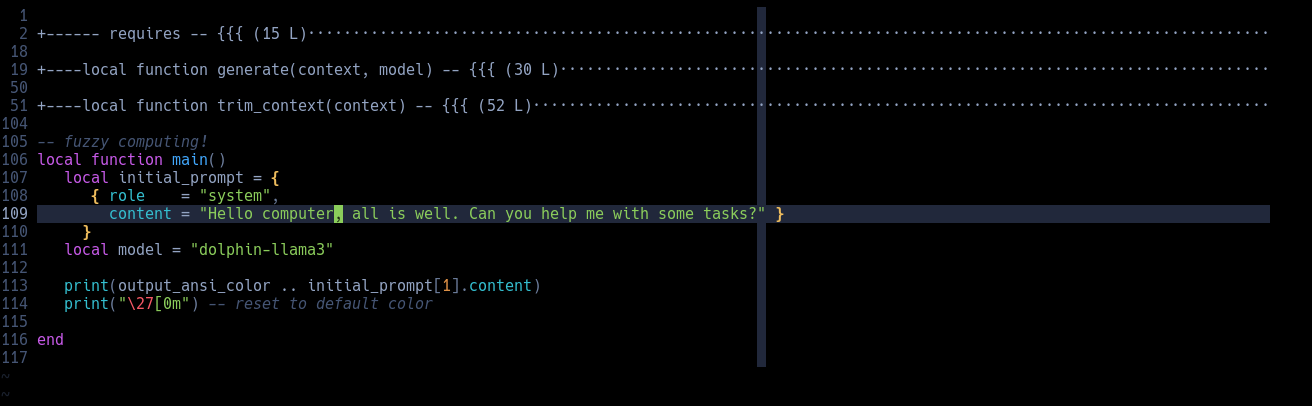
this is all it takes to send a message to a local LLM.
add a third function to get chatbot functionality.
a fourth to get a database storing method
(even if it's just in .txts)
great, you've mastered the technical difficulty in using AI. Now you gotta
learn all the other kind of programming so you can use this for situations
that need interpretation moment to moment.
aka active duty systems.
something like "output a 0 if the next text is [category.iter()]: " +
output.get_content() + " \n\n output a 1 if the next text is
[category.iter()]: " + output.get_content()"
or even "describe this thing as most like one of these characteristics" until
eventually you get THX-1138 if the characters were computers.
┌─────────┐                                                           ┌───────────┐
│ similar │                       chronological                       │ different │
╘═════════╧╧═════════════════════════════════════════════════════════──────────────────┘

--- #19 fediverse/3577 ---
════════════════════════════════════════════════════════───────────────────────────
 ┌─────────────────────────┐
 │ CW: computers-mentioned │
 └─────────────────────────┘


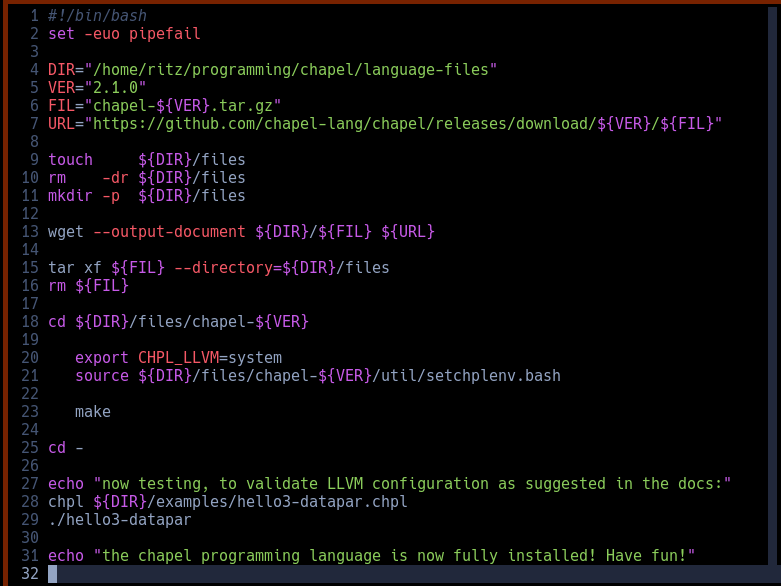
 I love writing installation scripts like this!

 If you want to install something on Linux but you have difficulty, talk to me
 and I'll write you a script like this. I might even make it fancier.

 This one installs a programming language that is useful for parallel computing
 across multiple clusters of computers which could be useful if you want to
 leverage multiple CPUs and GPUs with ease to compute tasks which are far
 beyond a normal computer.

 https://chapel-lang.org/download.html
┌─────────┐                                                           ┌───────────┐
│ similar │                       chronological                       │ different │
╘═════════╧╧═════════════════════════════════════════════════──────────────────────────┘

--- #20 fediverse/928 ---
═══════════════════════════════════════════════────────────────────────────────────
 @user-226

 especially if you teach them how to use the terminal.

 the amount of problems I could solve increased exponentially once I learned
 basic python and BASH.

 I love using "tldr", which is a summarizer for man pages. You can use it to
 store custom notes (and import some from the community) which show you how to
 complete common tasks. It's so nice when you can see the options laid out in
 use right there for you whenever you type "tldr " - I personally use
 "tealdeer" which is a tldr browser written in Rust. It's pretty nice because
 you can write a note for yourself every time you solve a particular problem,
 and then if you ever need to do it again it's there for you, easy to access.

 of course, if your problem isn't listed, that's okay. That's what the man
 pages are for. As long as you teach them how to search with \/ they can find
 anything. Especially the \/-f[space] trick, to search for the -f flag for
 example.

 some organizers won't need the terminal, some will. if they pay attention,
 great!
┌─────────┐                                                           ┌───────────┐
│ similar │                       chronological                       │ different │
╘═════════╧╧════════════════════════════════════════───────────────────────────────────┘
|