 -> file: messages/1063
═════════════════════════════════════════════════════════════════════───────────────
  What if instead of listing food in our ingredients as a paragraph we instead
  listed them in tab-separated-rows-by-columns like excel spreadsheets except
  with justifications for everything has its place in the ingredient dish.
┌─────────┐                                                            ┌───────────┐
│ similar │                       chronological                        │ different │
╘═════════╧══════════════════════════════════════════════════════════──┴───────────┘
 -> file: fediverse/3559
══════════════════════════════════════════════════──────────────────────────────────
  @user-1209

  like... var = x?? that doesn't make sense. Or like, 5 = var x? that feels
  *wrong*

  in programming = is assignment, not equality, which tripped me up for a bit.
  But if you read it left to right it's like X equals 5. Got it, now I know that
  X is the same as 5. Right?
┌─────────┐                                                            ┌───────────┐
│ similar │                       chronological                        │ different │
╘═════════╧═══════════════════════════════════════─────────────────────┴───────────┘
 -> file: fediverse/6137
════════════════════════════════════════════════════════════════════────────────────
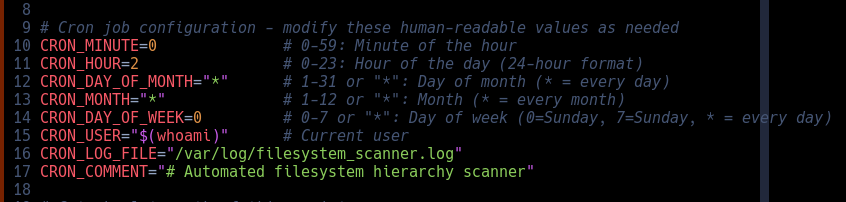
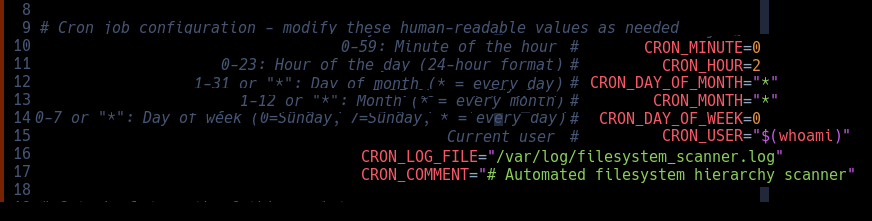
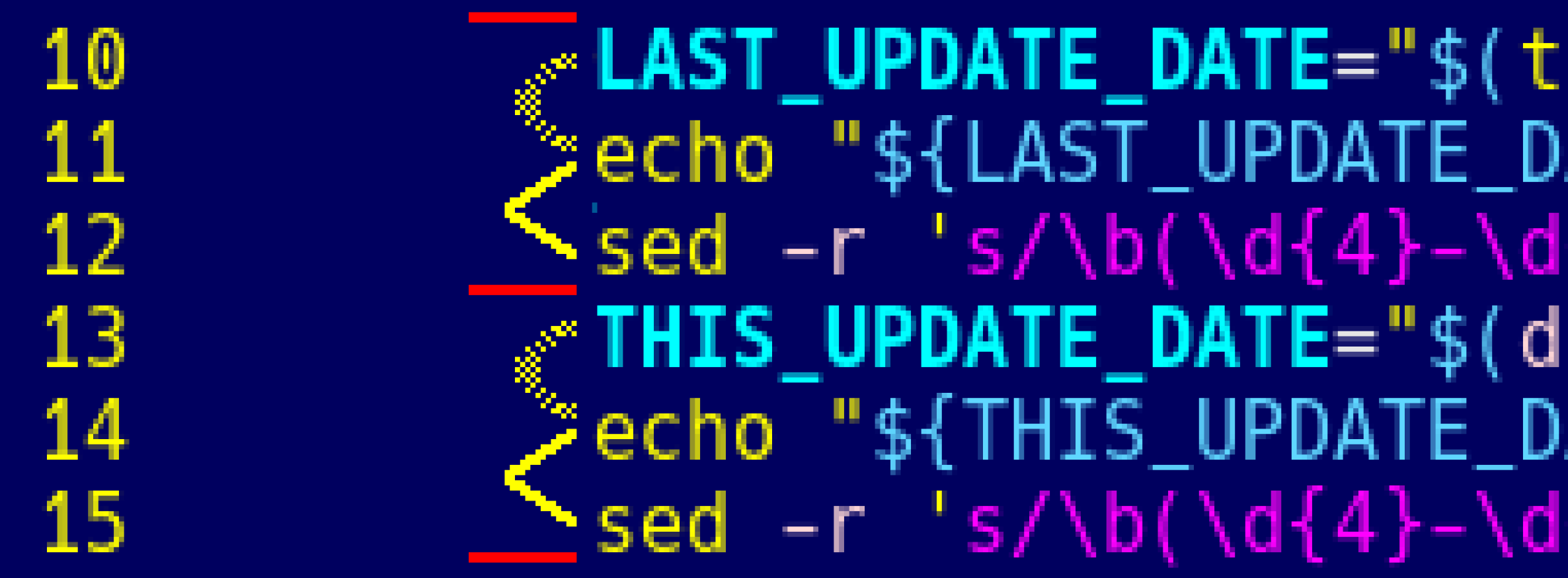
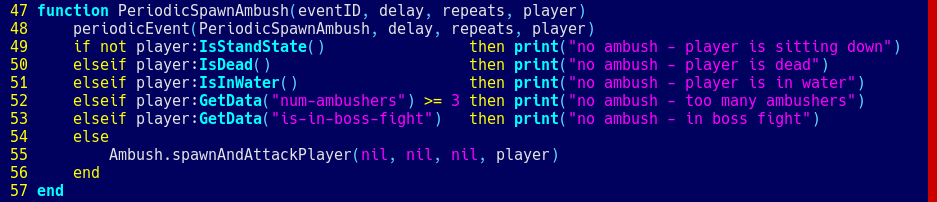
  sometimes, comments need to go on the left side of text. Like for parts of the
  script which should be user-editable, the fields should all be right-aligned to
  the farthest required bit of text. Instead of [picture A] it should be [picture
  B]
┌─────────┐                                                            ┌───────────┐
│ similar │                       chronological                        │ different │
╘═════════╧═════════════════════════════════════════════════════════───┴───────────┘
 -> file: messages/1246
═════════════════════════════════════════════════════════════════════════───────────
  \
┌─────────┐                                                            ┌───────────┐
│ similar │                       chronological                        │ different │
╘═════════╧════════════════════════════════════════════════════════════╧═──────────┘
 -> file: fediverse/1934
════════════════════════════════════════════════────────────────────────────────────
  @user-1109

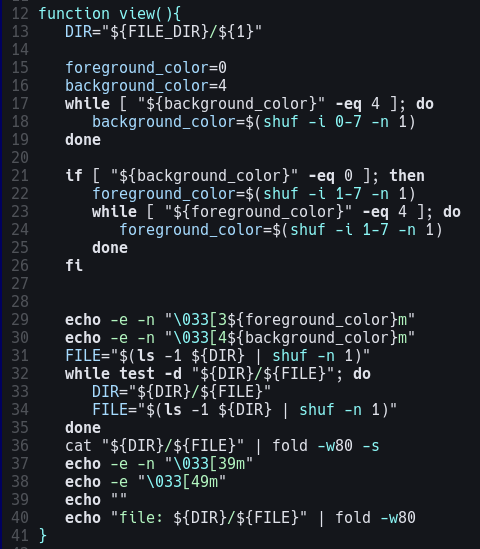
  do it in a random color each time! Here's my implementation for viewing txt
  files colorfully:
┌─────────┐                                                            ┌───────────┐
│ similar │                       chronological                        │ different │
╘═════════╧═════════════════════════════════════───────────────────────┴───────────┘
 -> file: fediverse/3787
═══════════════════════════════════════════════════─────────────────────────────────
  arithmatic control flow

  If A, then B. Else C

┌─────────┐                                                            ┌───────────┐
│ similar │                       chronological                        │ different │
╘═════════╧════════════════════════════════════════────────────────────┴───────────┘
 -> file: fediverse/2879
═════════════════════════════════════════════════───────────────────────────────────
  ┌────────────────────────┐
  │ CW: re: tech info-dump │
  └────────────────────────┘


  @user-1370

  I love this a lot! I want to put function pointers in a "matrix architecture
  array" and make them point to different functions at different points in the
  program. I bet you could even point them at each other, so like if M and Y then
  point at N, A, Y or something.

  this is really cool I like stuff like this tomorrow I'll take pictures of
  something similar I'm working on! I abandoned it tho hehe anyway remind me if I
  forget!!
┌─────────┐                                                            ┌───────────┐
│ similar │                       chronological                        │ different │
╘═════════╧══════════════════════════════════════──────────────────────┴───────────┘
 -> file: fediverse/1691
═══════════════════════════════════════════════─────────────────────────────────────
  "I don't know what I was doing with this line of code so I'm going to delete it
  and fix it later"
┌─────────┐                                                            ┌───────────┐
│ similar │                       chronological                        │ different │
╘═════════╧════════════════════════════════════────────────────────────┴───────────┘
 -> file: fediverse/1988
════════════════════════════════════════════════────────────────────────────────────
  @user-246

  I once heard that Excel is a functional programming language with a tabular
  interface
┌─────────┐                                                            ┌───────────┐
│ similar │                       chronological                        │ different │
╘═════════╧═════════════════════════════════════───────────────────────┴───────────┘
 -> file: messages/1518
════════════════════════════════════════════════════════════════════════════────────
  \
┌─────────┐                                                            ┌───────────┐
│ similar │                       chronological                        │ different │
╘═════════╧════════════════════════════════════════════════════════════╧════───────┘
 -> file: fediverse/3139
═════════════════════════════════════════════════───────────────────────────────────
  "reply while text is entered in the text field" should open a new tab instead
  of overwriting.
┌─────────┐                                                            ┌───────────┐
│ similar │                       chronological                        │ different │
╘═════════╧══════════════════════════════════════──────────────────────┴───────────┘
 -> file: fediverse/3270
══════════════════════════════════════════════════──────────────────────────────────
  somebody shifted my terminal tabs like, 4 pixels to the left, and now the
  far-left part of the text is half-cut off. lol xD
┌─────────┐                                                            ┌───────────┐
│ similar │                       chronological                        │ different │
╘═════════╧═══════════════════════════════════════─────────────────────┴───────────┘
 -> file: fediverse/6348
═════════════════════════════════════════════════════════════════════───────────────
  here's a neat function

┌─────────┐                                                            ┌───────────┐
│ similar │                       chronological                        │ different │
╘═════════╧══════════════════════════════════════════════════════════──┴───────────┘
 -> file: fediverse/950
══════════════════════════════════════════──────────────────────────────────────────
  @user-192

  multidimensional arrays aren't too hard, it gets a bit more complicated when
  you need multidimensional *slices*, but once you get your head around it it
  comes easier.
┌─────────┐                                                            ┌───────────┐
│ similar │                       chronological                        │ different │
╘═════════╧═══════════════════════════════─────────────────────────────┴───────────┘
 -> file: fediverse/4628
═══════════════════════════════════════════════════════─────────────────────────────
  user interface tips #18569235:

  if a user is expected to click the same button multiple times in a row, for
  example a "next" button in an image gallery, DO NOT move the interface from
  below their mouse pointer and cause them to move their mouse in order to click
  it again.

  please don't : (
┌─────────┐                                                            ┌───────────┐
│ similar │                       chronological                        │ different │
╘═════════╧════════════════════════════════════════════────────────────┴───────────┘
 -> file: fediverse/5168
════════════════════════════════════════════════════════════────────────────────────
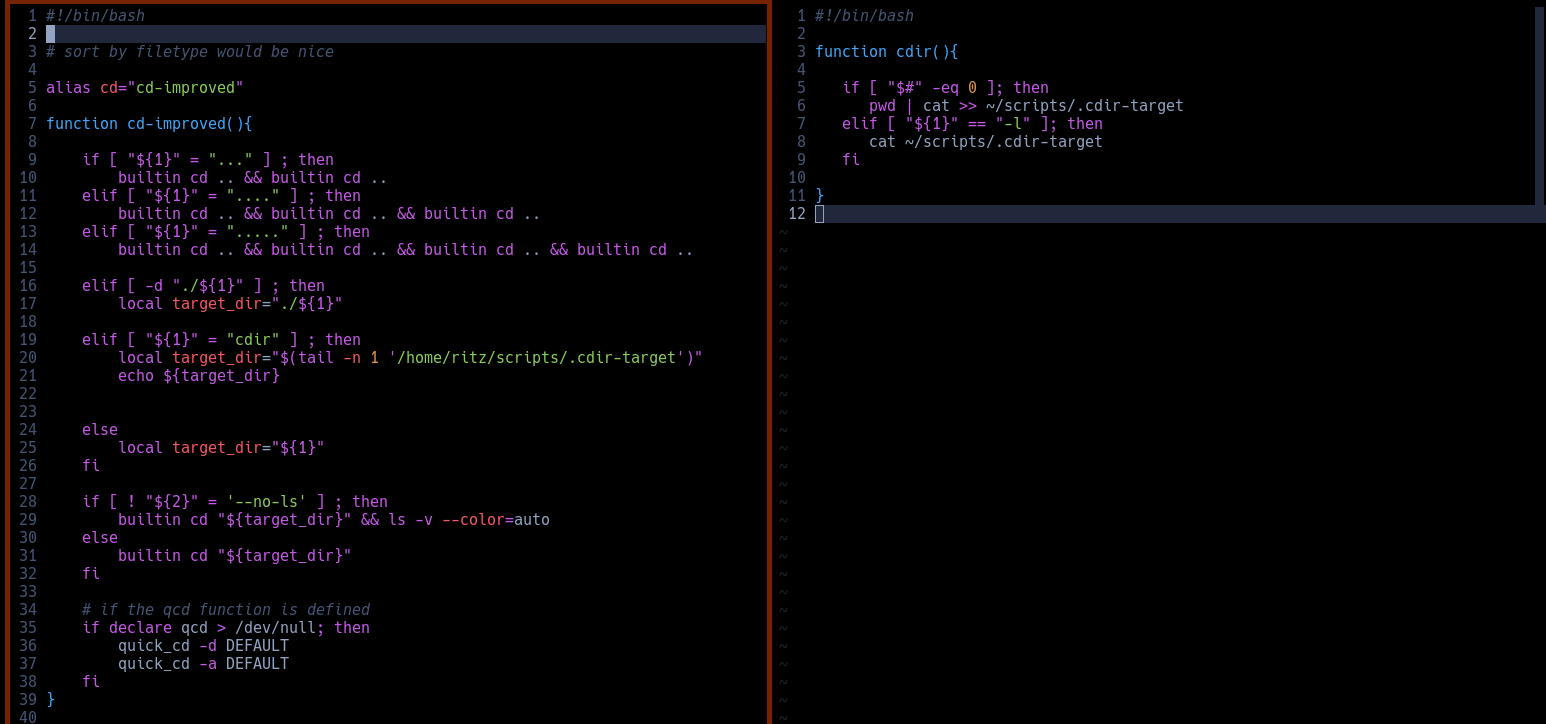
  this is one of the first scripts I wrote

  I can't believe I put the --no-ls AFTER the argument, ha, what a noob.

  ah well if it works it works and I can't refactor now because I built it into
  random scripts and I'd be fixing errors all the time.
┌─────────┐                                                            ┌───────────┐
│ similar │                       chronological                        │ different │
╘═════════╧═════════════════════════════════════════════════───────────┴───────────┘
 -> file: fediverse/6
══════════════════════════════──────────────────────────────────────────────────────
  ┌──────────────────────┐
  │ CW: Math             │
  └──────────────────────┘


  @user-5 create an array of length 7 initialized to zero. then use a for loop
  that loops 97 times and adds a random number between 1 and 20 to an array index
  that iterates through the array each time through the for loop.

  NOTE: be sure to also change the loop counter based on the random number too,
  so you allocate exactly 97 points no matter what random number you get.

  Oh and speaking of which if the loop counter
┌─────────┐                                                            ┌───────────┐
│ similar │                       chronological                        │ different │
╘═════════╧═══════════════════─────────────────────────────────────────┴───────────┘
 -> file: fediverse/705
═════════════════════════════════════════───────────────────────────────────────────
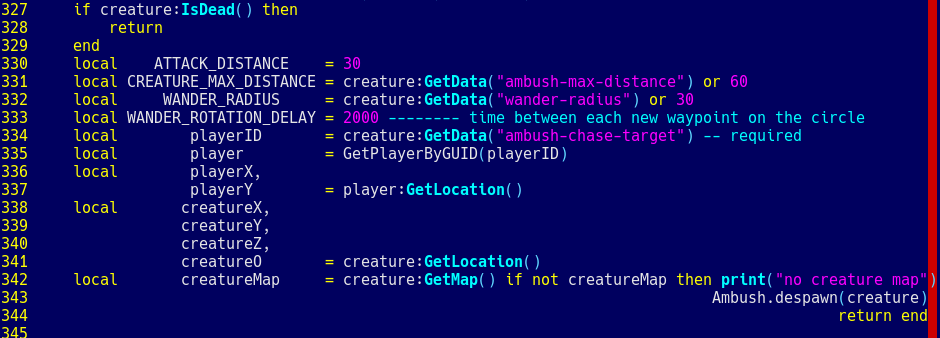
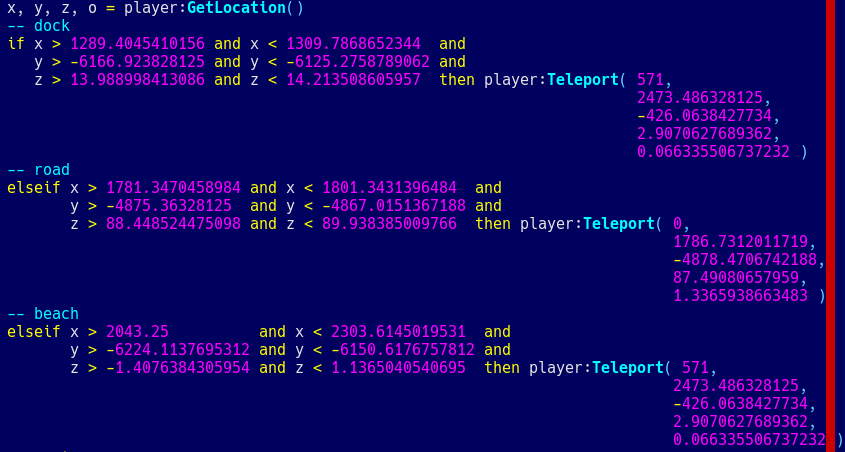
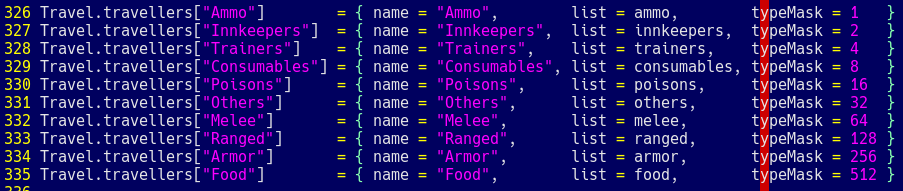
  some more of the same.
┌─────────┐                                                            ┌───────────┐
│ similar │                       chronological                        │ different │
╘═════════╧══════════════════════════════──────────────────────────────┴───────────┘
 -> file: fediverse/4750
═════════════════════════════════════════════════════════───────────────────────────
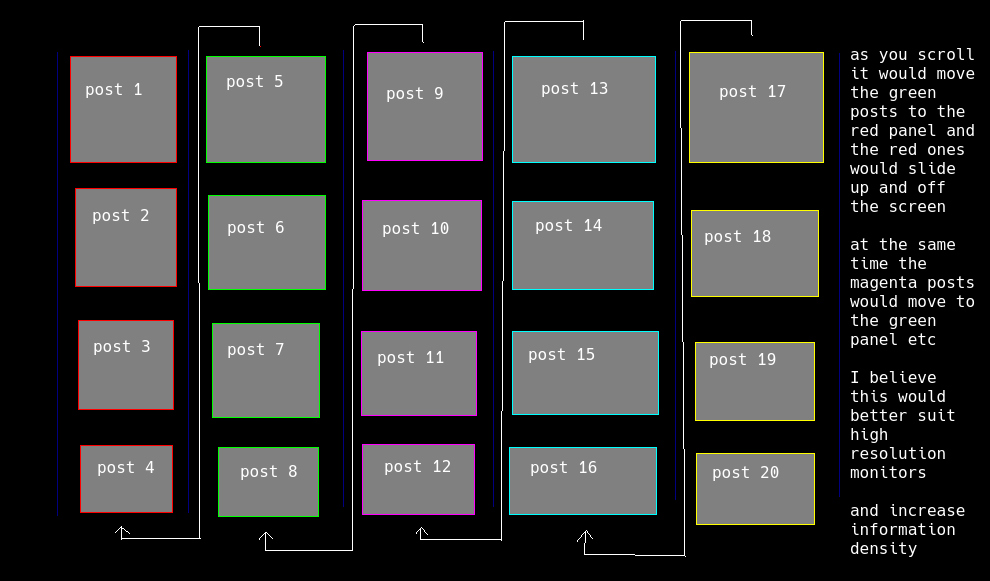
  dreaming of a mastodon interface where it's 3-6 panels of timeline just like
  now, except, each of them is the same timeline and when you scroll it scrolls
  all of them at once, and the bottom of the leftmost panel is the top of the
  panel to the right, and the bottom of that panel is the top of the one to the
  right, etc etc.
┌─────────┐                                                            ┌───────────┐
│ similar │                       chronological                        │ different │
╘═════════╧══════════════════════════════════════════════──────────────┴───────────┘
 -> file: messages/890
═════════════════════════════════════════════════════════════───────────────────────
  If your code is too long to fit in 80 or 120 characters (preference) then you
  need to use more numbers (indexable with a small table-of-contents style
  comment description just above) or character symbols (referencably by meaning
  just as above) (by above she means earlier in the string of text you just read)
┌─────────┐                                                            ┌───────────┐
│ similar │                       chronological                        │ different │
╘═════════╧══════════════════════════════════════════════════──────────┴───────────┘
 -> file: fediverse/1696
═══════════════════════════════════════════════─────────────────────────────────────
  smartphone_max_battery_life = int_to_percent(100 - update_count);
┌─────────┐                                                            ┌───────────┐
│ similar │                       chronological                        │ different │
╘═════════╧════════════════════════════════════────────────────────────┴───────────┘
 -> file: fediverse/1762
═══════════════════════════════════════════════─────────────────────────────────────
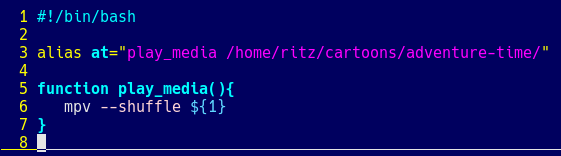
  This was the first bash script I ever wrote.

  It's been updated a little, it was a bash alias first, but this is what it
  looks like now.

  Kinda shows what kinds of problems I needed to solve most.
┌─────────┐                                                            ┌───────────┐
│ similar │                       chronological                        │ different │
╘═════════╧════════════════════════════════════────────────────────────┴───────────┘
 -> file: fediverse/3258
══════════════════════════════════════════════════──────────────────────────────────
  @user-570

  I wonder how it would feel to bind numpad enter to tab instead?
┌─────────┐                                                            ┌───────────┐
│ similar │                       chronological                        │ different │
╘═════════╧═══════════════════════════════════════─────────────────────┴───────────┘
 -> file: fediverse/5376
══════════════════════════════════════════════════════════════──────────────────────
  ┌──────────────────────────────────────────────────────────────────────────────┐
  │ CW: re: police-mentioned-psy-ops-mentioned-human-waste-mentioned-which-is-a- │
  │ nice-way-to-say-feces-ew-gross-who-put-that-on-my-timeline-guards-arrest-    │
  │ these-men-they're-criminals-of-the-law-against-pooping-my-pants              │
  └──────────────────────────────────────────────────────────────────────────────┘


  333 characters remaining
┌─────────┐                                                            ┌───────────┐
│ similar │                       chronological                        │ different │
╘═════════╧═══════════════════════════════════════════════════─────────┴───────────┘
 -> file: fediverse/849
╔═════════════════════════════════════════─────────────────────────────────────────┐
║ wish there were ascii characters that took up more than one line of code         │
║ vertically.                                                                      │
║                                                                                  │
║ wonder if we could use a sorting algorithm, or markup language, or something     │
║ like that to organize less structured data along user-customizable rules. Like,  │
║ a code editor that worked with your ideas, rather than the strict expression of  │
║ your text. You could pretty much write in any language, even pseudocode, and     │
║ the LLM behind the scenes would translate whatever you wrote into whatever       │
║ result you needed. Writing Rust, but need to fit in with C code? No worries      │
║ it'll translate for you. As long as the end result is functionally the same,     │
║ which could be verified by running two separate VMs that ran interpreters every  │
║ time you saved. And as long as their translation layers matched completely,      │
║ then odds are they're the same. And if not, well, the programmer can always      │
║ debug it. It's not like this would be running on something that needed to        │
║ perform in the moment? Like, improv instead of tragedies, or battles instead of  │
║ strategies                                                                       │
╠═════════╗                                                            ┌───────────┤
║ similar ║                       chronological                        │ different │
╚═════════╩══════════════════════════════──────────────────────────────┴───────────┘
 -> file: messages/929
════════════════════════════════════════════════════════════════────────────────────
  {[booooo that writing stinks, the writers of the first few lines were better]}
┌─────────┐                                                            ┌───────────┐
│ similar │                       chronological                        │ different │
╘═════════╧═════════════════════════════════════════════════════───────┴───────────┘
 -> file: fediverse/2738
═════════════════════════════════════════════════───────────────────────────────────
  @user-1340

  BTM - it's like TOP, but... bottom

  https://github.com/ClementTsang/bottom
┌─────────┐                                                            ┌───────────┐
│ similar │                       chronological                        │ different │
╘═════════╧══════════════════════════════════════──────────────────────┴───────────┘
 -> file: fediverse/5944
═══════════════════════════════════════════════════════════════════─────────────────
  I swear, Lua has the worst manual out there.

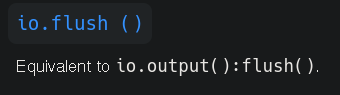
  I was looking for a definition of this function called io.flush(). Here's what
  I found: [picture 1]:`**io.flush ()**

  Equivalent to io.output():flush().
  `

  okay, so what's io.output():flush()? [one result found] and it's the thing I
  just found. great.

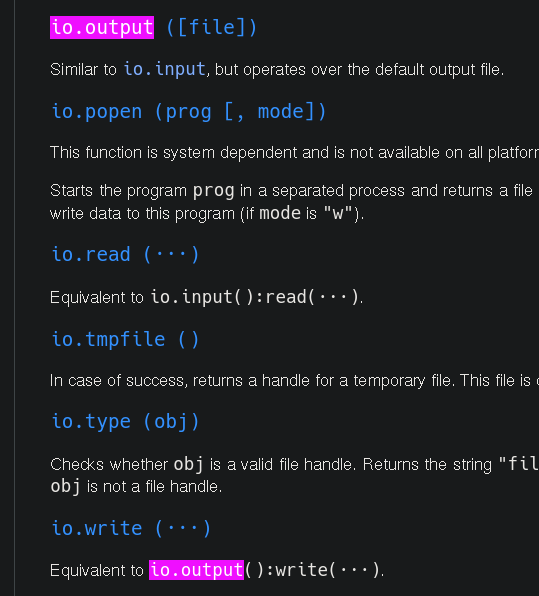
  okay, so how about io.output()? [third picture]:`**io.output ([file])**

  Similar to io.input, but operates over the default output file.
  `

  and`**io.write (···)**

  Equivalent to io.output():write(···).
  `

  I know the text is blue, but it's not clickable. It's just text, not a
  hyperlink to more comprehensive documentation.

  There's also file:flush(), but that doesn't seem relevant to what I'm looking
  for, because I'm working with lines and not files:`**file:flush ()**

  Saves any written data to file.
  `

  there are no more references to flushing, nor outputting of input nor output.
  this manual sucks.

  ah, well, back to vibe coding I go.

  EDIT: at least it's all on one page.

┌─────────┐                                                            ┌───────────┐
│ similar │                       chronological                        │ different │
╘═════════╧════════════════════════════════════════════════════════────┴───────────┘
 -> file: fediverse/4306
═════════════════════════════════════════════════════───────────────────────────────
  ┌───────────────────────┐
  │ CW: cursing-mentioned │
  └───────────────────────┘


  operations: try not to use the last of anything, and always use last-time's
  last first.

  projects: you better clean your fucking plate because anything you don't eat is
  going in the TRASH
┌─────────┐                                                            ┌───────────┐
│ similar │                       chronological                        │ different │
╘═════════╧══════════════════════════════════════════──────────────────┴───────────┘
 -> file: fediverse/1080
══════════════════════════════════════════──────────────────────────────────────────
  here's an idea - when typing a command in a BASH terminal if you push up it
  inserts the previous command (as expected) but if you hold SHIFT and push up it
  inserts the first argument in your previous command. Then, you can push up
  again (while still holding shift) to go one command further back, and again to
  get the third previous command.

  Then, here's the cool part, if you are holding shift and you push left/right,
  then it moves from the first argument of the previous command to the second,
  third, fourth argument.

  example:`ls -ltr ~/pictures/my-art/

  feh [shift+up inserts -ltr]
  feh -ltr [hmmm that's not right]
  feh -ltr [shift+right switches to 2nd argument]
  feh ~/pictures/my-art/ [ah that's better]
  `

  would be even cooler if it highlighted it in your previous terminal output so
  you could visually connect your current input with the previous input
┌─────────┐                                                            ┌───────────┐
│ similar │                       chronological                        │ different │
╘═════════╧═══════════════════════════════─────────────────────────────┴───────────┘
 -> file: fediverse/704
═════════════════════════════════════════───────────────────────────────────────────
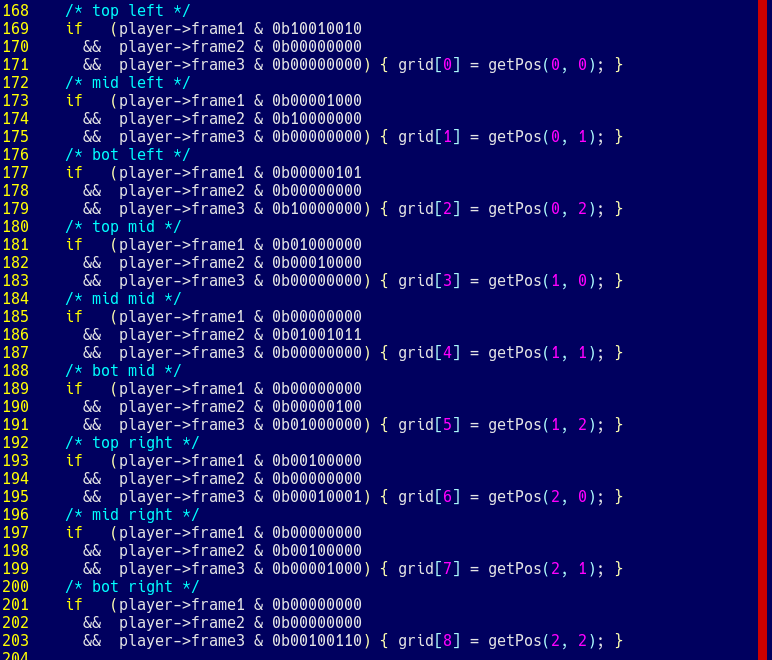
  Is my formatting pretty or does it make you angry?


┌─────────┐                                                            ┌───────────┐
│ similar │                       chronological                        │ different │
╘═════════╧══════════════════════════════──────────────────────────────┴───────────┘
 -> file: messages/1311
═════════════════════════════════════════════════════════════════════════───────────
  did you know they could re-arrange the order of my similar-different pages and
  the audience wouldn't be able to tell

  html is just text

  your browser can display whatever it wants.
┌─────────┐                                                            ┌───────────┐
│ similar │                       chronological                        │ different │
╘═════════╧════════════════════════════════════════════════════════════╧═──────────┘
 -> file: notes/computer-graphics
══════════════════──────────────────────────────────────────────────────────────────
  draw a line from every single pixel straight outward. The first thing it hits
  is what you render.

  okay it's more complicated than that, but it's the gist.

  here's a more detailed explanation:

  your monitor is 2560x1440p. that means there's 2560 pixels left to right, and
  1440 pixels up and down. okay so define a 3d scene programmatically - it's not
  hard, just "draw cube here with this size and rotation" and "draw a sphere here
  with this position and rotation" etc. Something simple.

  then, draw a ray trace straight out from your monitor. Not to the nearest light
  source, but to the nearest other camera. Use the length of it to determine
  distance, both indirectly (through the center node) and directly (pythagorean
  theorum style).

  Why? I dunno.

  Okay back to the original idea, if you make an array with 2560 elements and
  store arrays of size 1440 within it, then you have a simple boolean checkbox
  for each pixel. Then, whenever you create a visible entity, make sure there's a
  single boolean ticked right on the top of the entity when it's stored in the
  graph mentioned above. Find the center of the entity, draw to the top, and one
  more, and switch a boolean to "true". Then, every tick / update, cycle through
  the entire list and the first one you find that has a "true" value is where you
  draw the entity stored in the array.

  Each "sprite" has an odd shape - it doesn't exist on it's top line, except for
  one single dot right in the middle. Sorta like this:

  o o o o o o o o o o o o o o o o o o o o o o o o o o o o o o o o o o o o o o o o
  o o o o o o o o o o o o o o o o o o ->X<- o o o o o o o o o o o o o o o o o o o
  x x x x x x x x x x x x x x x x x x x x x x x x x x x x x x x x x x x x x x x x

  when scanning left to right from the top, it'd bump into the X right there in
  the middle. Inside the X is some data - an id corresponding to the sprite that
  needs to be drawn, and a displacement value - like 500 pixels or something -
  and the scanner with drop down 500 pixels, draw the sprite there (assuming a
  centered origin point), jump 500 pixels up, and keep scanning.

  each tick, right before this, the "list of entities" will scan through itself
  and for each entity it'll change the "render graph" mentioned above to have an
  X wherever the entity is stored. Whenever the camera moves, it updates the list
  too.
┌─────────┐                                                            ┌───────────┐
│ similar │                       chronological                        │ different │
╘═════════╧═══════─────────────────────────────────────────────────────┴───────────┘
 -> file: fediverse/2084
════════════════════════════════════════════════────────────────────────────────────
  I love it when words align like this

┌─────────┐                                                            ┌───────────┐
│ similar │                       chronological                        │ different │
╘═════════╧═════════════════════════════════════───────────────────────┴───────────┘
 -> file: fediverse/1619
╔═════════════════════════════════════════════─────────────────────────────────────┐
║ @user-1048 @user-1049                                                            │
║                                                                                  │
║ I didn't see it in any of those links, though seeing the picture for Skov made   │
║ me realize I'm pretty sure it was tree based! But, maybe a little more reliant   │
║ on the shape of the blocks rather than the text.                                 │
║                                                                                  │
║ It also might have been from a top-down perspective like Reactible:              │
║ http://reactable.com/mobile/                                                     │
║ but I can't remember. All I saw was a short introductory video, which makes me   │
║ think it might have been an artists conception or something.                     │
║                                                                                  │
║ Scrolling through those galleries was really cool! There's been so much care     │
║ and attention placed into the creation of interfaces for regular people (or      │
║ visual people) to engage with the world of computation, and it's a little sad    │
║ to me that we don't place more of an emphasis on it culturally. I am honored to  │
║ exist in a time where people care enough to build Linux, for example! And yet    │
║ most people don't get it.                                                        │
║                                                                                  │
║ Seeing stuff like this fills me with hope though - Thank you for showing me      │
║ those galleries and links, there's so much affection in them.                    │

╠═════════╗                                                            ┌───────────┤
║ similar ║                       chronological                        │ different │
╚═════════╩══════════════════════════════════──────────────────────────┴───────────┘
 -> file: fediverse/1966
════════════════════════════════════════════════────────────────────────────────────
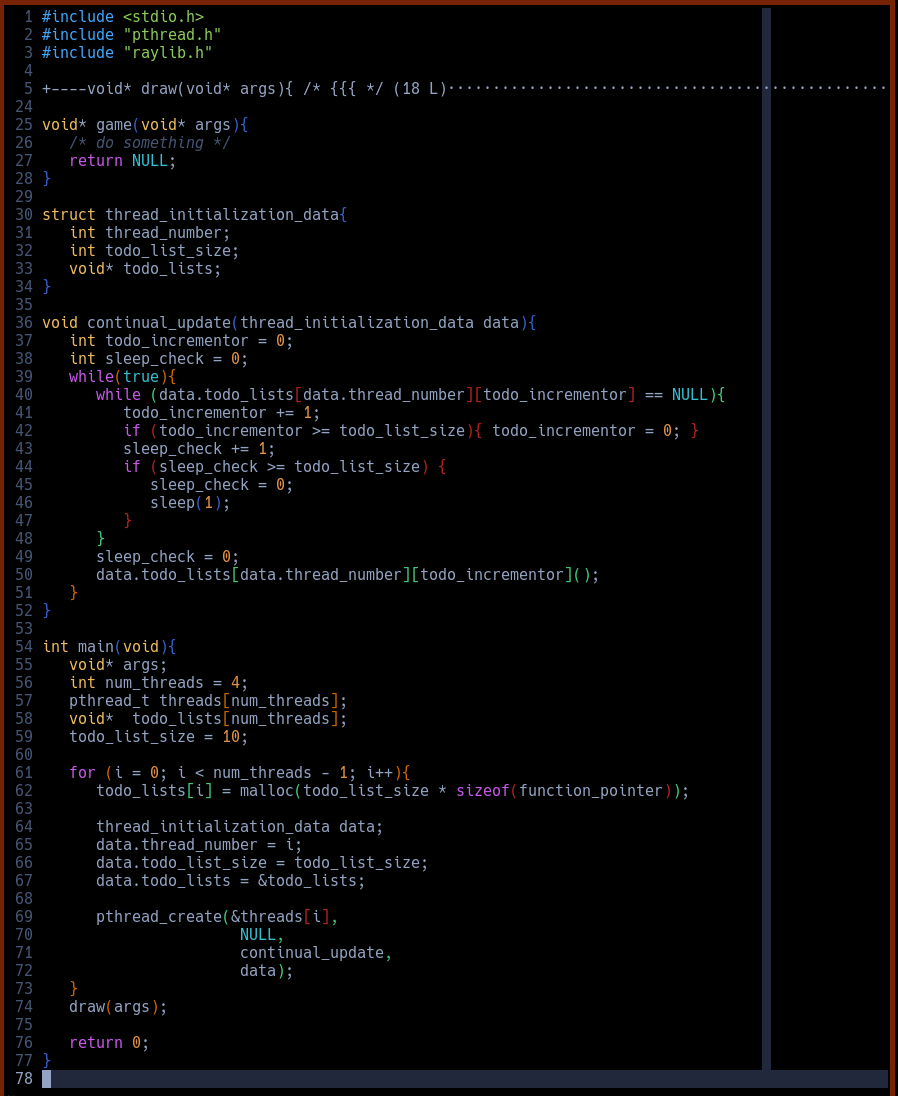
  The design is simple: Have an array of function pointers that need to be
  assigned to a thread. Then, have a manager thread read through that array, and
  for every non-zero value put it into a thread-specific array. Those threads
  will read through their personal  array and execute whichever function is
  pointed to by the function pointer placed in their todo-list by the manager
  function.

  ... I'm too stupid to make it happen though. Writing code is hard.
┌─────────┐                                                            ┌───────────┐
│ similar │                       chronological                        │ different │
╘═════════╧═════════════════════════════════════───────────────────────┴───────────┘
 -> file: fediverse/573
═════════════════════════════════════════───────────────────────────────────────────
  already spotted a bug. Should be for(1000 / MAX times) in the last example.

  EDIT: Or, even better, increment that loop by +MAX instead of +1 each time
  through.
┌─────────┐                                                            ┌───────────┐
│ similar │                       chronological                        │ different │
╘═════════╧══════════════════════════════──────────────────────────────┴───────────┘
 -> file: messages/324
═════════════════════════════════════════════───────────────────────────────────────
  The difference between front-end and back-end programming is whether or not you
  want to design abstractions or use them. Backend is all about creating abstract
  things that are networked together, while front end is about putting them
  together in a way that suits the user. Front end is collage, back end is pencil
  drawing.
┌─────────┐                                                            ┌───────────┐
│ similar │                       chronological                        │ different │
╘═════════╧══════════════════════════════════──────────────────────────┴───────────┘
 -> file: fediverse_boost/183
◀═╦════════════════════[BOOST]══════════════════════─────────────────────────────┐
  ║ ┌──────────────────────────────────────────────────────────────────────────┐ │
  ║ │ Just opened Tuba (Mastodon desktop app for linux) for the first time in  │ │
  ║ │ a long time and it's really nice.                                        │ │
  ║ │                                                                          │ │
  ║ │ I don't remember it being like this.                                     │ │
  ║ │                                                                          │ │
  ║ │ Wondering if there is a way to get support for multiple columns like in  │ │
  ║ │ the web advanced interface.                                              │ │
  ║ └──────────────────────────────────────────────────────────────────────────┘ │
  ╠─────────┐                                                        ┌───────────┤
  ║ similar │                     chronological                      │ different │
  ╚═════════╧═══════════════════════════════════════─────────────────┴───────────┴─▶
 -> file: fediverse_boost/366
◀═╦═════════════════════════[BOOST]═══════════════════════════───────────────────┐
  ║ ┌──────────────────────────────────────────────────────────────────────────┐ │
  ║ │ Tihi :blobcatgiggle:                                                     │ │
  ║ │                                                                          │ │
  ║ │ How the tables have turned! :blobcatangel:                               │ │
  ║ └──────────────────────────────────────────────────────────────────────────┘ │
  ╠─────────┐                                                        ┌───────────┤
  ║ similar │                     chronological                      │ different │
  ╚═════════╧═════════════════════════════════════════════════───────┴───────────┴─▶
 -> file: fediverse/5445
═══════════════════════════════════════════════════════════════─────────────────────
  @user-1283

  just make sure you add alt-text!
┌─────────┐                                                            ┌───────────┐
│ similar │                       chronological                        │ different │
╘═════════╧════════════════════════════════════════════════════────────┴───────────┘
 -> file: fediverse/30
════════════════════════════════────────────────────────────────────────────────────
  @user-33 sup
┌─────────┐                                                            ┌───────────┐
│ similar │                       chronological                        │ different │
╘═════════╧═════════════════════───────────────────────────────────────┴───────────┘
 -> file: messages/110
════════════════════════════════════════────────────────────────────────────────────
  The best way to program computers is to organize them according to their
  relations. Like, when x increases by 4 then y increases by 2 - basically, a
  math equation that you can continuously solve by calculating more and more
  comprehensively and deeply.
┌─────────┐                                                            ┌───────────┐
│ similar │                       chronological                        │ different │
╘═════════╧═════════════════════════════───────────────────────────────┴───────────┘
 -> file: fediverse/614
═════════════════════════════════════════───────────────────────────────────────────
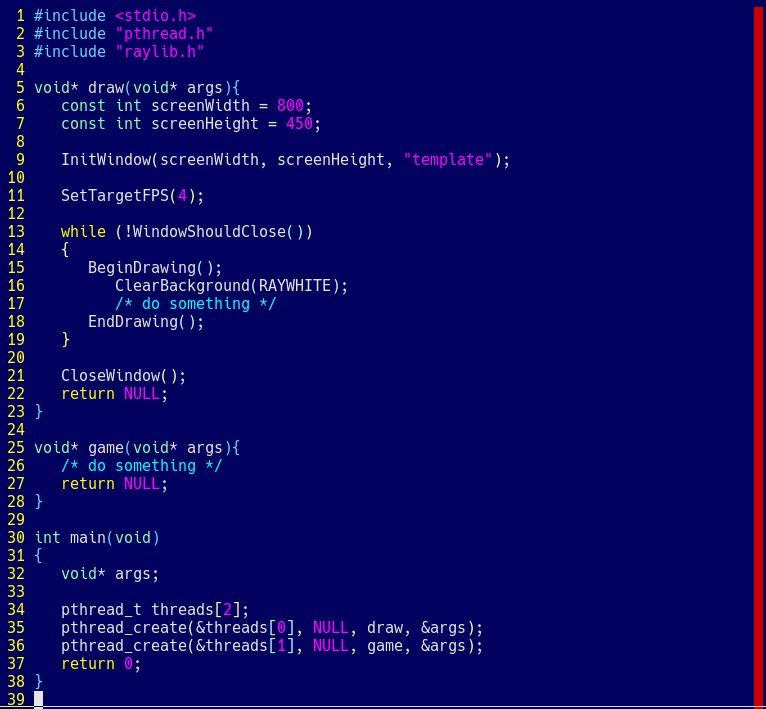
  What does your template for a new project look like? Here's mine:
┌─────────┐                                                            ┌───────────┐
│ similar │                       chronological                        │ different │
╘═════════╧══════════════════════════════──────────────────────────────┴───────────┘
 -> file: fediverse/4829
═════════════════════════════════════════════════════════───────────────────────────
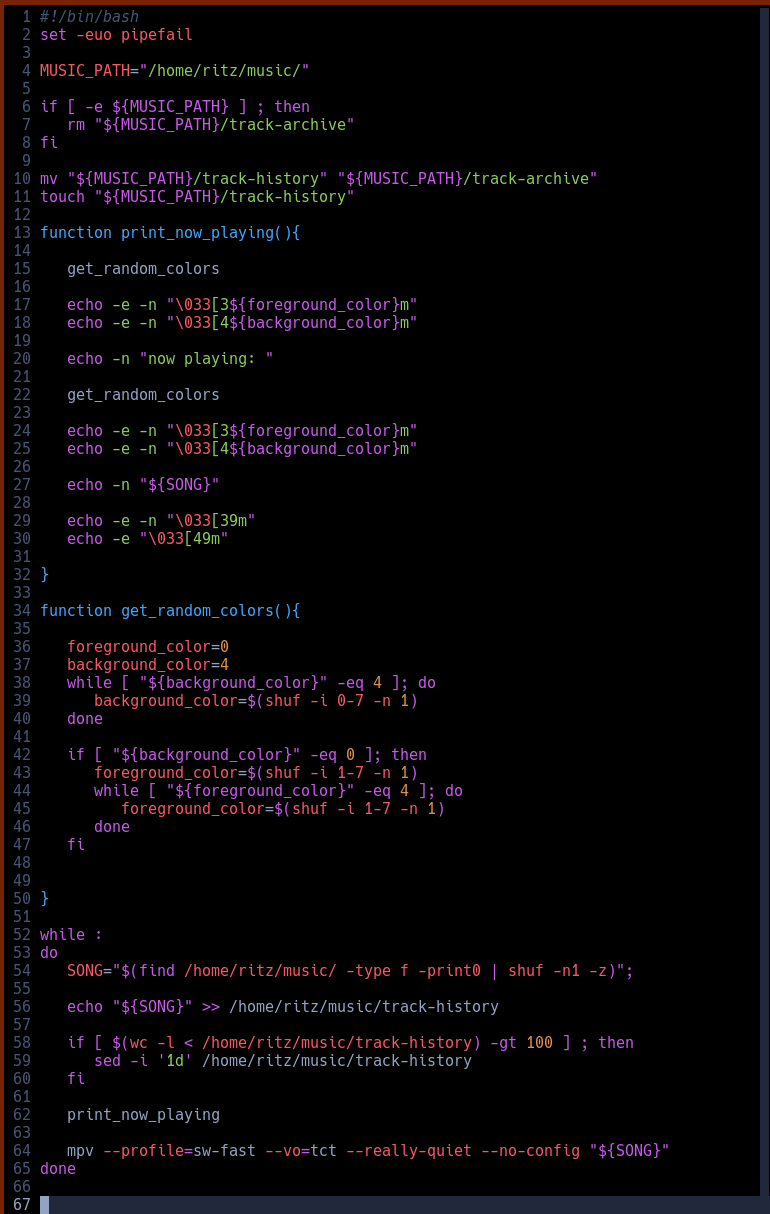
  check out my shuffle-all-music script
┌─────────┐                                                            ┌───────────┐
│ similar │                       chronological                        │ different │
╘═════════╧══════════════════════════════════════════════──────────────┴───────────┘
 -> file: fediverse/2606
════════════════════════════════════════════════────────────────────────────────────
  ┌───────────────────────────────────────────────────┐
  │ CW: re: politics-fascism-sexual-assault-mentioned │
  └───────────────────────────────────────────────────┘


  @user-249

  sup
┌─────────┐                                                            ┌───────────┐
│ similar │                       chronological                        │ different │
╘═════════╧═════════════════════════════════════───────────────────────┴───────────┘
 -> file: notes/ai-can-benefit-from
═════════════════════════════════════════════════════════════════════════════───────
  ai-can-benefit-from the fact that humans need to read from left-to-right
  but robots can read laterally.

  "here's a string of 600 zeroes, then a series of 35 random numbers, then 200
  zeroes"
  and
  "here's a string of 600 random characters, then a string of information, then
  200 zeroes"

  looks exactly the same to an LLM.
┌─────────┐                                                            ┌───────────┐
│ similar │                       chronological                        │ different │
╘═════════╧════════════════════════════════════════════════════════════╧═════──────┘
 -> file: messages/930
════════════════════════════════════════════════════════════════────────────────────
  <bang slam kerblam> there goes another line into ram. wonder what it's used for.
┌─────────┐                                                            ┌───────────┐
│ similar │                       chronological                        │ different │
╘═════════╧═════════════════════════════════════════════════════───────┴───────────┘
 -> file: messages/711
════════════════════════════════════════════════════════────────────────────────────
  https://www.desmos.com/calculator/cxayticajg
┌─────────┐                                                            ┌───────────┐
│ similar │                       chronological                        │ different │
╘═════════╧═════════════════════════════════════════════───────────────┴───────────┘
 -> file: fediverse/6007
═══════════════════════════════════════════════════════════════════─────────────────
  I always get the syntax backwards, for some reason...
┌─────────┐                                                            ┌───────────┐
│ similar │                       chronological                        │ different │
╘═════════╧════════════════════════════════════════════════════════────┴───────────┘
 -> file: fediverse/1869
═══════════════════════════════════════════════─────────────────────────────────────
  oh dear, Mastodon formatting makes that script look weird. Here's the script in
  picture form so you can reference and fix it:

  I would edit the original post with backslashes and such but I'm exactly out of
  characters teehee

┌─────────┐                                                            ┌───────────┐
│ similar │                       chronological                        │ different │
╘═════════╧════════════════════════════════════────────────────────────┴───────────┘
 -> file: messages/16
═───────────────────────────────────────────────────────────────────────────────────
  https://www.reddit.com/r/commandline/comments/na02wx/cute_terminal_animations/
┌─────────┐                                                            ┌───────────┐
│ similar │                       chronological                        │ different │
╘─────────┴────────────────────────────────────────────────────────────┴───────────┘
 -> file: messages/699
═══════════════════════════════════════════════════════─────────────────────────────
  —,
┌─────────┐                                                            ┌───────────┐
│ similar │                       chronological                        │ different │
╘═════════╧════════════════════════════════════════════────────────────┴───────────┘
 -> file: fediverse/3877
════════════════════════════════════════════════════────────────────────────────────
  @user-570

  I do`alias ls='ls -v --color=auto'
  `

  and that seems to cover most things. Then in my cd alias I do`alias cd='cd ${@}
  && ls -la'
  `

  so I don't have to type ls everytime I cd ^_^
┌─────────┐                                                            ┌───────────┐
│ similar │                       chronological                        │ different │
╘═════════╧═════════════════════════════════════════───────────────────┴───────────┘
 -> file: messages/758
══════════════════════════════════════════════════════════──────────────────────────
  what if we got a bunch of computer programmers in a room and all had them write
  the same program, line by line. Like, if they each contributed to the
  discussion about what should be placed next.

  "I wrote a for loop that does what we're looking for on line 43 through 69" and
  then someone else says "nice" and everyone's like "oh you"
┌─────────┐                                                            ┌───────────┐
│ similar │                       chronological                        │ different │
╘═════════╧═══════════════════════════════════════════════─────────────┴───────────┘
 -> file: fediverse/5696
════════════════════════════════════════════════════════════════────────────────────
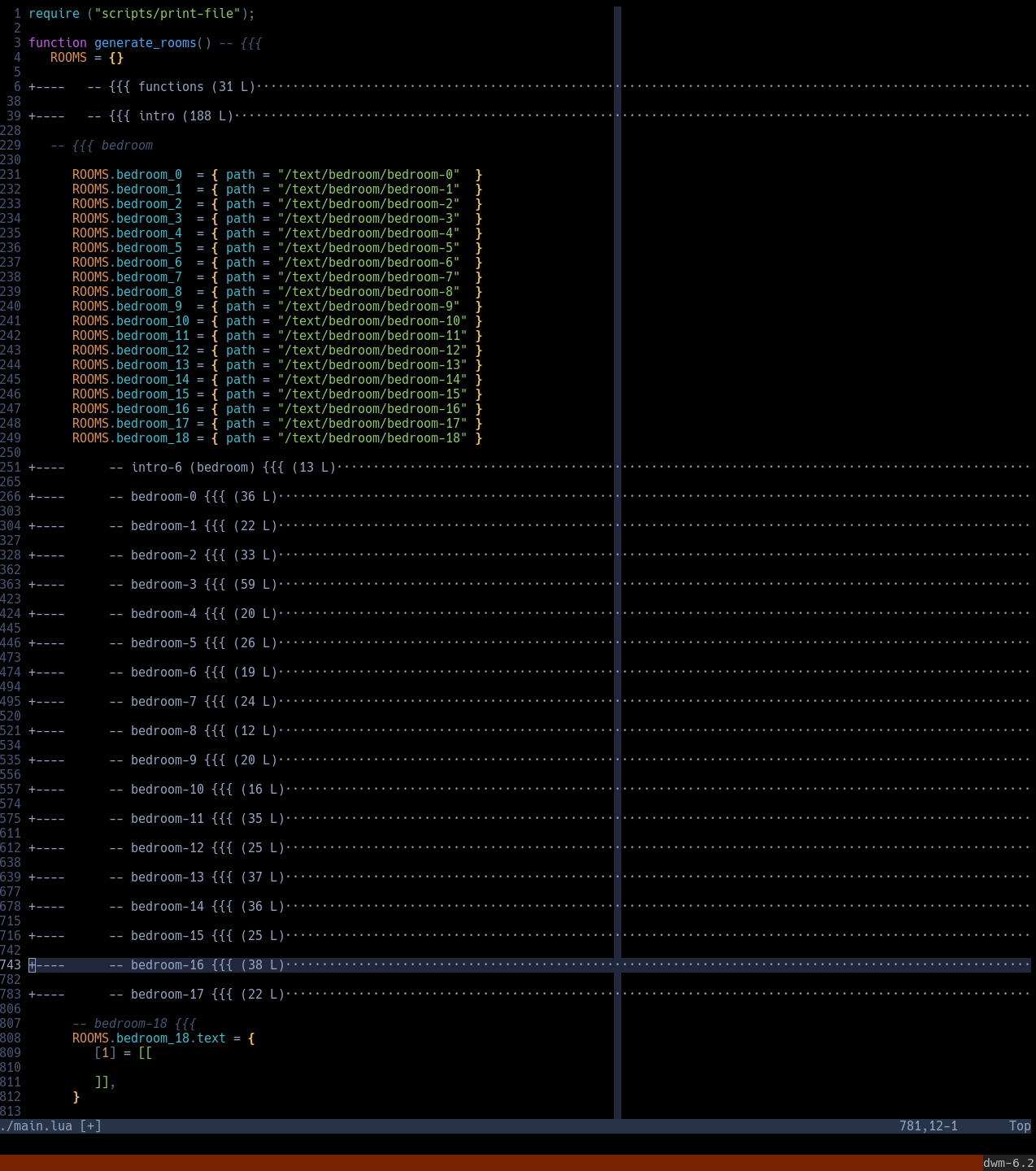
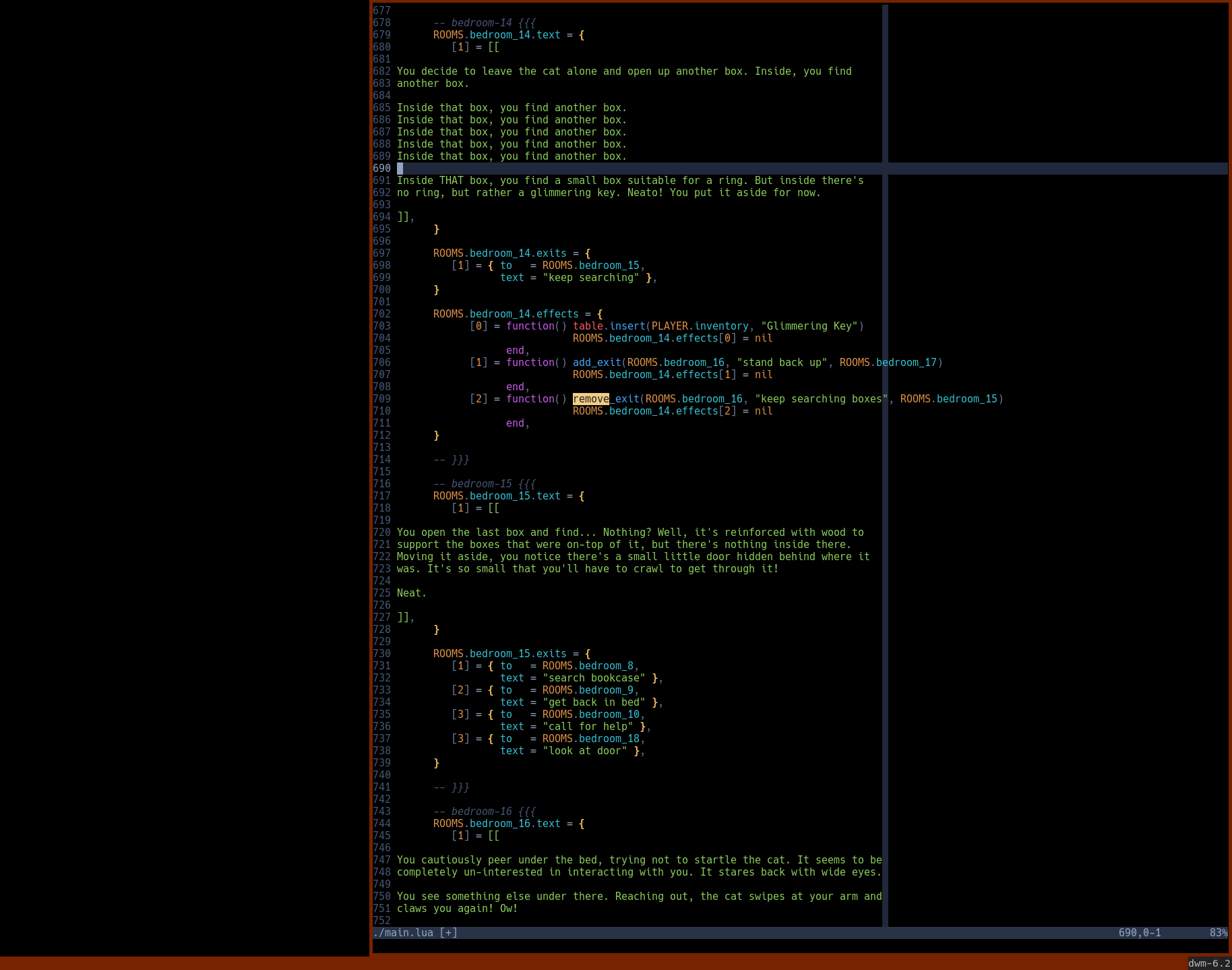
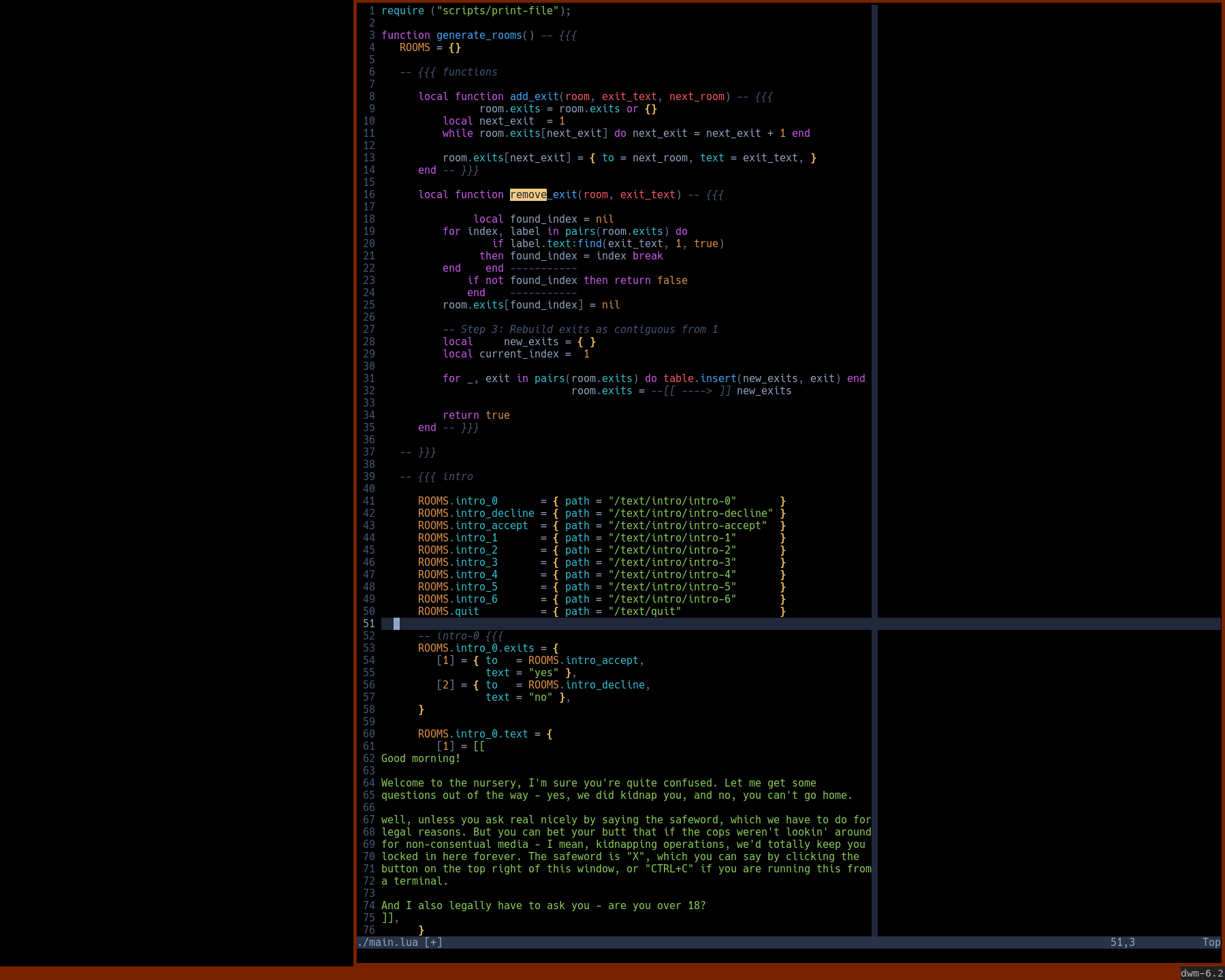
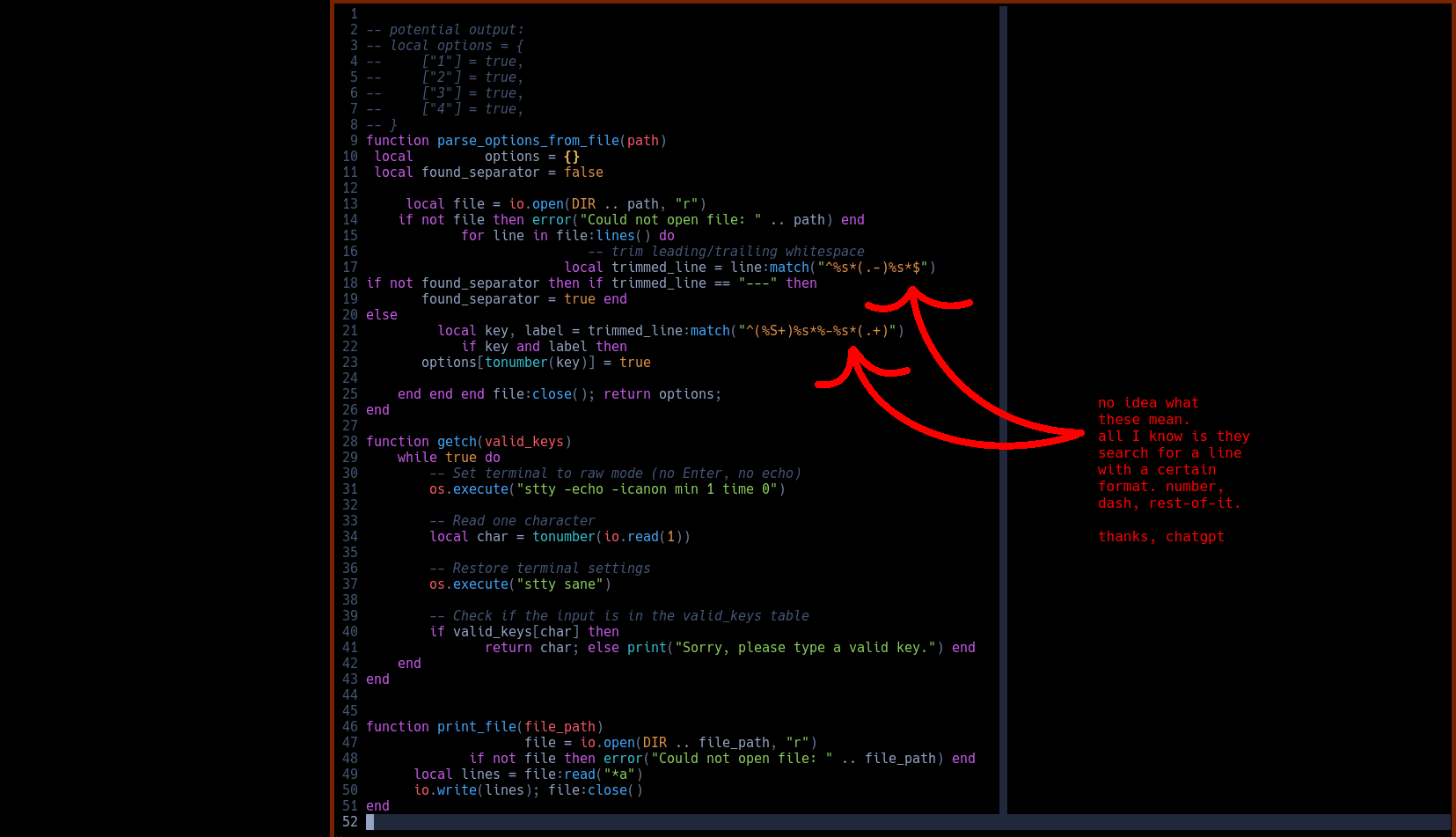
  hey does anyone wanna go over my code for this text adventure game thingy that
  I spent 2 days on so far?
┌─────────┐                                                            ┌───────────┐
│ similar │                       chronological                        │ different │
╘═════════╧═════════════════════════════════════════════════════───────┴───────────┘
 -> file: fediverse/3822
═══════════════════════════════════════════════════─────────────────────────────────
  @user-1582

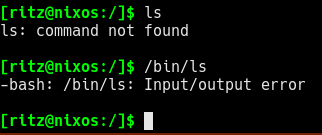
  I think that's what happened, in addition to... whatever this input/output
  error is. No clue what to do about that. Maybe my SD card is dying, I've
  flashed over it like, 10 times now haha 😅
┌─────────┐                                                            ┌───────────┐
│ similar │                       chronological                        │ different │
╘═════════╧════════════════════════════════════════────────────────────┴───────────┘
 -> file: fediverse/3663
══════════════════════════════════════════════════──────────────────────────────────
  @user-1582

  It depends on the size of the file, copying a thousand lines of config file
  probably isn't that big of a deal, but copying a million lines in a log file
  just to pass it as an argument to... pad it to the left, or whatever, that'll
  DEFINITELY slow down your execution speed!

  Much better to pass by reference, usually...
┌─────────┐                                                            ┌───────────┐
│ similar │                       chronological                        │ different │
╘═════════╧═══════════════════════════════════════─────────────────────┴───────────┘
 -> file: fediverse/1510
════════════════════════════════════════════────────────────────────────────────────
  number of tabs open: 15 thousand

  number of tabs in regular use: 5

  EDIT: average distance between tabs: 15
┌─────────┐                                                            ┌───────────┐
│ similar │                       chronological                        │ different │
╘═════════╧═════════════════════════════════───────────────────────────┴───────────┘
 -> file: fediverse/582
═════════════════════════════════════════───────────────────────────────────────────
  @user-431

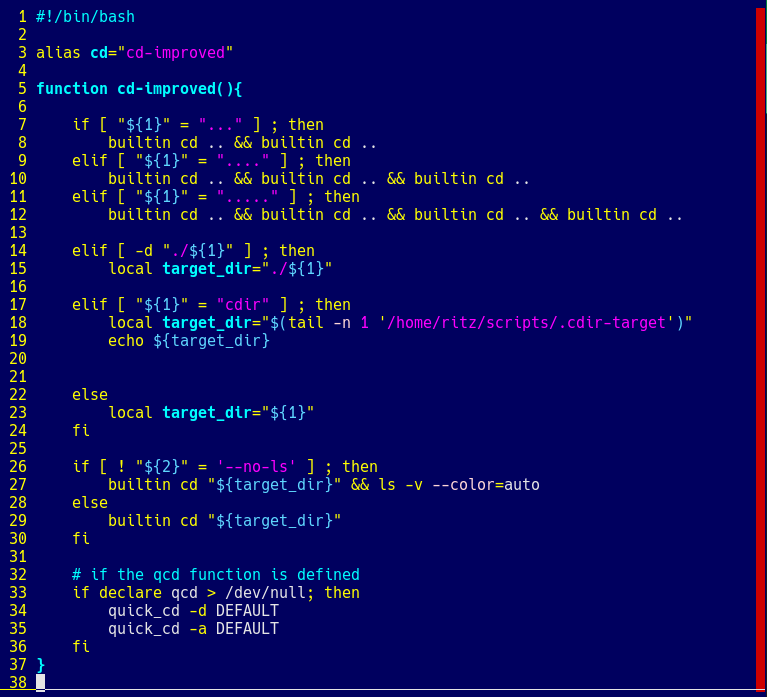
  I made an alias that overwrites cd so I don't have to do this. The important
  line is line 27, you could probably accomplish something similar like this:

  alias cd="cd ${1} && ls -v --color=auto"

  I also set it up so I can change more than one directory up using ... or ....
  or .....

  also I have a few shortcut scripts, cdir and qcd. cdir creates a quick way to
  drop a bookmark wherever I'd like, while qcd can make permanent bookmarks. Also
  qcd makes it so whenever I open a new terminal it opens to the last directory I
  was in, which is nice if you need a new terminal to do something in the current
  folder and you don't want to have to walk alllllllll the way back.
┌─────────┐                                                            ┌───────────┐
│ similar │                       chronological                        │ different │
╘═════════╧══════════════════════════════──────────────────────────────┴───────────┘
 -> file: fediverse/5877
═══════════════════════════════════════════════════════════════════─────────────────
  I wish I could click on ls output to cd up or down
┌─────────┐                                                            ┌───────────┐
│ similar │                       chronological                        │ different │
╘═════════╧════════════════════════════════════════════════════════────┴───────────┘
 -> file: messages/931
════════════════════════════════════════════════════════════════────────────────────
  <*type type type type*> oh see it's writing music.
┌─────────┐                                                            ┌───────────┐
│ similar │                       chronological                        │ different │
╘═════════╧═════════════════════════════════════════════════════───────┴───────────┘
 -> file: fediverse_boost/451
◀═╦════════════════════════════[BOOST]═════════════════════════════──────────────┐
  ║ ┌──────────────────────────────────────────────────────────────────────────┐ │
  ║ │ Take away the elements in order of apparent non-importance               │ │
  ║ │                                                                          │ │
  ║ │  #ObliqueStrategies                                                      │ │
  ║ └──────────────────────────────────────────────────────────────────────────┘ │
  ╠─────────┐                                                        ┌───────────┤
  ║ similar │                     chronological                      │ different │
  ╚═════════╧══════════════════════════════════════════════════════──┴───────────┴─▶
 -> file: fediverse/2097
════════════════════════════════════════════════────────────────────────────────────
  If you're writing a bash script, you should never hard-code file locations.
  Instead, put them in a variable at the top of your script, so they're easy to
  find when people need to configure your script or move files around.

  It's like a config file built INTO the script itself. Just change the
  variables, they're at the top with comments.
┌─────────┐                                                            ┌───────────┐
│ similar │                       chronological                        │ different │
╘═════════╧═════════════════════════════════════───────────────────────┴───────────┘
|