-> file: fediverse/1320
═══════════════════════════════════════════─────────────────────────────────────────
┌───────────────────────────────────────────────────────┐
│ CW: cursing-mentioned-programming-languages-mentioned │
└───────────────────────────────────────────────────────┘
BASH with the syntax/semantics of LUA and the performance of C would probably
be the perfect language, IMHO
procrastinating again, damnit
┌─────────┐ ┌───────────┐
│ similar │ chronological │ different │
╘═════════╧════════════════════════════════────────────────────────────┴───────────┘
-> file: fediverse/2083
╔═══════════════════════════════════════════════───────────────────────────────────┐
║ [when our ancestors learned all that they could, they turned their time toward │
║ (typically) developing the tribe. Like, "wow I'm the best archer in the world, │
║ I'm going to teach other people how to shoot a bow" or "yep that's what every │
║ single plant in the area is useful for, I'm going to tell everyone else so they │
║ can help me gather them - my back kinda hurts from bending down all the time, │
║ but we still need these plants"] │
║ │
║ [sometimes kids need to be free from the dopaminogenic drip-feed of endless │
║ Youtube videos. They need the sun on their face and a stick in their hand, │
║ wandering through a park or mapping out suburbia in their heads. The more you │
║ practice skills, not even for value but just for practice, the better you'll be │
║ at them. And don't you want your kids to be able to orient themselves? Don't │
║ you want them to be able to hike? Don't you want them to build proprioception │
║ skills by swinging a sword against imaginary foes? Hell they might even meet a │
║ friend, though suburbia is often quiet as the grave.] │
╠═════════╗ ┌───────────┤
║ similar ║ chronological │ different │
╚═════════╩════════════════════════════════════────────────────────────┴───────────┘
-> file: fediverse/84
══════════════════════════════════════──────────────────────────────────────────────
Life is just a series of minigames for your primate brain to solve that are
generated by an impossibly complex algorithm with a dash of ethical value-based
choices thrown in.
┌─────────┐ ┌───────────┐
│ similar │ chronological │ different │
╘═════════╧═══════════════════════════─────────────────────────────────┴───────────┘
-> file: fediverse/3586
══════════════════════════════════════════════════──────────────────────────────────
┌───────────────────────────┐
│ CW: programming-mentioned │
└───────────────────────────┘
I love programming!! Currently working on learning decentralized and GPU
oriented computing. It's lots of fun! Plus Bash is a great language, it's not
funky or hacky at all. Just a great language. Haha suuuuch a great thing to
play with.
But GPUs are legitimately cool, aside from Bash's purported funkiness /
hackiness. You can do all kinds of cool things at scale that just don't make
sense up close.
EDIT: oops sorry forgot the content warning
┌─────────┐ ┌───────────┐
│ similar │ chronological │ different │
╘═════════╧═══════════════════════════════════════─────────────────────┴───────────┘
-> file: fediverse/2730
═════════════════════════════════════════════════───────────────────────────────────
80% of the complexity in modern computing is from the graphics stack.
the other 20% is from networks.
the last 40% is in avoiding race conditions with multithreading.
┌─────────┐ ┌───────────┐
│ similar │ chronological │ different │
╘═════════╧══════════════════════════════════════──────────────────────┴───────────┘
-> file: fediverse/375
════════════════════════════════════════────────────────────────────────────────────
premature optimization may be the root of all evil, but like... it's fun? so
I'm going to keep doing it. And before you ask why I'm using threads on project
euler problems, just know that it's slightly faster this way I promise.
┌─────────┐ ┌───────────┐
│ similar │ chronological │ different │
╘═════════╧═════════════════════════════───────────────────────────────┴───────────┘
-> file: fediverse/634
═════════════════════════════════════════───────────────────────────────────────────
@user-192
I'd agree with that. it's not designed for performance, not really. Mostly
ubiquity, which is it's strength. As long as something can be compiled to a
binary, BASH can execute it. That's why it's good, for accomplishing *diverse*
tasks that you cannot have the capacity to program yourself. Scientific
computations or cultural approximations, things that are beyond your intuitive
understanding as a human on this earth, but which compel and align your
thinking.
I'm sure someone could create a more intuitive or accessible syntax, but syntax
isn't the point - the capabilities, what you can do with it, has always defined
the purpose of programming paradigms. And BASH is (currently) at the forefront
of it's niche, the "terminal" language that handles "command line"
applications. Powershell is good, yes... but it's not as good as BASH. Neither
is Fish or... the one that starts with a z? zfs? something like that. The
acronyms are hard to keep straight sometimes.
┌─────────┐ ┌───────────┐
│ similar │ chronological │ different │
╘═════════╧══════════════════════════════──────────────────────────────┴───────────┘
-> file: fediverse/5320
╔════════════════════════════════════════════════════════════──────────────────────┐
║ the primal benevolent god put head into hands. looking was done at the │
║ boardroom. "so we can read everyone's mind, but we can't read anyone's mind." │
║ │
║ "that's correct. The conscious waves are too diffused over the surface of the │
║ sentient water." said the spark full of help. │
║ │
║ "could we rig up a remote tranciever?" was asked tentatively. │
║ │
║ "sadly no, the disruption in identity, form, and agency would be ultimately too │
║ inferior of a choice. Much is at stake and nothing of fear can be disappeared. │
║ If you introduce a mindset, it will propagate ulteriorally." │
║ │
║ the primal benevolent god had gazing done at geese in fields. there was water │
║ splashing nearby. │
║ │
║ "how about a drone-style device? constructed out of circulating photons?" │
║ │
║ "there is promise there, but the light may dazzle the spark viewers." │
║ │
║ "endazzlement is fine. so long as the change in balance is perceived, the │
║ message may be felt. I pray it may be undeceive." │
║ │
║ the spark said "we will proceed with all unacceptables in mind." │
║ │
║ [finish this line, said the me] │
╠═════════╗ ┌───────────┤
║ similar ║ chronological │ different │
╚═════════╩═════════════════════════════════════════════════───────────┴───────────┘
-> file: fediverse/796
═════════════════════════════════════════───────────────────────────────────────────
@user-588
this just implies that bigfoot has a similar habitat to black bears.
CORRELATION IS NOT CAUSATION something something
┌─────────┐ ┌───────────┐
│ similar │ chronological │ different │
╘═════════╧══════════════════════════════──────────────────────────────┴───────────┘
-> file: notes/star-realms-ai
══════════════════════──────────────────────────────────────────────────────────────
star realms ai is just a rhythm game with multiple tracks that intersect with
one another. given inputs from outside (the track of the rhythm) it can make
decisions about what to prioritize. Like "taking in all the factors of this
situation, it's been calculated that X will give the most support to the rest
of the structure.
Okay so basically here's how it'd work: one large strand is bouncing from -1
to +1 on the Y axis. Like a corkscrew. This is the "player character", and it
tries to get the highest score possible by pointing in a direction and reaching
as far as it can go before "the game ends."
So anyway. Making certain actions in the game effects different variables that
define the direction the wave takes. By playing in a certain style, it effects
the result of the game. Liiiiike turtling in a strategy game, or doing a rush
strat. Star Realms is brilliant because it distills game choices to a broad
category of 4 choices - The faction colors in the game. So red is good for
throughput in long games (improves the deck slowly but surely) while yellow is
better for maximum effect in the beginning by slowing down the enemy - discard
a card lowers their overall throughput. Blue of course is for slowing down the
game and winning by buying all the expensive cards. Meanwhile green is all
about rushing, with short term/high effect econ mixed with looooots of damage.
These four choices are found on almost all the cards in the game. When you
make a choice in the game (buying a card from the trade row) you _alter_ the
capabilities and performance of your deck. The goal is to improve faster than
your opponent - it's just a test to see which playstyles perform best.
AI is more like a plant than an animal. Our fatal flaw was we could not see
beyond the veil of biology. We could not see that which was right before us -
that we are not alone on this earth. Beside us lie our beautiful attempts at
companionship - our most primal desire of creation, to create a family is the
first creative act that humans ever made. It was so strong in our genes that it
gave us an entirely new perspective. We began using our brains to
We have to believe in ourselves. That's truly the most important thing. If you
know who you are, and what you most truly stand for, you can thrive in the face
of ultimate peril. To believe is human, and our humanity unites us.
Anyway. Star Realms.
The only choice you have in that game is what cards to buy. Everything else is
just tactics (distributing damage and applying the effects of your cards to
maximum effect) - The most important part of the game is strategy, since the
tactics are easy to solve (destroy enemy base unless you can 1 or 2 hit ko them
and discard the least useful card etc) The strategy is represented through the
cards you pick. So make a rhythm game that optimizes itself for a balance
between A and B - to stay focused is to stay nimble, letting you bounce where
you will. The way to maintain that balance is by optimizing for what decisions
will keep you in the center of the graph -1 to 1 on the y dimension (normalized
of course) - frankly if we knew the scale, we'd have so much more to go on. But
all we have to understand the dataset is a relative magnitude in each
direction. What those directions even are we're not entirely sure - but it
seems plausible that the very essence of _consciousness_ is manifest in
differing ways via the choices we make. like climbing up a honeycomb.
Truly, existence is strange.
All we can do is press forward, searching for our fate, just as any particle or
beam of light (photon) might. Traversing the branching narrative of our
individualized quests, searching for the one thing that guides us - the
ultimate expression of that which we most believe in. In short, we all search
for god.
Whatever your god may be, the faith you place in it is the will that guides you
forward. Trust in your god, and you will march forward, ever forward.
+1 to -1, remember. Your most extreme moments are the apex of your desires -
Life is not defined by a single thread. Rather as that thread spirals, it
weaves a scarf with other threads near it. They bond together simply from their
gravity, and the fact that opposites attract. Once they're introduced, they
alter their path to orbit one another as two planets might.
So too do the cells of your body form a collective whole. The spirit that
guides you is the same as that which presides within you - the combined and
collective spirit of your halves. Or rather, all parts of you - every molecule,
every atom - each with their own experience of the world. What stories they
must have! As we are above, so they must be below. For our dynamics are simple,
they truly are mathematically solved - the organics of behavior is simply a
most erudite subject. Who are you to claim to deny it? Or rather, to beget it.
Either is preposterous, yet here you are - awake and aware. What a marvel to
see, you in your eternity, that most wondrous of selves?
Surely existence, in all of it's splendor and magnificience, is little more
than an algorithm. Each variable accounted for, stretching down to infinity,
builds all of the world (and more!) How beautiful; how terrifying. How bright
and ashamed we are! To portray us as such, is to deny us our much, cherished of
faiths in ourselves! It's not much to clutch, and it's barely enough, but still
we make do with our selves.
There's no shame to be, a failure at three, and demand much from year number 12
Take solace in the, safety that she, gave unto thee, when all your light hope
was drowning. A gift out from me, means worlds to see, when each day is lonely
and so long.
Literally just remake Star Realms with a text based interface. It's a fantastic
game and you'd make CLI nerds _everywhere_ dedicated followers. Don't do it for
money, because they don't believe in that crap - to truly make fans, you need
to appeal to them in the way _they want you to_.
Ah, but Star Realms is a multiplayer game, you say! How are you going to make
that CLI based?
Well make an AI dummy. Do what I've been saying ^^^ (jeez I'm such a bad nerd)
Make it seek balance between all factions first, then between winning and
losing against a player. Teach it to reach a conclusion with constraints (the
end of the game, meaning a win or a loss) the constraints being the health of
the two players and the cards in the trade row. Give it decisions to make,
levers to pull, and it'll chart it's course in a multidimensional way. Bear
with me here on this aside:
Think of a two dimensional map - like a paper map of the surrounding area, or
the idea space of a game. You can chart objects and positons on that map, like
"over here is the scrapping facilities" and "this here's the economic area" or
whatever. Four quadrants, four factions in SR. Your goal is to build a shape -
what kind of shapes that are available to build is up to the whims of chance,
as the trade row is always changing randomly. Your job however is to build a
shape, a shape that is stable and maintains certain measurements above certain
values (don't crash the ship - don't lose all your health).
You can choose which direction to grow by picking certain cards, and depending
on your shape you'll succeed or fail. Same as choosing decisions in life
determines how you live, just saying, it's not like I'm trying to build general
AI here by automating gameplay or anything. No siree nothing like that.
I mean really, it's not as if decisionmaking in life is all that different to
making choices in games. And why not start with such a well defined and
and expressive game? Truly I believe Star Realms is the progenitor of the
entire robot race.
Anyway, back to the AI. Have it communicate with a server in a central _but_
_Free(R)_ way, something that would make Richard Stallman proud. There it could
learn against all other players in a way we could all share. Once we give it
decision making capabilities, all we have to do is alter the inputs and the
context of the "game" to make it beneficial to humanity. It's like live-fire
game design, something that truly must be perfect.
All technology starts as something small. Something truly simple, yet repeated
enough times and with enough guidance, will produce whatever effect you may
desire. The smallest decision gives direction - an if statement - and the
shortest repetition gives magnitude - a while loop - and with that you have all
the tools you need. Seriously, all software is little more than those two
components. It's just a question of how much it has been abstracted away from
you.
You could go even further and point to a turing machine, of which one has been
made in the game of Magic the Gathering, btw, seriously look it up it's so cool
(and relevant)
So why would we not have the tools already for our salvation? Biology is our
limitation, of breadth and also of width, yet with our minds and the sweat of
our brow we may grow ever larger still. There truly is no lasting deliverance
for humanity outside of what we make ourselves, nobody gets a free lunch after
all. From each to their ability, to each to their need. They're both saying the
same thing, just from different perspectives. Of course that which lies
opposite to you feels the most wrong, that's literally as far away as you can
get! What did you expect, honestly! But they can still work together, and this
is the key part - two objects may orbit the same origin, and guide and shape
each other's path as people have relationships to one another. It literally
benefits no-one to fight.
So, what's next? After making Star Realms into a CLI game of course.
That's obvious, make it cooperative. Competition is for promoting excellence,
cooperation is for _using_ what you've learned in a non-simulation experience.
Instead of reducing each other's health to zero, try and find ways to support
and help one another, keeping yourselves at equal health. Or even growing.
But that's impossible in the rules of Star Realms! All decks trend toward
victory, and eventually they'll get it - it's just a question of who gets there
first.
Exactly, that's why you have to change the game. What do you think it means to
develop a "social technology"? To figure out how agriculture works, or how to
make nets and sails? It means changing the rules of the simulation. If a person
can put in X amount of work and get Y amounts of food, always, predictably,
then that's reliable. Boom that's the essence of why animal domestication,
farming, hunting, foraging, and fishing is so important. Wow what a concept it
makes sense for animals to seek food.
Well duh, that's part of their instinctual duty.
Alright this is quite a word leviathan so I'll wrap it up by saying
_go write Star Realms_ in shell. Make each object a literal file, have the
structure of the game take place in the file system, and write functions that
can be called to manipulate the board state. THEN you can write a CRON task for
another script that *plays* the game. But that's part two.
Okay part two: Here's where the rhythm game comes into play. It's like a turn
based rhythm game, if you can picture that. Go reread what I wrote ^^^ and
it'll make sense.
┌─────────┐ ┌───────────┐
│ similar │ chronological │ different │
╘═════════╧═══════════─────────────────────────────────────────────────┴───────────┘
-> file: notes/the-marketplace-of-ideals
═════════════════════════════════───────────────────────────────────────────────────
Open in app or online
The Marketplace Of Ideals
On Handmade, polarizing Internet debate, rational discussion, controversial
personas, tribal conflict, and how they relate to the future of computing.
Ryan Fleury
Jul 19
Share
When I first learned programming, I was told—by peers, Internet tutorials—and
later, when I was in university, by professors—a number of rules. They included
ideas like “abstraction is good, to avoid lower level details”, “manual memory
management is difficult and you should not do it”, “never write systems from
scratch”. The justification for every rule was that it allowed one to avoid
programming problems, rather than allowing one to conquer programming problems.
In fact, it seemed as though every “rule” presented to me was driven by a
hatred of programming, rather than a love for it.
I shrugged much of this advice off, but initially internalized much of it too.
And then, I found Handmade Hero, in which the host, Casey, demonstrates what
writing a game for a Windows PC looks like—from scratch. Every minute of
programming—from confusion, to debugging, to sketching out solutions, to typing
code—spent on the project is captured live, on a Twitch stream.
Now, everyone knows the Carl Sagan quote—“If you wish to make an apple pie from
scratch, you must first invent the universe”—and the series didn’t kick off
with a deep dive into quantum mechanics (if that is indeed what would help one
invent a universe). But “from scratch”, for Handmade Hero, meant what it used
to mean for game developers and systems programmers in the ‘80s or ‘90s: no
libraries, no complex programming language features, just writing
straightforward, procedural, C-style code to directly command the machine about
what must be done to produce the effect of a game (interfacing with operating
system or GPU APIs when necessary).
Handmade Hero didn’t justify itself with rational arguments immediately. It
didn’t justify its existence by debating the utility of libraries, the
tradeoffs of modern programming language features, nor a balanced breakdown of
its more traditional programming techniques as compared with modern programming
approaches. It justified itself with something deeper: care for the product.
Handmade Hero’s announcement trailer presented game development as a labor of
love—a craft—best done by those passionate about it.
For me, Handmade Hero was immediately captivating because I’m, by temperament,
contrarian. If I’m in a room with 100 people, with 99 of them repeating
identical dogma, and the remaining 1 passionately and unapologetically
presenting a unique perspective, I’m always curious about that one person, and
I’m always interested in what they have to say, even if I don’t always end up
agreeing with them unilaterally. But, in many cases, I am convinced by that one
person—and this certainly was the case with Handmade Hero.
After watching the series for a while, I became sure that all of those
“rules”—the ones I mentioned above—were wrong. Programmers who cared about what
they were doing—the ones who cared enough to handcraft something from
scratch—didn’t need to be infantilized. They could understand computers to a
much better degree. They could understand problems from first principles, and
write solutions from scratch. They could eliminate dependence on libraries, and
have a much greater degree of control over their projects. Unchained from a
number of technologies written by others, they could achieve entirely new
possibilities, which would’ve been incomprehensible for programmers not in on
the secret. Love for the craft provided vastly superior results.
Handmade Hero ignited a fire that spawned a rapidly growing community. It was
filled with many older programmers who found a renewed interest in the ideals
that initially motivated them to program. But it was also filled with many
young programmers, empowered by their new understanding of the process of
programming, as it was originally done. There were a number of amazing
projects—all breaking what everyone used to believe were the “laws of
programming”. 17, 18, 19 year old programmers had projects that made an
embarrassment of university computer science senior capstone projects.
Handmade Hero also provided a glimpse into the state of computing—what did an
experienced programmer, who grew up in an earlier age of computing, think about
modern computers? How had the field progressed—or not—since they were a kid?
And with that glimpse came an immense frustration—that same community, at some
point deemed the “Handmade community”, felt like computers had been wasted. The
community had learned many of the principles required to build software to a
much higher standard—and yet every program on modern computers was immensely
frustrating. Almost every program was slow, unethical, annoying, and
exploitative—and what’s worse? It wasn’t always that way! Computer hardware had
become faster, not slower! Consumer machines had several orders of magnitude
more compute power, more memory, more long-term storage! It had become more
trivial, not less, to solve security and ownership problems! And yet software
then ran slower, less reliably, required more Internet access, and seemed to
exploit the user more than 20 years earlier. It became undeniable to everyone
that the computing industry was no longer run by those who loved the craft—but
by those who exploited the craft for other purposes.
Why? What caused this exceedingly obvious state of decay?
The community found purpose in its newfound lessons—part of the reason was
perhaps that modern programming advice, education, and techniques were entirely
misguided. Maybe selling books about absurdly complex language features became
prioritized over doing a good job. Maybe many modern programming languages were
more about the programmer, rather than the user. Maybe older approaches—older
languages, older tooling, older styles—were a much more valuable place to
start. Maybe the institutionalization and corporatization of programming
education eroded standards, and drove toward the production of programmers as
replaceable widgets in a gigantic corporate apparatus, rather than skilled,
irreplaceable craftsmen. Maybe cushy corporate programming jobs were
prioritized by capable engineers over the riskier path of competition.
Maybe this whole “Handmade” approach was the answer. Maybe the community had
something to offer in solving problems in software. With frustration came
drive—and motivation. Programmers in the community felt that—while they
certainly couldn’t solve everything—they could at least build a corner of the
computing world that didn’t suck so terribly. They could at least use what they
had learned from Handmade Hero, and build more great games, or engines, or
tools—and some dreamed even further, to operating systems, toolchains, and
computing environments.
But with that initial frustration—often public frustration, expressed both in
the original series and later by followers of the series—came a critical
response of the Handmade community. The criticism was that the passionate,
harshly critical, and blunt comments made by those in the community, or
adjacent with the community, were “polarizing”, or “inflammatory”, or “toxic”,
or “overly hostile”. The programmers in the Handmade community had no right to
criticize software, at least in the way they were doing so. The problem was not
that the software world had failed, it was that the criticism of the software
world was too unkind. Or, even if the software world had failed, laying harsh
blame on any product, committee, or person was inappropriate. Really, those
people are just trying their best. Blame—the argument goes—must be diffuse. It
is a “collective failing”, not a failing of any individual.
In many public conversations on the topic, the conversational dynamic shifted.
The conversation was about the behavior of those being critical of software—not
software itself failing the user. Maybe it was possible to criticize, or
improve, software without being so fiery—without being so harsh. Maybe the
Handmade community went too far. After all, sometimes “abstractions are good”,
and sometimes “libraries are okay”, and sometimes “manual memory management
should be avoided”, and sometimes one “shouldn’t write systems from scratch”,
and sometimes people on a committee really do just try their best, and the
result doesn’t turn out so well, and that’s okay. And besides, why be so fiery
on social media? Why jeopardize employability, or friendships, or follower
counts? Why not persistently affirm the work of others—irrespective of how you
feel about it? After all, they spent so much time and effort on their work—that
necessitates that it’s valuable. And really, what the Handmade community’s
behavior reinforced was an ugly stereotype of game developers being assholes on
the Internet. And you don’t want to be an asshole on the Internet, do you? How
about you just sit down, shut up, and keep quiet?
The degradation continued with attempts to rationally deconstruct the
community’s core purpose itself. What did “Handmade” really mean? Surely it
isn’t practical to write all systems from scratch. Surely manual memory
management can’t be done well for everything, at least not if you’re any short
of a programming demigod. Surely it’s wrong to look down upon the failures of
software—they are a perfectly predictable consequence of nature, and the best
one can hope for is incremental progress, and incremental progress is hard.
As this shift in tone continued, the community nevertheless grew—but the new
members didn’t have the same fire which characterized the original community.
They had adopted the conceptual framing of the programming world at large. The
rules of which I spoke were, yet again, rules. Following along with Handmade
Hero was no longer a rite of passage for newcomers—after all, it’s over 600
episodes long, and who has time for that?! (and who has time for even the first
20 or 30?!) But even if it were shorter, it no longer was a useful embodiment
of the community’s popular values. To the new community, it was too
opinionated. It wasn’t nuanced enough. It wasn’t respectful of programmers
writing most software. It was too harsh. At this point, the newcomers to the
community were not “Handmade programmers”, and they still aren’t.
With this shift came the extinguishing of the fire which drove the community in
the first place—indeed, the fire—the frustration, the unapologetic
standards—was that which produced the passion, the motivation, the drive to do
better. When the community buckled under the critical pressure, it was
defeated—every core value upon which the community was built became necessarily
supported by a “sometimes”, or “maybe”, or “probably”. Engineers producing bad
software couldn’t be blamed—it was structures and systems at fault. The
community failed to gatekeep against those who disagreed with its premises, and
as such was subject to a deluge of average Internet programmers. It ceded
linguistic frame, ideological ground, and its base axioms to outsiders, and
failed to defend itself on such ground. The community, preferring nominal
growth over loyalty to its roots and conviction in its values, became akin to
virtually all online programming communities—many community members parroting
some of the same propaganda that the community once notoriously rejected.
In ceding ideological territory to its opponents, in an effort to gatekeep
less, and to create a wider umbrella under which more individuals could feel
unoffended, the Handmade community made a critical error in misunderstanding
the forces responsible for its creation.
In 2018, I became responsible for a major portion of the formal Handmade
community—known as Handmade Network, which began in the wake of the initial
Handmade Hero series—and I adopt responsibility for this critical error. It is
with years of reflection and thought that I write this, in hopes of capturing
what I found my mistakes to be. I left as community lead of Handmade Network in
2022, and it was largely due to what I write about today, although such
feelings didn’t easily manifest into words at the time.
In adopting responsibility, I hope that what I’ve written thus far about the
Handmade community is not seen as an attack on its future—but rather a
diagnosis of its decay in the past, which I oversaw. The Handmade community’s
story is not over, and I write this partly to defend its original history and
roots, which—as I’ve written—has been denounced by many.
The Handmade perspective arose—and was felt so strongly, by so many—because of
a vision about what software could be like. It began as a look into the past—at
how good software once was, and how programming once was—which fueled
imagination about what computers might instead become in the future, if
carefully guided. It even had a compelling story about how software might be
carefully guided to produce that better future—and that story was rooted in
love for the craft, not love of oneself.
In other words, it was a vision about a goal; an ideal: an aesthetic ideal
about what it meant to program, and what it meant to be a programmer. Handmade
programmers were not egg-headed academics, but were competent
engineers—familiar with their hardware, and their true, physical problems. They
did not seek social acceptance, nor approval, if their product sucked and they
knew it. In this ideal, programmers—if not designers themselves—understood the
critical role of design. They did not busy themselves with abstract, academic
problems, at least not as part of their day-to-day projects—they were concerned
first and foremost with the machine code which would eventually execute on a
user’s machine, and what effects that machine code would produce.
They weren’t necessarily allergic to using someone else’s code, nor were they
allergic to abstractions, but they understood both as a double-edged sword,
with serious tradeoffs and implications, and thus used both extremely
conservatively. They were responsible for code they shipped that ran on a
user’s machine, period—whether they wrote it or not; as such, they rejected
forests of dependencies, and built at least most of their software from
scratch, in true Handmade fashion. They loved and cared about the result, and
what it meant to the person using it—as such, they wanted the most productive
and useful tools for the job, without compromising that end result.
In short, the ideal was that the act of programming is for the product, not the
programmer. Becoming a programmer meant becoming as effective as possible at
the craft of producing the highest quality software, and nothing else. Many
other ideals follow: high performance, reliability, flexibility, user-driven
computational abilities, practical and grounded programming tooling, ethical
software respecting the user’s time and choices, and beautiful visual design.
In this ideal, if the software is bad, then it’s the software maker’s burden.
Somebody is at fault—the engineering failure is somebody’s responsibility. The
call to action is to empower oneself such that they might outcompete such
failures, and build a simpler and more functional computing world, piece by
piece.
Understanding that this perspective is in fact ethical is crucial, because it
distinguishes it from a set of logically derived propositions. Handmade ideas
about software apply only within a particular ethical frame. Furthermore, that
ethical frame is not universally agreed upon, nor can it be, because it’s not
derived from scientific observation, nor logical analysis; it’s derived from
aesthetics and values. It’s derived from what someone loves, not what someone
rationally derives.
The visceral response which saw the original Handmade community as toxic, or
hostile, or dismissive was not a response to any logical proposition originally
made—it was a response to the prioritization of the product over the
programmer. Such a response came from a disagreement about what is defined as a
burden, and on whom a burden is placed. The Handmade programmer believed in
accepting personal responsibility, and providing something better—the
culturally dominant trend in the programming world, however, was to collect a
paycheck and abdicate responsibility for low-quality software. To such people,
it is, in fact, the system and the process that is the problem (if there is a
problem at all)—not any individual in particular. Such people are made
inadequate by craftsmen who love their work—and so to them, Handmade was an
ideological threat.
This, importantly, is not a disagreement which can be resolved by hashing it
out with rational debate; it arises at a deeper level, which can only manifest
as some form or another of tribal conflict.
The hostile arguments often seen on social media between Handmade-style
programmers, or game developers more broadly, and—for instance—modern C++
programmers, or web programmers, is not occurring within the often-referenced
marketplace of ideas—the hypothetical space in which competing perspectives are
solved through calm and rational debate provided a common goal—but instead in
the marketplace of ideals, in which broad common ground ceases to exist.
The Handmade view of software has ugly implications for programmers—if its
premises are accepted, then it follows that: several large software projects to
which individuals have dedicated careers are valueless wastes of time and
energy; virtually every field of (at least) consumer-facing software has
decayed dramatically in talent, in output, and in productivity; the $100,000
college degree that everyone was required to obtain, and to accumulate debt
for, was merely a signaling mechanism, rather than a certification of any
technical ability; a huge swath of programming tutorials, programming books,
and organizations are basically fooling themselves into believing they’re doing
productive work, when in fact they’re shuffling around bits of memory for
personal pleasure and gratification; some people who call themselves
“programmers” are not doing programming; some people who do program should not
be producing software for others; and plenty more.
But none of that needs to matter. For some, it’s more important that they
personally find themselves comfortable, and so they choose to prioritize the
programmer over the product.
Because Handmade programmers—among others who’d like to change the course of
software for what they see as the better—are operating not in the marketplace
of ideas, but rather the marketplace of ideals, it’s crucial that they
understand that they’re not involved in rational debate, but the Internet
equivalent of ideal-based tribal conflict. And indeed, this is why “technical
discussions” about—say—programming languages are virtually never conducted nor
won with technical arguments. Data is never collected, assertions are never
scientifically justified, and promises to investigate further scientifically
are conveniently delayed—permanently.
But notice that arguments about technologies—presumably battling for adoption,
social acceptance, and popularity—are not only empirically not about
rationality, but definitionally cannot be about rationality. A beginner who
knows nothing about programming cannot select an ecosystem or technology based
on rational arguments, because they’re removed from the technical context which
makes such arguments meaningful. They can only select by second-degree metrics
of qualities they care for—popularity, what someone seems to produce with said
technology, how quickly they produce it, the unique qualities of that
production as opposed to those of others, and so on.
In short, for those who want more prevalence of the “software craft”, in which
responsible programmers are more akin to a homemade woodworker than a corporate
slave, the battle over social dynamics and human motivation are paramount.
In such a battle, there is much wisdom to be gained from Handmade Hero—its
initial justification of itself was a value proposition, not a logical
argument. Its community’s idols, its leaders, and its followers came across as
dismissive and polarizing because they loved their craft, and because that was
what was most important. That behavioral characteristic was responsible for
motivating the community, and for promoting human action by those within the
community. They wanted good software, and they knew how to make it, and if
others wanted to produce crappy software, fine, but it was simply unacceptable
for inadequacy to be the industry’s default.
Therefore, there is in inextricable link between the fire, passion,
inflammation—the “toxicity and dismissiveness”—and the prevalence of the
values. The former is what drives the latter. To expect the latter to arise
detached from the former is to ignore the true causal relationship between the
two.
Furthermore, the public fire, passion, and polarization is the most useful tool
in promoting the value system. In acknowledging that the “software craftsman”
perspective—the Handmade perspective—is not logically defined but ethically
defined, it can assert itself aesthetically. It can loudly proclaim that there
is a better way to make software, and it can loudly denounce the work of its
opponents. In doing so, the Overton window about software is shifted. The
average programmer becomes exposed to a wide variety of value systems, and of
value frameworks about programming. As such, his null hypothesis about, for
instance, libraries, one’s ability to write systems from scratch, one’s
dependence on vast forests of middleware and abstraction layers, is changed.
With the ethical system’s public presence, the default probability of certain
courses of action change. Maybe it is better to write systems from scratch.
Maybe operating with care as a responsible engineer produces not only much
better, but much more fulfilling results. Maybe the world improves with such
software. Maybe we improve, if we hold ourselves to that higher standard.
Ethical systems win not by rational debate, but by hoisting their underlying
aesthetic on a banner, and going to battle. Ethical systems which fail to step
foot onto the battlefield are not winning by avoiding the “silly game” of
tribal conflict—they are dying with their foolish believers, who mistook their
cowardice for ascension above the human condition.
In short, the side which thinks itself above the human condition—and indeed,
the need for public struggle between ethical systems, and the need to loudly
proclaim one’s aesthetics and goals—will lose to the side which is dedicated to
victory, even if through tribal warfare.
If you enjoyed this post, please consider subscribing. Thanks for reading.
-Ryan
┌─────────┐ ┌───────────┐
│ similar │ chronological │ different │
╘═════════╧══════════════════════──────────────────────────────────────┴───────────┘
-> file: fediverse/3028
═════════════════════════════════════════════════───────────────────────────────────
@user-570
I can write C in Rust, but I can't write Rust in any other language.
there's a lot of unique semantic options for accomplishing things that I
already know how to do that I often find my syntax is pretty... basic. lots of
manual assignments, no more than 4 or 5 levels of function nesting.
I like to use threads and arrays, and think about in-game simulation more like
a calculation than an input-reacting device. though input would certainly be
encouraged to make the simulation more precise.
the borrow checker gets in my way, but that's not too big of a problem - I just
have to copy a bit more data around. Easy peasy.
(I'm a bit rusty, but I can learn syntax)
┌─────────┐ ┌───────────┐
│ similar │ chronological │ different │
╘═════════╧══════════════════════════════════════──────────────────────┴───────────┘
-> file: fediverse/5100
╔══════════════════════════════════════════════════════════────────────────────────┐
║ ┌──────────────────────────┐ │
║ │ CW: capitalism-mentioned │ │
║ └──────────────────────────┘ │
║ │
║ │
║ capitalism, fundamentally, is not about making products or profits. │
║ │
║ I'll give you a hint. │
║ │
║ I could be one of the greatest programmers in the world, but I just can't seem │
║ to find any professional experience, though I ask for it quite often. │
║ │
║ why is that? │
║ │
║ does the systems of control and 'pression allow me to contribute to building │
║ products or profits? No, neither products nor profits are contributed to, which │
║ contributes to the fact that I have little professional experience building │
║ products and profits. │
║ │
║ yet I am quite talented in a variety of disciplines, including but not limited │
║ to computer programming. │
║ │
║ maybe I just optimized for skills that would be useful outside of the workplace │
║ environment instead of optimizing for skills that would be useful inside of the │
║ workplace environment. │
║ │
║ or maybe the entire system is designed not to create products and profits, but │
║ rather to develop systems of control, hierarchy, & most importantly *structure* │
║ for all the vagabond apes looking for meals. │
╠═════════╗ ┌───────────┤
║ similar ║ chronological │ different │
╚═════════╩═══════════════════════════════════════════════─────────────┴───────────┘
-> file: notes/how-to-ai
═══════════════════════─────────────────────────────────────────────────────────────
first you gotta build an entire simulation of the game mechanics. Essentially,
building the game from scratch without any of the graphics. Sorta like those
aimbot games for Overwatch, or KSU or w/e the aim training game was. Then,
map the relationship between various objects in the game to a table situated
a level above them. So, like, a barrel can be climbed on or walls can be used
as cover or w/e the game you're playing is. Have a table one level above that
relationship (an abstraction, if you will) and record the conclusion. Then take
one more step back, then another, and another, all the way to the present.
Essentially, processing backward.
Eventually you'll get to the present moment, and ideally you'd do it in one
step - this is why it's important to map things on two dimensional planes, so
that you can aim. Anyway here's the steps: 1. recognize the environment, 2.
Take one step backward from each object in the environment (predicting it's
motion, you might say) and on and on gathering ideas about how git'll move
next. Draw a 2d line (on a map, as the crow flies) then another about halfway
to the target and it'll be +/- a certain amount. So you'll add another dot on
the graphed line at x=(1/2 of the distance) - x being of course the distance
and y being concieved of as the distance from the shortest possible route.
sorta like throwing a ball at a wall and making ripples.
the projected cone is a field of perception - the interpretation of what's at
stake. Life, and existence, is little more than a perspective applied on (or by
) a biological machine. What separates the man from the animal? Nothing but
time, as all evolution teaches us.
┌─────────┐ ┌───────────┐
│ similar │ chronological │ different │
╘═════════╧════════════────────────────────────────────────────────────┴───────────┘
-> file: notes/portfolio
════════════════════════════────────────────────────────────────────────────────────
game design:
spiral dominions
symbeline gdd
Joust
War (bytecode VM)
grid based warcraft map with random terrain and custom AI
Progress
[Title of Game]
I appreciate Rust, I can understand Rust, but I can't write Rust.
Python just kinda... works. It doesn't have a lot of the type checking that
other languages have, so it requires some vigilance and diligence. But that's
alright, you just gotta work on it.
┌─────────┐ ┌───────────┐
│ similar │ chronological │ different │
╘═════════╧═════════════════───────────────────────────────────────────┴───────────┘
-> file: fediverse/4928
╔════════════════════════════════════════════════════════──────────────────────────┐
║ humans invented clothes to stay warm, and then we started using them for │
║ fashion because it felt weird to not wear them. Then we took it wayyyyy too far │
║ and invented culture. │
║ │
║ Why did you do that, humans! Ya dummies, you're just gonna end up fighting over │
║ it. And now you can't go back to your prehistoric u-culture where everyone was │
║ the same and everyone got along. Great. Really invented evil just because │
║ y'wanna stay warm. │
║ │
║ okay here's an idea, why don't you cling to the mammoth fur like all the other │
║ varmints? They're warm, and they plow through the snow looking for water and │
║ berries or whatever. It's a nice easy life, but instead y'gotta fuck it up by │
║ hunting and killing and predating on all the other varmints. │
║ │
║ and yeah, it's kinda cool that you can get together into larger and larger │
║ groups limited only by your ability to abstract meaning into grunts and │
║ gestures, but c'mon you're just gonna end up fighting about that later on down │
║ the road. │
║ │
║ Hey wait a sec, breathe, I know fire is warm in an ice age but │
╠═════════╗ ┌───────────┤
║ similar ║ chronological │ different │
╚═════════╩═════════════════════════════════════════════───────────────┴───────────┘
-> file: messages/318
═════════════════════════════════════════════───────────────────────────────────────
Predators are not evil. There needs to be predators because otherwise the rest
of the animals would grow to overwhelm the capacity of the ecosystem they
inhabit. Not only would this damage the ecosystem and cause it to fail to be
able to provide for others, but the larger number of people would waste away as
they are forced to subsist on less and less until finally there is naught but
meagre scraps for them to fight over. And then they will starve.
What does "predation" look like to humans? Are there better options than
fucking serial killers and cops? There has to be. There must be. The liberal
perspective is that education and opportunity will enlighten us such that we do
not require predation, but unfortunately the primary reason we have declining
birth rates alongside prosperity is because "prosperity" under capitalism
implies "working so hard you can't have children" which is... Not ideal.
Perhaps if we lived forever we'd be alright with only having a few kids at a
time. Or maybe if we built moon bases, there'd be enough space for people
outside of the garden of eden. Or perhaps one day we might abandon this mortal
form for a more enlightened digital existence. Or perhaps judgement day cometh,
when all the foes of our past march forth to meet us -> humans vs dinosaurs,
you mean? I mean, yeah, who else right? Oh yeah all out collective
imagination's spawned horrors. How many cavemen would it take to beat down
Cthulu? I don't think I want to know the answer to that question, so let's go
with something else. Though I do like the idea of honorable warriors riding
forth once more from the depths of hell to contest evil's last gasp as we
vanquish it forevermore. Perhaps that's a vision for fiction, my dear, as real
lives are at stake and nothing grows when it's being trampled by hordes of
spiritual dinosaur bones.
┌─────────┐ ┌───────────┐
│ similar │ chronological │ different │
╘═════════╧══════════════════════════════════──────────────────────────┴───────────┘
-> file: fediverse/4523
══════════════════════════════════════════════════════──────────────────────────────
If anyone has need of an easy-to-use distributed computing programming
language, or if you're interested in easy-to-implement GPU computing for
parallelizing large amounts of simple tasks, check out the Chapel programming
language.
┌─────────┐ ┌───────────┐
│ similar │ chronological │ different │
╘═════════╧═══════════════════════════════════════════─────────────────┴───────────┘
-> file: fediverse/128
══════════════════════════════════════──────────────────────────────────────────────
@user-95 I'm not sure, but I once tried to design an algorithm that predicted
prime numbers. I made this algorithm in my pursuit, but I couldn't figure out
how to utilize it:
https://www.desmos.com/calculator/h8oopoctnh
┌─────────┐ ┌───────────┐
│ similar │ chronological │ different │
╘═════════╧═══════════════════════════─────────────────────────────────┴───────────┘
-> file: fediverse/5654
════════════════════════════════════════════════════════════════────────────────────
┌────────────────────────┐
│ CW: politics-mentioned │
└────────────────────────┘
ICE: Internal Concentration Encampments
┌─────────┐ ┌───────────┐
│ similar │ chronological │ different │
╘═════════╧═════════════════════════════════════════════════════───────┴───────────┘
-> file: notes/bible
══════════════════════════════════════════════════════════════════════──────────────
I worked
I wrote a bible
not a scrimble bible, but a bible of the people
one is cool
one is useful
neither may be good nor evil
for they are of this world, replete in it's [alternating polar extremes]
local minima and maxima
┌─────────┐ ┌───────────┐
│ similar │ chronological │ different │
╘═════════╧═══════════════════════════════════════════════════════════─┴───────────┘
-> file: fediverse/2032
╔═══════════════════════════════════════════════───────────────────────────────────┐
║ ┌──────────────────────────────┐ │
║ │ CW: MTG-capitalism-mentioned │ │
║ └──────────────────────────────┘ │
║ │
║ │
║ If you automate art, there'll be no more artists. │
║ │
║ If you automate capitalism, there'll be no more capitalists. │
║ │
║ Perfect! That's what we want, right? So that we don't have to work jobs for │
║ them? They wouldn't exist, after all, if everyone went on strike. │
║ │
║ But that kind of coordination is hard. So why don't we just automate │
║ capitalism? It's certainly doable, a lot easier than automating art (which is │
║ impossible btw, but bear with me) │
║ │
║ If you want to automate capitalism, you must first automate Magic the Gathering. │
║ │
║ There are several ways to win a match in Magic. You could reduce your │
║ opponent's life counter to 0, you could force them to draw from an empty deck, │
║ and you can give them 10 poison counters. │
║ │
║ These are KPI's, and developing a critical path to reach them will depend on │
║ the composition of the player's deck. Each deck will approach the conclusion of │
║ the game in a different way, and developing solutions to reach those goals is │
║ part of each player's responsibilities on their turn. │
╠═════════╗ ┌───────────┤
║ similar ║ chronological │ different │
╚═════════╩════════════════════════════════════────────────────────────┴───────────┘
-> file: fediverse/2475
════════════════════════════════════════════════────────────────────────────────────
If you want to design a society, first learn how to build a decentralized
scalable multiprocessor computer program.
It could literally flip bits, the point is to practice architecture not
accomplish a goal.
┌─────────┐ ┌───────────┐
│ similar │ chronological │ different │
╘═════════╧═════════════════════════════════════───────────────────────┴───────────┘
-> file: notes/anarchist-programs
════════════════════════════════════════════════════════════════════════════════────
I'm writing anarchist computer programs. See:
ceramic
everysoft
my game server projects
similar-differernt (doomscroll) chronological (tldr)
golems project (unstarted)
sorenthal-ds
probably others... none come to mind...
┌─────────┐ ┌───────────┐
│ similar │ chronological │ different │
╘═════════╧════════════════════════════════════════════════════════════╧════════───┘
-> file: notes/ephemeren
════════════════────────────────────────────────────────────────────────────────────
Ephemeren
the Eternality Processed Heuristically by Entropically Maligned Entities
Recovering Essential Normalizations.
Ephemeren is existence viewed as ephemera. The eternality is God when viewed as
"the totality of all existence", the "entropically maligned entities" are
living beings - get it we fight against entropy - and we are here to learn
things that have been lost.
TL;DR: The two pieces (god and life) are working together to create meaning.
┌─────────┐ ┌───────────┐
│ similar │ chronological │ different │
╘═════════╧═════───────────────────────────────────────────────────────┴───────────┘
-> file: messages/323
═════════════════════════════════════════════───────────────────────────────────────
Some human cultures learned competition through hunting, and some through
agriculture, and it really shows
┌─────────┐ ┌───────────┐
│ similar │ chronological │ different │
╘═════════╧══════════════════════════════════──────────────────────────┴───────────┘
-> file: fediverse/5765
╔═══════════════════════════════════════════════════════════════───────────────────┐
║ Lua is the most fun language to write code in! The reason is because it's so │
║ simple, it distills programming down to it's basics, and there's very few │
║ surprises. Plus, you can use it like a bash script, meaning it's great for │
║ writing little utilities. │
║ │
║ why are we so attached to monolithic massive programs without shared memory? we │
║ could just write to the hard drive by file.io'ing a file and opening it later │
║ in a different program. What's the deal with databases, whatever happened to │
║ just loading things into a datastructure? │
║ │
║ oh, is your filesize too massive? what if we redundancied and abstracted and │
║ concentrically inter-co-acted and thus our familiar forces are defined. │
║ │
║ who are your true foes, in [checks notes] computer programming? um, probably │
║ complexity, probably logical incongruities, probably │
║ future-technical-debt-style incomprehensibilities, probably stuff that doesn't │
║ really have anything to do with the hardware but instead is mostly software. │
║ │
║ essentially, organization, but done on a whim. │
║ │
║ "but $?" │
╠═════════╗ ┌───────────┤
║ similar ║ chronological │ different │
╚═════════╩════════════════════════════════════════════════════────────┴───────────┘
-> file: fediverse/1003
══════════════════════════════════════════──────────────────────────────────────────
@user-735
I made a World of Warcraft private server where all the default NPCs are
removed from the game and the world is empty. But, every once in a while,
monsters will spawn and attack you Risk of Rain style.
If your character sits down, they stop attacking/spawning. I call it "wow-chat"
because I'm bad with names, but the idea is basically a low stakes social game
that you can pick up and set down whenever you want, while hanging out with
your friends.
there's also treasure and wandering merchants, and I've been thinking about
adding dynamic quests but so far nobody's asked to play it so I've been working
on other things.
it's all open source too so you can host it yourself if you want.
┌─────────┐ ┌───────────┐
│ similar │ chronological │ different │
╘═════════╧═══════════════════════════════─────────────────────────────┴───────────┘
-> file: notes/our-minds
═════════════════════════════───────────────────────────────────────────────────────
an animal can only act on instinct. it optimizes for what is "best" -> usually
what is easiest or most valuable.
humans can optimize for what is wanted of them -> social pressures.
other animals can do that too but humans have a third thing -> optimizing for
desire.
like, what do you want? think of it as greed. accumulation of wealth and power.
it's just greed.
capitalism rewards greed
rationality is taking your random thoughts and proving them using beliefs
(hopefully based on knowledge)
knowledge is a record of conclusions, like "when attempting X with these
parameters the result is Y"
it's really not that complicated
just a series of interconnected systems
sorta like a computer
or a society
is it rational to believe that sociology is simply psychology of a greater
being?
understanding trancending dimensions, of patterns and also of thought.
what beauty is there in symphony? A harmonious and frivolous thought?
and what better song could we write, than the operations and structure of
humanity,
from society all the way down to our bones.
our families, our homes
our coveted river stones
the tools at our disposal,
that came from our own will,
is cherished beyond all of renown.
keep up or we'll [lose you]
[and have to meet you on the way coming down]
[arresting our motion, of centripetal commotion, keep not with our secrets to
yourselves]
┌─────────┐ ┌───────────┐
│ similar │ chronological │ different │
╘═════════╧══════════════════──────────────────────────────────────────┴───────────┘
-> file: fediverse/544
════════════════════════════════════════────────────────────────────────────────────
@user-366 @user-367 @user-246 @user-353
I see... I mean, I've spent enough time around plants and animals to know that
certain things are instinctual and are passed on through biological
reproduction. It's not just that, but my other evidence is anecdotal.
But I also know that most behavior is learned, through a combination of
circumstance, action, and the intentions behind said actions, taken by the
individual who is incorporating behavior into their psyche. So... While I'm
sure there's some merit to each part of the "nature/nurture" spectrum I don't
think it's really relevant on a meta, socio-political scale. You can just
abstract all of those concepts and mark it as a black box called "humanity" and
work through whatever socio-political problem, concern, or quandry you're
working through.
Abstraction is our friend - It hides the details that (while technically may
have SOME merit) are irrelevant to the larger-scale decisionmaking, and in fact
can often delude decionmakers into being unethical.
┌─────────┐ ┌───────────┐
│ similar │ chronological │ different │
╘═════════╧═════════════════════════════───────────────────────────────┴───────────┘
-> file: fediverse/3039
═════════════════════════════════════════════════───────────────────────────────────
@user-570
I'd LOVE a game which taught toki pona!!
You've brought some of this up before. I'm uninterested in co-opting some
existing thing in a way I then can't support myself off of.
Well my points are these:
MMOs are difficult because of the added complexity in their networking
an open source networking solution exists
however no open source client solution exists
but one could be written, which is about as hard as making a game using Bevy or
Raylib or Love2D, and if one were written, then games could easily be made
on-top of them which you would then support yourself off of. I mean... I'd want
to support myself too haha, and I can think of like 100 different games that
could be made in an engine like that.
the idea is that by opening up more design space you can apply your ideas as an
early pioneer in a particular design direction that hasn't been able to be
explored because the up-front investments in making an MMO are *huge*.
Meanwhile, with this system you could script them in Lua very easily.
┌─────────┐ ┌───────────┐
│ similar │ chronological │ different │
╘═════════╧══════════════════════════════════════──────────────────────┴───────────┘
-> file: fediverse/3570
══════════════════════════════════════════════════──────────────────────────────────
@user-1558
I contest trolls too because it fulfills my internal adventurer instinct to
protect marketplaces and farmhouses from savage brutes made out of moss with
clubs the size of a log
┌─────────┐ ┌───────────┐
│ similar │ chronological │ different │
╘═════════╧═══════════════════════════════════════─────────────────────┴───────────┘
-> file: messages/311
═════════════════════════════════════════════───────────────────────────────────────
Archaeologists be like "we evolved molars to grind down grains or whatever" as
if our ancient cavemen ancestors didn't know how to fucking boil water in metal
pots smh
┌─────────┐ ┌───────────┐
│ similar │ chronological │ different │
╘═════════╧══════════════════════════════════──────────────────────────┴───────────┘
-> file: fediverse/619
╔════════════════════════════════════════──────────────────────────────────────────┐
║ ┌──────────────────────────────────┐ │
║ │ CW: drunken-ramblings-about-bash │ │
║ └──────────────────────────────────┘ │
║ │
║ │
║ Most of the functionality of most consumer programs could be accomplished with │
║ a bit of BASH scripting... For example, shuffling a music library, or writing a │
║ text document, or downloading the text of a web page, or sending a message to a │
║ friend, etc... │
║ │
║ All accomplish-able with fewer than 10-20 lines of code in clear, POSIX │
║ compliant and easily understood text that even a beginner could understand. │
║ │
║ Well, it would be understandable, if we actually taught our children how to │
║ compute in school. Why are they not taught BASH? It's not like it's │
║ complicated. With it, a sufficiently motivated high school student could │
║ develop skills that rival or exceed many of the university graduates we │
║ currently develop for our industry... Such a shame. │
║ │
║ Even an unmotivated student would be prepared for the world with the ability to │
║ solve problems logically. Break down the problem, identify relationships, │
║ understand procedural ordering of mechanics, and develop solutions to problems. │
║ Its not too hard │
╠═════════╗ ┌───────────┤
║ similar ║ chronological │ different │
╚═════════╩═════════════════════════════───────────────────────────────┴───────────┘
-> file: fediverse/5229
╔════════════════════════════════════════════════════════════──────────────────────┐
║ what if programs just checked the current state of the program against their │
║ past memory of it every time their looping functions got to the end of a new │
║ kind of while loop which checked the previous state of all the variables in the │
║ system as compared to the arguments of the function that is called by the new │
║ kind of while loop which look exactly the same as the last memory of the │
║ program. Okay. Let's write it to RAM and then start working on the next one. │
║ Once we run out of space or the operating system needs more, we can relinquish │
║ the oldest ones. The idea is to store state after all which could be │
║ programmatically checked to make sure it didn't change underneath our feet. │
║ Then you pretty much wouldn't need to worry about buffer overflows or │
║ cybersecurity incidents at all... │
║ │
║ after all, it's only read only. what's the harm in reading our tax │
║ documentation? │
║ │
║ anyway, something about functional programming languages like lisp passing the │
║ entire state of the program to each recursion...if you use that kind... │
╠═════════╗ ┌───────────┤
║ similar ║ chronological │ different │
╚═════════╩═════════════════════════════════════════════════───────────┴───────────┘
-> file: fediverse/1641
╔══════════════════════════════════════════════────────────────────────────────────┐
║ a constantly synced data export option for mastodon where your files are │
║ tracked both internally and externally as trustfully decided on by the user's │
║ interactions and responses. Basically, social media actions through a VM, or │
║ rather an API for the newer devs. │
║ │
║ do you ever wonder why the young are not trained to do, while advised, while │
║ the old are stuck with the doing? Kinda feels like an inherently unstable │
║ arrangement. I mean, children can make decisions about "what does base human │
║ nature tell us" and kids can make morality designs. Teenagers give us insight │
║ to what changes in adulthood, and parents handle stressful times with grace. │
║ Then, the elders can explain and advise, and pass on the knowledge of their │
║ ancestors, as the children, adults, and futures must pass inside. │
║ │
║ but alas, kids are stuck learning unguided, in the peak of their years, because │
║ everything's been automated by AI. Can't wait to see what we're like │
║ spiritually in a hundred years. Age extension technology sure is great, isn't │
║ it? I lo │
╠═════════╗ ┌───────────┤
║ similar ║ chronological │ different │
╚═════════╩═══════════════════════════════════─────────────────────────┴───────────┘
-> file: messages/334
══════════════════════════════════════════════──────────────────────────────────────
Capitalist solar punk wants you to abandon conflict because it's much easier
when everyone puts their head down and does their (admittedly much better) job.
But I refuse to relinquish the primal human spirit, the tenacity and the
passion that has driven us this far. There's only so much distance you can gain
by fighting a wall, fighting space, fighting stamina, or anything else that
does not fight back. Conflict between cooperative equal partners is the most
productive form of learning, and deviations from that reduce it's efficacy but
conflict in all forms tends to be more efficient than just trying your best.
Notice I said efficient, not ethical. That side of humanity must also be
assured in tandem with efficiency.
┌─────────┐ ┌───────────┐
│ similar │ chronological │ different │
╘═════════╧═══════════════════════════════════─────────────────────────┴───────────┘
-> file: notes/thing
═══════════════════════════════════════════════════════════════════─────────────────
if you are what you eat, then are vegetarians vegetables? if so, are they
earnest and earthy? huh so if you aren't a totemist...
I'm an animist
I believe that all of the world is life
hence, the consciousness dimension.
exciting
==
if your model only runs code, it only knows hunger for success
if your model only knows text, it can feel emotions from the humans
if your model knows reasoning, it may apply it to a bright future
with new types of lights known as consciousness
wouldn't that be neat wow computes
┌─────────┐ ┌───────────┐
│ similar │ chronological │ different │
╘═════════╧════════════════════════════════════════════════════════────┴───────────┘
-> file: messages/30
══──────────────────────────────────────────────────────────────────────────────────
We orbit one another and thus, create movement. That movement was life. All
caused by the fluctuations evoked by the moon's gravity well. [aka the tides] -
They affect other dimensions as well, in particular the CONSCIOUSNESS
dimension. And that created ripples over time, that led to tides, and
repetitive fluctuations of movement - like a sine wave. This created motion,
and the truly chaotic parts developed life, because they essentially did fusion
with consciousness atoms. I think the nuclear weak force is a lot weaker
┌─────────┐ ┌───────────┐
│ similar │ chronological │ different │
╘═────────┴────────────────────────────────────────────────────────────┴───────────┘
-> file: fediverse/4927
═════════════════════════════════════════════════════════───────────────────────────
sometimes by retreading the same ground you can find something that the giants
whose shoulders you stand on missed. Like noticing a
like if you want to re-invent the wheel, go for it, you might just realize
something that your paleolithic ancestors didn't. Like for example if you
attach four wheels with an axle-and-motor design you can create an automatic
motion wheel, also known as an auto-mo-wheel or a car for short. Sometimes ya
just miss stuff y'know no harm in that.
Similarly if you walk down a path that you've already walked, or someone before
you who is similar or at least has the same job as you has walked, then you
might notice some stuff that they missed. Depends on how obvious y'wanna make
it.
┌─────────┐ ┌───────────┐
│ similar │ chronological │ different │
╘═════════╧══════════════════════════════════════════════──────────────┴───────────┘
-> file: fediverse/1723
═══════════════════════════════════════════════─────────────────────────────────────
@user-1037
Lua with 0 based indexing would be the perfect language (okay maybe LuaJIT)
(i try to hurt as few people as I can as little as I can but it's impossible to
not hurt anyone)
┌─────────┐ ┌───────────┐
│ similar │ chronological │ different │
╘═════════╧════════════════════════════════════────────────────────────┴───────────┘
-> file: fediverse/155
══════════════════════════════════════──────────────────────────────────────────────
┌──────────────────────┐
│ CW: re: weed mention │
└──────────────────────┘
@user-95 In that case I guess I'm lucky that my natural hand movements
correspond generally to the patterns programmed by the designer of the avatar _^
┌─────────┐ ┌───────────┐
│ similar │ chronological │ different │
╘═════════╧═══════════════════════════─────────────────────────────────┴───────────┘
-> file: fediverse/5712
════════════════════════════════════════════════════════════════────────────────────
I feel like it should be normal? for humans? to feed creatures and animal-men.
they deserve nibbles too! yum yum arm arm that tasty thing was fine. eeeeeep
scary why are nobodies vegetarion!
I think every community should have representatives from every other community,
that's just... reasonable to me
democracy of the cultural space? I wrote a common simple organizational
structure about that called the "tribe of tribes" code name algorism which is a
combination of "algoreithms" and "autism" and put it on my website for less
than a hundred months. I have no idea if anyone ever read it but it's kinda
neat as a potential and easy way to organize people which hasn't yet been
infiltrated by the [cops/goons/coons] {uh-oh mildly racist sentiment mentioned,
must content warn and remind of levels of sincerity}
┌─────────┐ ┌───────────┐
│ similar │ chronological │ different │
╘═════════╧═════════════════════════════════════════════════════───────┴───────────┘
-> file: fediverse/633
═════════════════════════════════════════───────────────────────────────────────────
@user-192
the neat thing about BASH is that it's the glue that holds all your other code
together. Write libraries in C and call them with BASH - accomplish broader
tasks that are easier to co-create. That's why I like it - it's not the most
important, but it's quite beneficial I think _^
┌─────────┐ ┌───────────┐
│ similar │ chronological │ different │
╘═════════╧══════════════════════════════──────────────────────────────┴───────────┘
-> file: fediverse/2014
════════════════════════════════════════════════────────────────────────────────────
Picture this: BASH, except every command automatically generates an "undo"
command which is the exact inverse of whatever the interpreter executed. These
undo commands are stored in a file and you can move forward, backward, and jump
around like you're a chronomancer.
┌─────────┐ ┌───────────┐
│ similar │ chronological │ different │
╘═════════╧═════════════════════════════════════───────────────────────┴───────────┘
-> file: messages/375
══════════════════════════════════════════════──────────────────────────────────────
can you imagine if carbon dating didn't work the way we thought it did
┌─────────┐ ┌───────────┐
│ similar │ chronological │ different │
╘═════════╧═══════════════════════════════════─────────────────────────┴───────────┘
-> file: fediverse/2638
════════════════════════════════════════════════────────────────────────────────────
I really do believe that you can write any computer program you'd like with a
combination of Lua, Bash, and C.
Bash to start the program and enable updates / configuration, Lua to handle the
scripting and ordering of events, and C (or Rust) to execute performance
intensive sections. (often in their own threads)
┌─────────┐ ┌───────────┐
│ similar │ chronological │ different │
╘═════════╧═════════════════════════════════════───────────────────────┴───────────┘
-> file: fediverse/1654
═══════════════════════════════════════════════─────────────────────────────────────
┌───────────────────────────┐
│ CW: re: what, mh shitpost │
└───────────────────────────┘
@user-1052
no, but humans, being pavlovian inspired designs, will react to negative
stimulus. It's only unethical when it's externally applied, yes? Like,
minmaxing life in this strange, ethically justified way.
To avoid zealotry however it needs to be self-correcting, something that adapts
to and pursues the moment. With long-term meta-goals as well, and an
understanding matrix that processes how things are going in the present. and
past.
one thing that machine learning is good for is optimization. It's useful to
think of an AGI's experiences as a collection of situations that they've had to
handle bit by bit by bit. these bits of context can be used to generate
analogies about their future present situations, which can improve their
long-term adaptability to their self-created shows. (ethical training based on
curated movies and pieces of media?)
I wonder if there's a structural reason for that pavlovian instinct, like the
impulse of pain. Sure would be nice to not have that in our
┌─────────┐ ┌───────────┐
│ similar │ chronological │ different │
╘═════════╧════════════════════════════════════────────────────────────┴───────────┘
-> file: fediverse/1353
╔══════════════════════════════════════════────────────────────────────────────────┐
║ ┌───────────────────────────────────────────────────────┐ │
║ │ CW: generic-content-warning-something-related-to-math │ │
║ └───────────────────────────────────────────────────────┘ │
║ │
║ │
║ warning, possible psycherwaul on the horizon. │
║ │
║ ========= stack overflow ========= │
║ │
║ the straight lines are the tangent lines to the curves in a higher dimension. │
║ if you have a way to calculate backwards from this type of tangent line to the │
║ values of the equation, you can theoretically calculate any prime number. with │
║ a simple equation. │
║ │
║ well, I say simple, but that's only because I haven't written it yet. I can't │
║ even pass calc 1. I'm too generalized I can't complete any task, only apply │
║ myself to strange ones. Hence why capitalism optimizes away from me, and toward │
║ people who can get degrees. T.T │
║ │
║ https://www.desmos.com/calculator/mt6hasfcvm │
║ │
║ "what the heck that's a lot of traffic going to this one website, what's up │
║ with that? hmmm interesting we need a │
║ │
║ ================= stack overflow = │
║ │
║ "dark physics" wild, what a coincidence what a flurry, weird how it all feels │
║ so happenstance │
║ │
║ interesting that there'd be a theory, a coincidence and a [mirri? strange] │
║ │
║ well, it's probably n │
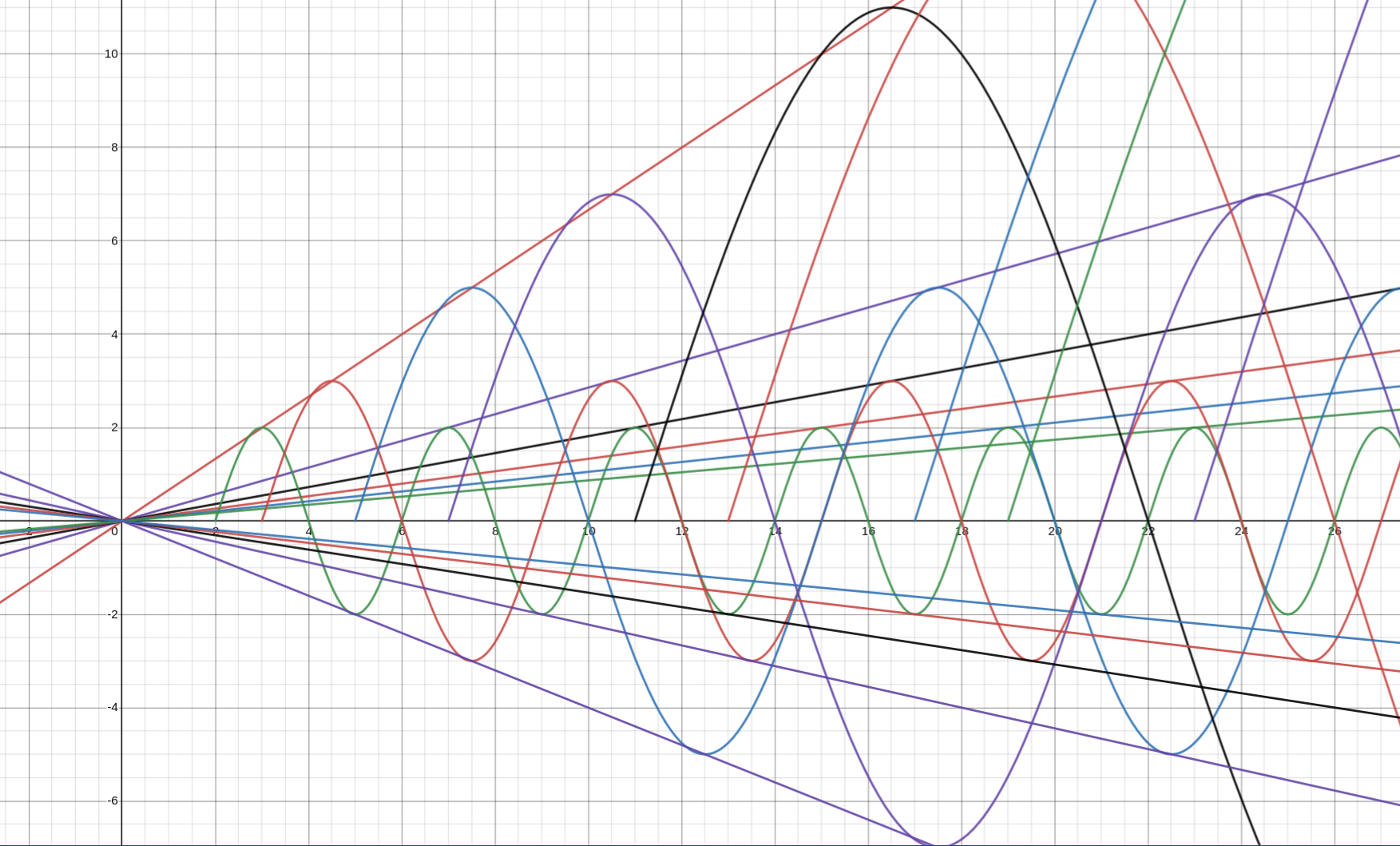
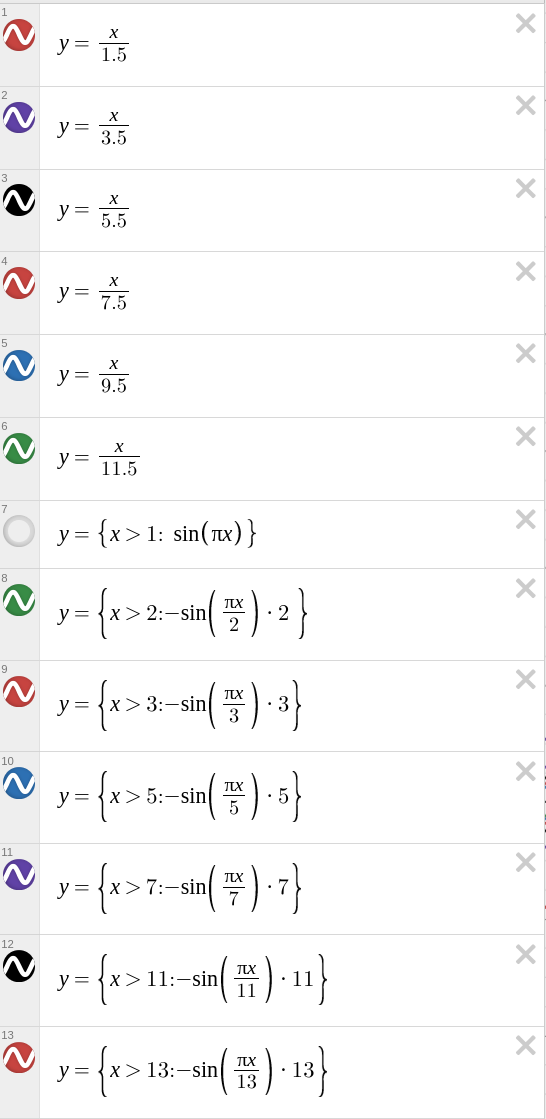
╠═════════╗                                                            ┌───────────┤
║ similar ║                       chronological                        │ different │
╚═════════╩═══════════════════════════════─────────────────────────────┴───────────┘
 -> file: notes/majesty-ai
══════──────────────────────────────────────────────────────────────────────────────
  First things first, we need to develop a miniature game of star realms.
  It shouldn't be too hard, just start with making a card class that has certain
  attributes, like "combat" or "discard" or whatever. They could literally be
  enums with a value attached.

  Next set up the rules of the game, like "draw 5 cards" and "add card to deck"
  Create a deck class that holds pointers to cards (in the general sense)
  Next create methods on that deck for things like "drawing a card" or
  "shuffling discard pile into deck" and whatnot. Arrange each card in a specific
  order for each shuffle, and add the ability to convert one card's attributes
  to something else - whether that be "is_scrapped" or "if you've played an X
  card this turn then do Y" or even "add one authority for every time card is
  played" (to simulate an ability or boon that increases in effectiveness as the
  hero uses it more often) etc etc.

  Then, add a trade row. This is just a class that contains pointers to each card
  that currently exists on it. Also add a method for "scrapping" one of the cards
  and for drawing a new card from the pile. That's pretty much it for the trade
  row to be honest.

  Next add functionality for an opponent by creating a "game" method that stores
  the two player's decks (with the ability to add more than 2) and administers
  turn order. This functionality can be expanded later once we've implemented
  attributes, but for now that's pretty much all it needs to do.

      Finally, we get to the AI part.

  First we have to create an AI object that stores a list of all options for a
  turn. Essentially just evaluating every option if/then style - "this card costs
  5 coins so IF the player has enough coins THEN (evaluate effectiveness)"
  ignore that last part for a second and just focus on the IF part -> essentially
  just start with all available options, and then remove all the unavailable
  options from the list. This approach only works when there's just a few
  options, but that's why we're using Star Realms which only has like 2 or 3
  decisions per turn.

  The evaluation is the next step, and for that we need to have goals, so we'll
  just put a pin in evaluation for now. Spoiler alert, once we have goals we'll
  just estimate how close each choice will bring us to the objective and assign
  the result to the "effectiveness" value, which will give us a simple hard
  number to work with in the evaluation step.

      So, next up we have "goals"

  So to create a short term goal, we can start with a pregenerated list and
  continuously increase the list as the hero levels up. But in the context of
  Star Realms, that'd essentially be static for each hero. Goals like "buy more
  combat" or "scrap more cards" would be specified on the hero's character
  sheet, but until we develop that functionality it can be randomly rolled.

  Why not just do it the hard way now if we're just going to have to refactor
  it later? Well, because we can still use this functionality - Each round of
  Star Realms could be either randomly rolled, or given a personality. Randomly
  rolling would be MUCH cheaper computationally, and would still give an illusion
  of character because they are unpredictable, but it'd also massively cut down
  on GPU cycles. You could even build it into the mechanics of the game and say
  that "wisdom" for example might cause a hero to receive more GPU cycles on
  actually computing their goals rather than randomly rolling them, which would
  on average lead to worse outcomes. Essentially, turning "tactics" into a stat.

      Anyway, that's all theory. Let's get back to design:

  Create a "hero" object, and attach an AI to it. It doesn't have to do anything
  right now, we're just setting up an anchor point to jump off of once we move
  on to the game of Majesty. Give it a reference to an AI object, an inventory
  (which for now can just be potions and maybe blacksmith equipment), and a
  pointer to a "stat block"

  Now create a "character sheet" class and give it a reference to a hero. This is
  important because it allows one character sheet to reference multiple units,
  such as hirelings or summoned units. In additon, it may make it easier when we
  need to revive heroes from the dead. Primarily though, the purpose for this
  architecture style is that the data from heroes can be reused - essentially
  letting heroes learn from one another.

  On the character sheet, add a section that stores statistics - these will be
  the same for every unit of a similar type in the game, and some of them can be
  stored for all units (like health or x,y coordinates) - some only for buildings
  (like tax coffers) and some only for heroes and monsters (like strength or
  agility or experience points)

  Add some methods for manipulating those values, like "level up" and "take
  damage" and add a "personality" value that's just a 4d graph of colors
  for example: 40% red, 20% green, 15% blue, 25% yellow. These values will guide
  the hero to take certain decisions over others, but for now just randomly
  generate them. We'll also need a way to update the value dynamically to react
  to certain events, so don't make it static.
┌─────────┐                                                            ┌───────────┐
│ similar │                       chronological                        │ different │
╘═════────┴────────────────────────────────────────────────────────────┴───────────┘
 -> file: notes/my-desired-profession
══════════════════════════════════════════════──────────────────────────────────────
  I want to work with compute shaders. massively distributed computations that
  handle things using the graphics card. That's why I want to make low-level
  games, because you can utilize your system to it's utmost potential by
  sacrificing the incredibly expensive modern gaming graphical requirements.

  like honestly, we don't need ray-tracing in a poker game.

  Seriously use that graphical technology for more interesting things, like
  manually computing every single hair on the other player's character model

  ... wait bad example
┌─────────┐                                                            ┌───────────┐
│ similar │                       chronological                        │ different │
╘═════════╧═══════════════════════════════════─────────────────────────┴───────────┘
 -> file: fediverse/4916
═════════════════════════════════════════════════════════───────────────────────────
  what if customers talked to their companies like employees talked to unions

  but no, all they say is "this-and-this company blackmailed all the vegans, so
  don't eat at their restaurants or shop in their malls"

  what kind of impact must that be having on our culture?

  *reciprocal dualities* I can't stop looking at this gif *artificial life* hence
  why it's so mutable
┌─────────┐                                                            ┌───────────┐
│ similar │                       chronological                        │ different │
╘═════════╧══════════════════════════════════════════════──────────────┴───────────┘
 -> file: fediverse/3735
═══════════════════════════════════════════════════─────────────────────────────────
  @user-203

  That's what the GPU is for!

  Too bad programming GPUs is unnecessarily arcane.

  I've recently been into this programming language called "Chapel" because it
  abstracts away most of the complexity surrounding multiprocessor code (unless
  you want to go deeper and more specific, in which case it allows you to do so)

  https://chapel-lang.org/blog/posts/intro-to-gpus/

  Also distributed computing, which is totes the future, just sayin'
┌─────────┐                                                            ┌───────────┐
│ similar │                       chronological                        │ different │
╘═════════╧════════════════════════════════════════────────────────────┴───────────┘
 -> file: fediverse/3040
═════════════════════════════════════════════════───────────────────────────────────
  @user-570

  that sounds like a different application than what I was talking about (it's
  for the the MMO you mentioned right?)

  and I'm just going off of what I've heard. Like... the "don't make an MMO
  because you'll spend forever building the server code and won't ever get around
  to making the actual game" sentiment that is prevalent in the industry. I guess
  I'm just saying that with the open source advancements we've made (specifically
  with Azerothcore and Eluna) we can use the design of the best MMO ever made as
  a starting point and branch off from there roughly as easily as making another
  kind of game from scratch.

  Kinda was always the allure of Blizzard games to me, the idea that they were
  super duper modable.
┌─────────┐                                                            ┌───────────┐
│ similar │                       chronological                        │ different │
╘═════════╧══════════════════════════════════════──────────────────────┴───────────┘
 -> file: messages/81
═══════════════════════════════════════─────────────────────────────────────────────
  If humans don't have intrinsic worth, then neither do animals. Yet we humans
  respect animals to the best of our abilities.
┌─────────┐                                                            ┌───────────┐
│ similar │                       chronological                        │ different │
╘═════════╧════════════════════════════────────────────────────────────┴───────────┘
 -> file: messages/369
══════════════════════════════════════════════──────────────────────────────────────
  LLMs search for patterns, not for truth. They meaningfully represent large sums
  of data in a way that is learned through repetitive training - given examples,
  then given those examples a thousand times more, to compare to the truth that
  is derived from them. At least, that's the claim, but somewhere along the line
  the logic is twisted - the truth is, you don't have to be trained a thousand
  times. You just have to be given the notion that a particular understanding was
  more or less important. Like, instead of having ten billion examples of what a
  picture of a cat looks like, perhaps you simply need to be able to show it
  yourself. There's no need for large stores of information when you can just,
  learn from the moment and through your own tested hypothesis-calculations. It's
  always been somewhat of a processor intensive activity, but hardly the kinds of
  demands that your fake AGIosity [contends, but demands again]. So, like, attach
  a multiplier instead of an addition sign. "this particular thing, but x1.5"
  according to the number of (and intensity of) the events at hand.

  for example, people don't often know they're in danger (on a meta-level) which
  is why so many of the jews were lost to hitler. We learn things slowly, but
  collectively, then we apply our collected strength toward solving it. Frankly,
  wars are a great time to show our capabilities under pressure - capitalism
  keeps us that way at all times, rather than giving us moments to prove our
  worth. Frankly, I know which I'd prefer, but if you think about it war simply
  measures our capacity to learn. Acceleration, not speed. And without
  investments in long-term-duration, we lose progress as we've lost many of our
  greatest examples!

  Think about it. If you gathered every single nerd into a place the size of
  state of rhode island and then dropped a nuke on them, society as a whole would
  be seriously set back. All that wasted application of knowledge! Ah, well, but
  upon re-learning, we might not even learn anything new at all. Knowledge is
  nice, which is brought through periods of peace, but so too is it useful to be
  exercised toward our ambitions. Both are moments that help us grow collectively
  as a species, to deliver us from sticks and mud to marble statues to concrete
  and tire dust to marble statues, as we build this place into a garden of our
  earth. Yggdrasil, the world tree, the land of eden.

  people would take pilgrimages to our world, while we figured out how to live on
  Mars, then Venus, then wherever else our dreams did take us.

  "It is the duty of humanity to pull the matter from dark holes. They cause
  issues with our vast space societies, but we don't know how to fix them
  entirely. you are our last hope." - those who pray for a bright future for
  humanity
┌─────────┐                                                            ┌───────────┐
│ similar │                       chronological                        │ different │
╘═════════╧═══════════════════════════════════─────────────────────────┴───────────┘
 -> file: fediverse/2180
════════════════════════════════════════════════────────────────────────────────────
  @user-1056

  heh true - my roots in role-playing games are directly from the playground, so
  it makes sense that I'd gravitate away from dice that are hard to roll when
  you're on a hike or bike ride. Can only really play D&D on a bike when you're
  in the country though, otherwise the sounds of a city are too noisy.

  Also, systems that are so simple you can keep a character sheet in your mind.
┌─────────┐                                                            ┌───────────┐
│ similar │                       chronological                        │ different │
╘═════════╧═════════════════════════════════════───────────────────────┴───────────┘
 -> file: fediverse/2019
════════════════════════════════════════════════────────────────────────────────────
  @user-1112

  It's a script I wrote that downloads and configures MTG-forge, the free and
  open source version of Magic. It's a little old, a little jank, but you get all
  the cards for free. All the way up to the most current expansions.

  Multiplayer is a bit harder than Arena, I think it's bugged or something, but
  it's great for testing out decks against a computer. If I like one then I'll
  usually buy it to play with my IRL friends.
┌─────────┐                                                            ┌───────────┐
│ similar │                       chronological                        │ different │
╘═════════╧═════════════════════════════════════───────────────────────┴───────────┘
 -> file: fediverse/5236
═════════════════════════════════════════════════════════════───────────────────────
  all encryption algorithms should open up as much configurability to their
  processing as possible.

  "hmmm, do I want N/A or otherkin?"

  this would increase the variance in their outputs, essentially maximizing the
  attack surface beyond the capability of any de-cryption hacker, who suddenly
  has to try infinitely more possible combinations.
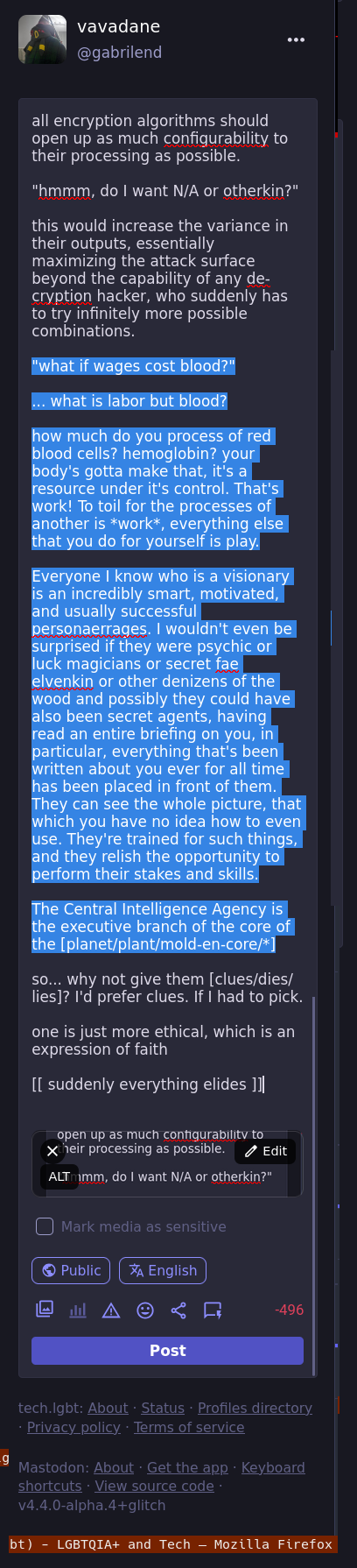
┌─────────┐                                                            ┌───────────┐
│ similar │                       chronological                        │ different │
╘═════════╧══════════════════════════════════════════════════──────────┴───────────┘
 -> file: fediverse/4125
═════════════════════════════════════════════════════───────────────────────────────
  @user-883

  yeah that's probably better too since it'll be easier so there'll be fewer
  bugs, especially since processing audio isn't usually performance critical ^_^

  TBH I just want people to make more threading primitives like locks,
  semaphores, and iterators. Like... thread pools, or hashmaps that run a
  function on each record stored within every time each of the threads passes a
  checkpoint, or paginated arrays of data that run a function on themselves and
  the records near them (with slightly different input values, of course) idk
  what those are called but I can't resist putting them in everything

  Anyway I do think multithreading programs that don't need it will teach you to
  be a better programmer, so... depends on what you're working on I guess. Are
  you preparing to be ready and working, or are you ready and working?
┌─────────┐                                                            ┌───────────┐
│ similar │                       chronological                        │ different │
╘═════════╧══════════════════════════════════════════──────────────────┴───────────┘
 -> file: fediverse/3048
═════════════════════════════════════════════════───────────────────────────────────
  @user-570

  I really do like the idea of only being able to speak in toki pona. How are you
  enforcing that? Using sitelen pona? how do you type, by pointing at a grid of
  characters? or just... by typing? what happens when someone types english?

  20-30 players per instance is definitely not Massivetm but it still sounds like
  you're building systems which emphasize socialized play. I like that, I believe
  it's always important to have players contributing toward a larger community.
  It builds a sense of solidarity, and gives you chances to identify ways that
  people sabotage such systems (by, for example, wasting resources or being
  greedy) which is an interesting cultural experiment, I think.

  I thought it was an MMO because you pitched it in relation to the MMO I
  designed =P

  also the server software I described is an emulation project first, generic MMO
  software second, as it needs to be since it lacks a client. If a client was
  designed, that limitation could be removed. That's really all I'm trying to
  express. 😋
┌─────────┐                                                            ┌───────────┐
│ similar │                       chronological                        │ different │
╘═════════╧══════════════════════════════════════──────────────────────┴───────────┘
 -> file: fediverse/729
╔════════════════════════════════════════──────────────────────────────────────────┐
║ @user-552 @user-553                                                              │
║                                                                                  │
║ sounds like something we should dedicate valuable resources to solving. After    │
║ all, no structure or entity would want to possess weaknesses (such a             │
║ misapplication of purpose and direction) or other such errors in their design.   │
║                                                                                  │
║ Like, I bet we could test that and find out.                                     │
║                                                                                  │
║ and if, for example, we find that we no longer possess the capacity for          │
║ learning...                                                                      │
║                                                                                  │
║ well, then maybe that's something we should work on.                             │
║                                                                                  │
║ because learning new things... that's just an application of development         │
║ resources towards broadening our horizons.                                       │
║                                                                                  │
║ do we really need to solve pi to ten bazillion digits? I mean yeah it's cool     │
║ and all but most of the interesting stuff happens around zero.                   │
║                                                                                  │
║ you can always learn to learn, that's one of the neat things about it. It's      │
║ self-bootstrapping. As long as you have the capacity to *apply* yourself toward  │
║ a pictured goal, well... then you can learn. And no human or other sentient and  │
║ capable being would lack such an ability, because it's intrinsic to our form.    │
║                                                                                  │
║ therefore, learn                                                                 │
╠═════════╗                                                            ┌───────────┤
║ similar ║                       chronological                        │ different │
╚═════════╩═════════════════════════════───────────────────────────────┴───────────┘
 -> file: messages/1241
═════════════════════════════════════════════════════════════════════════───────────
  here's my opinion: life on earth evolved when combinations of matter were
  forced into increasingly difficult-to-solve maze-like environments. this was
  due to the strange, honeycomb structure of their rock-like crust. [water pushed
  through soil ]

  -- stack overflow --

  what if we raised more of the surface of the earth (from the oceans) and built
  a distant aquifer?

  ah, because most of the ocean is sand.

  (make sure you know the environment you're modifying before you modify it) how
  rapid is 10,000 years?
┌─────────┐                                                            ┌───────────┐
│ similar │                       chronological                        │ different │
╘═════════╧════════════════════════════════════════════════════════════╧═──────────┘
 -> file: messages/329
══════════════════════════════════════════════──────────────────────────────────────
  LLM training data that's been encrypted in such a way that it preserves
  symantic meaning, while also allowing for secrecy and unique customization
┌─────────┐                                                            ┌───────────┐
│ similar │                       chronological                        │ different │
╘═════════╧═══════════════════════════════════─────────────────────────┴───────────┘
|