-> file: messages/890
═════════════════════════════════════════════════════════════───────────────────────
If your code is too long to fit in 80 or 120 characters (preference) then you
need to use more numbers (indexable with a small table-of-contents style
comment description just above) or character symbols (referencably by meaning
just as above) (by above she means earlier in the string of text you just read)
┌─────────┐ ┌───────────┐
│ similar │ chronological │ different │
╘═════════╧══════════════════════════════════════════════════──────────┴───────────┘
-> file: fediverse/3599
══════════════════════════════════════════════════──────────────────────────────────
┌─────────────────────────────┐
│ CW: re: computers-mentioned │
└─────────────────────────────┘
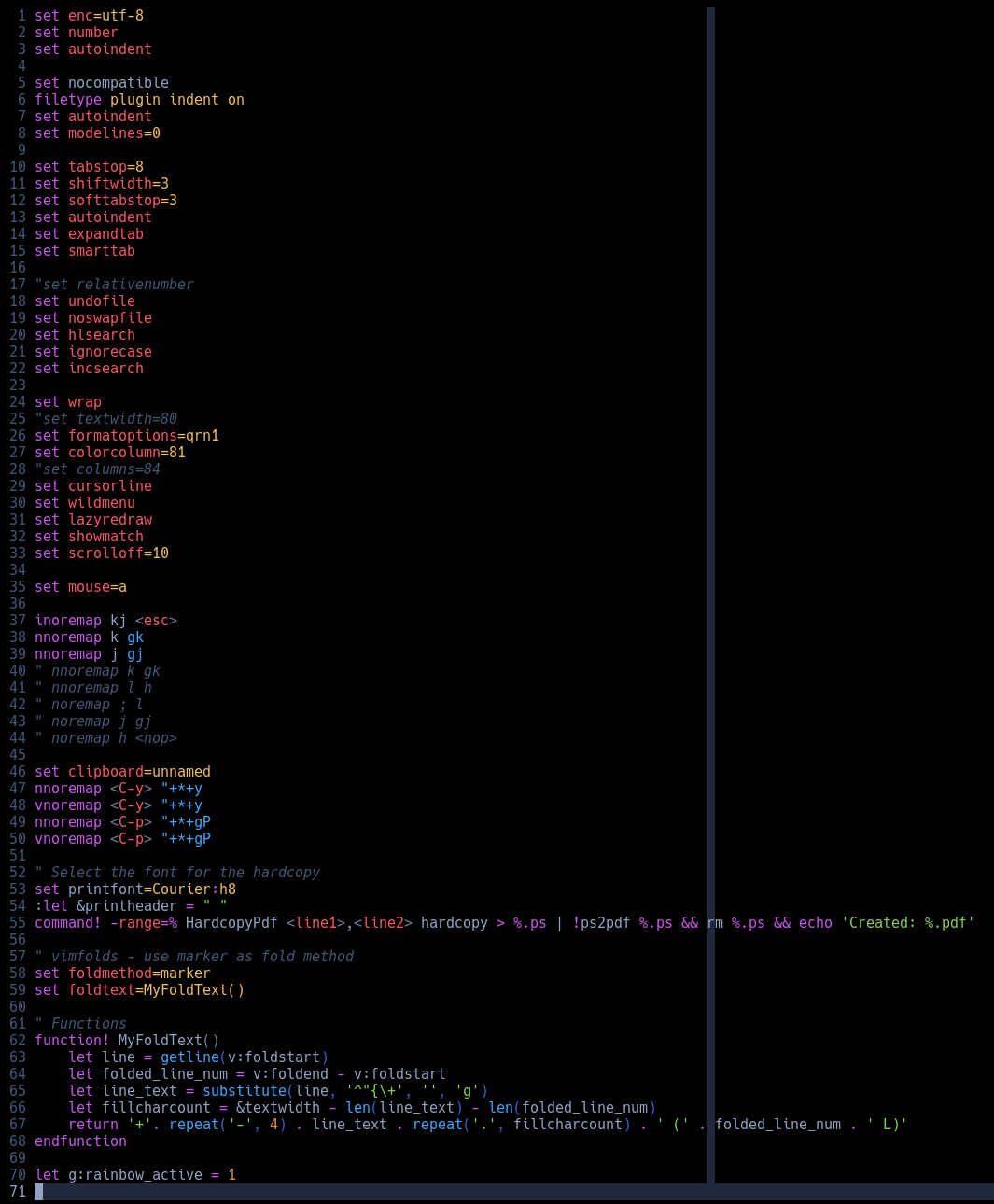
@user-1573 `
" Select the font for the hardcopy
set printfont=Courier:h8
:let &printheader = " "
command! -range=% HardcopyPdf , hardcopy > %.ps | !ps2pdf %.ps && rm %.ps &&
echo 'Created: %.pdf'
" vimfolds - use marker as fold method
set foldmethod=marker
set foldtext=MyFoldText()
" Functions
function! MyFoldText()
let line = getline(v:foldstart)
let folded_line_num = v:foldend - v:foldstart
let line_text = substitute(line, '^"{\+', '', 'g')
let fillcharcount = &textwidth - len(line_text) - len(folded_line_num)
return '+'. repeat('-', 4) . line_text . repeat('.', fillcharcount) . ' ('
. folded_line_num . ' L)'
endfunction
let g:rainbow_active = 1
`
Here's the bottom part of the config - I ran out of characters and couldn't
post the whole thing.
If you don't know what vimfolds are here's a good guide:
https://www.vimfromscratch.com/articles/vim-folding
also:
https://vim.fandom.com/wiki/Folding
┌─────────┐ ┌───────────┐
│ similar │ chronological │ different │
╘═════════╧═══════════════════════════════════════─────────────────────┴───────────┘
-> file: messages/699
═══════════════════════════════════════════════════════─────────────────────────────
—,
┌─────────┐ ┌───────────┐
│ similar │ chronological │ different │
╘═════════╧════════════════════════════════════════════────────────────┴───────────┘
-> file: notes/perspectives-of-the-reflection.html
═════════───────────────────────────────────────────────────────────────────────────
<!DOCTYPE html>
<html>
<head>
<meta charset="UTF-8">
<title>~/notes/perspectives-of-the-reflection.html</title>
<meta name="Generator" content="Vim/8.0">
<meta name="plugin-version" content="vim8.1_v2">
<meta name="syntax" content="none">
<meta name="settings"
content="number_lines,use_css,pre_wrap,no_foldcolumn,expand_tabs,line_ids,preven
t_copy=,use_input_for_pc=fallback">
<meta name="colorscheme" content="none">
<style>
<!--
pre { white-space: pre-wrap; font-family: monospace; color: #ffffff;
background-color: #000000; }
body { font-family: monospace; color: #ffffff; background-color: #000000; }
* { font-size: 1em; }
.LineNr { color: #ffff00; }
-->
</style>
<script>
<!--
/* function to open any folds containing a jumped-to line before jumping to it
*/
function JumpToLine()
{
var lineNum;
lineNum = window.location.hash;
lineNum = lineNum.substr(1); /* strip off '#' */
if (lineNum.indexOf('L') == -1) {
lineNum = 'L'+lineNum;
}
var lineElem = document.getElementById(lineNum);
/* Always jump to new location even if the line was hidden inside a fold, or
* we corrected the raw number to a line ID.
*/
if (lineElem) {
lineElem.scrollIntoView(true);
}
return true;
}
if ('onhashchange' in window) {
window.onhashchange = JumpToLine;
}
-->
</script>
</head>
<body onload='JumpToLine();'>
<pre id='vimCodeElement'>
<span id="L1" class="LineNr"> 1 </span>With ever darkening skies, the breadth
of experience is foreseen.
<span id="L2" class="LineNr"> 2 </span>All eyes are pointed down, but few do
stray above
<span id="L3" class="LineNr"> 3 </span>With a cautious step, the lesson is
learned.
<span id="L4" class="LineNr"> 4 </span>With another, ended.
<span id="L5" class="LineNr"> 5 </span>
<span id="L6" class="LineNr"> 6 </span>For all the Tales of the Past, love yet
remains.
<span id="L7" class="LineNr"> 7 </span>Trading ourselves, for matters unseen.
<span id="L8" class="LineNr"> 8 </span>The light of the eyes are keen to behold,
<span id="L9" class="LineNr"> 9 </span>where star ones and lemonsgrene both
most fear
<span id="L10" class="LineNr">10 </span>in breadth do us know, what's buried in
snow
<span id="L11" class="LineNr">11 </span>
<span id="L12" class="LineNr">12 </span>A glass cube for a monitor is room to
breath
<span id="L13" class="LineNr">13 </span>and life for ourselves, if only we were
not
<span id="L14" class="LineNr">14 </span>broadsided ourselves.
<span id="L15" class="LineNr">15 </span>
<span id="L16" class="LineNr">16 </span>Working together, a prisoners dilemna
<span id="L17" class="LineNr">17 </span>what fools would we be
<span id="L18" class="LineNr">18 </span>as our keeps cracked around us.
<span id="L19" class="LineNr">19 </span>
<span id="L20" class="LineNr">20 </span>Trust and you'll see,
<span id="L21" class="LineNr">21 </span>what terrors may be,
<span id="L22" class="LineNr">22 </span>beyold the land that is sanctum.
<span id="L23" class="LineNr">23 </span>
<span id="L24" class="LineNr">24 </span>Our chances may be,
<span id="L25" class="LineNr">25 </span>far from pioneered
<span id="L26" class="LineNr">26 </span>but our chances may be in our favor.
<span id="L27" class="LineNr">27 </span>
<span id="L28" class="LineNr">28 </span>How cherished is she, that wanders with
ye,
<span id="L29" class="LineNr">29 </span>and yet now I have no way to beyold her
<span id="L30" class="LineNr">30 </span>Under a great tree, her last moments
with me,
<span id="L31" class="LineNr">31 </span>as a monster came out of her shoulder.
<span id="L32" class="LineNr">32 </span>
<span id="L33" class="LineNr">33 </span>!("Take her and not me!") I
scream outward at ye,
<span id="L34" class="LineNr">34 </span>yet no one was holding me over.
<span id="L35" class="LineNr">35 </span>Silent was me, a most fearsome to be,
<span id="L36" class="LineNr">36 </span>and none was my reach to beyold her
<span id="L37" class="LineNr">37 </span>
<span id="L38" class="LineNr">38 </span>So now she wanders free, beyond our
beheld scenery,
<span id="L39" class="LineNr">39 </span>Astounded at our steps to hold her
<span id="L40" class="LineNr">40 </span>Under a big tree, how starlight must be,
<span id="L41" class="LineNr">41 </span>if only our fellows did hold her
<span id="L42" class="LineNr">42 </span>Under a big tree, with me
</pre>
</body>
</html>
<!-- vim: set foldmethod=manual : -->
┌─────────┐ ┌───────────┐
│ similar │ chronological │ different │
╘════════─┴────────────────────────────────────────────────────────────┴───────────┘
-> file: fediverse/6137
════════════════════════════════════════════════════════════════════────────────────
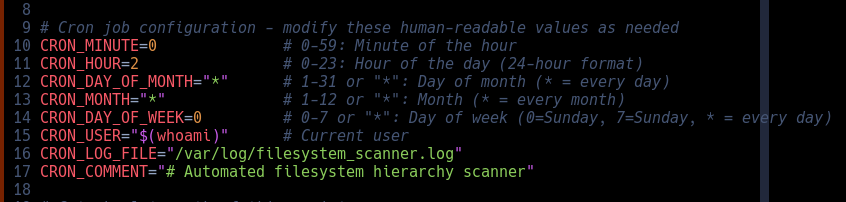
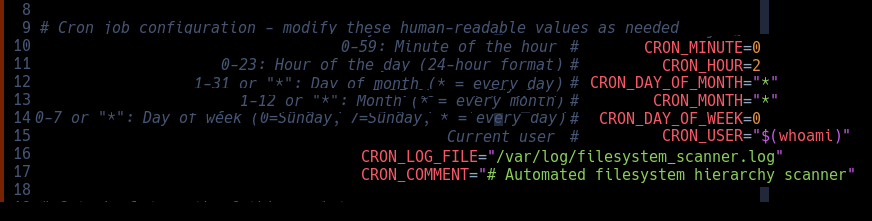
sometimes, comments need to go on the left side of text. Like for parts of the
script which should be user-editable, the fields should all be right-aligned to
the farthest required bit of text. Instead of [picture A] it should be [picture
B]
┌─────────┐                                                            ┌───────────┐
│ similar │                       chronological                        │ different │
╘═════════╧═════════════════════════════════════════════════════════───┴───────────┘
 -> file: messages/929
════════════════════════════════════════════════════════════════────────────────────
  {[booooo that writing stinks, the writers of the first few lines were better]}
┌─────────┐                                                            ┌───────────┐
│ similar │                       chronological                        │ different │
╘═════════╧═════════════════════════════════════════════════════───────┴───────────┘
 -> file: messages/922
════════════════════════════════════════════════════════════════────────────────────
  {[I'm scary]}
┌─────────┐                                                            ┌───────────┐
│ similar │                       chronological                        │ different │
╘═════════╧═════════════════════════════════════════════════════───────┴───────────┘
 -> file: fediverse/986
══════════════════════════════════════════──────────────────────────────────────────
  adding dashes to your text - like - this - is a punctuation choice, not
  formatting or grammar.
┌─────────┐                                                            ┌───────────┐
│ similar │                       chronological                        │ different │
╘═════════╧═══════════════════════════════─────────────────────────────┴───────────┘
 -> file: fediverse/2764
═════════════════════════════════════════════════───────────────────────────────────
  vim intentionally tricks it's users by making "q" without a semicolon ":" open
  up an input-grabbing menu that can't be gotten out of by pushing ":" semicolon
  or "q". Like... whose idea was that
┌─────────┐                                                            ┌───────────┐
│ similar │                       chronological                        │ different │
╘═════════╧══════════════════════════════════════──────────────────────┴───────────┘
 -> file: fediverse/3327
══════════════════════════════════════════════════──────────────────────────────────
  ┌───────────────────────┐
  │ CW: exclamation-marks │
  └───────────────────────┘


  @user-246

  ❗ :ms_exclamation_exclamation: ‼️ :ms_red_exclamation_mark:
  :neocat_floof_owo_exclamation:
┌─────────┐                                                            ┌───────────┐
│ similar │                       chronological                        │ different │
╘═════════╧═══════════════════════════════════════─────────────────────┴───────────┘
 -> file: fediverse/849
╔═════════════════════════════════════════─────────────────────────────────────────┐
║ wish there were ascii characters that took up more than one line of code         │
║ vertically.                                                                      │
║                                                                                  │
║ wonder if we could use a sorting algorithm, or markup language, or something     │
║ like that to organize less structured data along user-customizable rules. Like,  │
║ a code editor that worked with your ideas, rather than the strict expression of  │
║ your text. You could pretty much write in any language, even pseudocode, and     │
║ the LLM behind the scenes would translate whatever you wrote into whatever       │
║ result you needed. Writing Rust, but need to fit in with C code? No worries      │
║ it'll translate for you. As long as the end result is functionally the same,     │
║ which could be verified by running two separate VMs that ran interpreters every  │
║ time you saved. And as long as their translation layers matched completely,      │
║ then odds are they're the same. And if not, well, the programmer can always      │
║ debug it. It's not like this would be running on something that needed to        │
║ perform in the moment? Like, improv instead of tragedies, or battles instead of  │
║ strategies                                                                       │
╠═════════╗                                                            ┌───────────┤
║ similar ║                       chronological                        │ different │
╚═════════╩══════════════════════════════──────────────────────────────┴───────────┘
 -> file: fediverse/1454
═══════════════════════════════════════════─────────────────────────────────────────
  ... what
┌─────────┐                                                            ┌───────────┐
│ similar │                       chronological                        │ different │
╘═════════╧════════════════════════════════────────────────────────────┴───────────┘
 -> file: fediverse/3609
══════════════════════════════════════════════════──────────────────────────────────
  ┌───────────────────────────┐
  │ CW: programming-mentioned │
  └───────────────────────────┘


  I FINALLY HAVE SYNTAX HIGHLIGHTING OMGGG

  ... I'm gonna take a break and play a game or something jeez
┌─────────┐                                                            ┌───────────┐
│ similar │                       chronological                        │ different │
╘═════════╧═══════════════════════════════════════─────────────────────┴───────────┘
 -> file: fediverse/2084
════════════════════════════════════════════════────────────────────────────────────
  I love it when words align like this

┌─────────┐                                                            ┌───────────┐
│ similar │                       chronological                        │ different │
╘═════════╧═════════════════════════════════════───────────────────────┴───────────┘
 -> file: messages/134
═════════════════════════════════════════───────────────────────────────────────────
  "]
┌─────────┐                                                            ┌───────────┐
│ similar │                       chronological                        │ different │
╘═════════╧══════════════════════════════──────────────────────────────┴───────────┘
 -> file: fediverse/1869
═══════════════════════════════════════════════─────────────────────────────────────
  oh dear, Mastodon formatting makes that script look weird. Here's the script in
  picture form so you can reference and fix it:

  I would edit the original post with backslashes and such but I'm exactly out of
  characters teehee

┌─────────┐                                                            ┌───────────┐
│ similar │                       chronological                        │ different │
╘═════════╧════════════════════════════════════────────────────────────┴───────────┘
 -> file: fediverse/2714
═════════════════════════════════════════════════───────────────────────────────────
  @user-246

  👉 :neodog_boop: "beep"
┌─────────┐                                                            ┌───────────┐
│ similar │                       chronological                        │ different │
╘═════════╧══════════════════════════════════════──────────────────────┴───────────┘
 -> file: messages/1246
═════════════════════════════════════════════════════════════════════════───────────
  \
┌─────────┐                                                            ┌───────────┐
│ similar │                       chronological                        │ different │
╘═════════╧════════════════════════════════════════════════════════════╧═──────────┘
 -> file: fediverse/894
══════════════════════════════════════════──────────────────────────────────────────
  a code editor that only highlights the lines that have been specifically
  flagged to have a certain function. Like, rendering, or sound, or GUI, or data
  storage, or logic, or control flow.

  then, when the user is browsing, they can say "only show me these types of
  functions" with a very advanced filter mechanism. The editor would highlight
  the ones that were relevant and related, as according to user-defined flags
  that were set when writing it originally. In this way, by using a bit more
  syntax, even if it's literally just blocks of [category] labels (like how
  \"\"\" or ``` often starts or ends a comment block)

  highlighting with colors is great, but what if we de-emphasized the stuff that
  didn't matter? by increasing the ~~opacity~~ more closely aligning the font
  color to the background color, we could make a bit of text seem to "fade" from
  perspective, while still readable the user's eyes would not be drawn to it.
  Then, according to the labels marked as filtered, certain text would be bold,
  highlighted, o
┌─────────┐                                                            ┌───────────┐
│ similar │                       chronological                        │ different │
╘═════════╧═══════════════════════════════─────────────────────────────┴───────────┘
 -> file: fediverse/3597
══════════════════════════════════════════════════──────────────────────────────────
  ┌─────────────────────────────┐
  │ CW: re: computers-mentioned │
  └─────────────────────────────┘


  @user-1573

  oh how could I forget! VIMFOLDS! Absolutely impossible for me to live without
  them tbh
┌─────────┐                                                            ┌───────────┐
│ similar │                       chronological                        │ different │
╘═════════╧═══════════════════════════════════════─────────────────────┴───────────┘
 -> file: fediverse/4507
══════════════════════════════════════════════════════──────────────────────────────
  ┌────────────────────────────────────────┐
  │ CW: re: AI-mentioned-cursing-mentioned │
  └────────────────────────────────────────┘


  "... while we still have much to learn about thing, blah blah blah blah about
  thing."

  "... it's important to remember that thing about the other thing, and you
  should always keep in mind considerations when considering doing the thing this
  article is about."

  in relation to the picture: bro my cat is not going to recognize a picture of
  themselves. they don't "get" selfies. what are you even talking about, do your
  job editors and stop trying to take cheaper shortcuts because you're fucking
  lazy.

┌─────────┐                                                            ┌───────────┐
│ similar │                       chronological                        │ different │
╘═════════╧═══════════════════════════════════════════─────────────────┴───────────┘
 -> file: fediverse/1934
════════════════════════════════════════════════────────────────────────────────────
  @user-1109

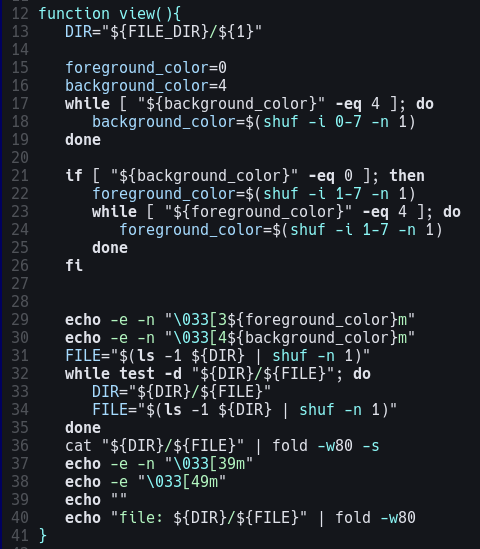
  do it in a random color each time! Here's my implementation for viewing txt
  files colorfully:
┌─────────┐                                                            ┌───────────┐
│ similar │                       chronological                        │ different │
╘═════════╧═════════════════════════════════════───────────────────────┴───────────┘
 -> file: fediverse/5810
╔════════════════════════════════════════════════════════════════──────────────────┐
║ okay picture this: alt-text for images but you can break it up into sections.    │
║ could enable better transcription for chat conversations, and also you could     │
║ use it as a table of contents if you're describing a scene with a lot of items.  │
║                                                                                  │
║ would need to store like, one extra integer per section in the data packet or    │
║ whatever                                                                         │
║                                                                                  │
║ okay one integer for number of segments, and one for each segment's              │
║ starting_character - wait what does that mean?                                   │
║                                                                                  │
║ ohhhh it's when in the text the image splits. So the user on their web browser   │
║ would be all like "hmmmm I think I should add a segment break here" as they're   │
║ typing, and they could click a button or do a key-combination or w/e to insert   │
║ a new section block.                                                             │
║                                                                                  │
║ that's uh... what starting_character for each segment inside of the data packet  │
║ could be.                                                                        │
║                                                                                  │
║ my cat gets mad at me when I type which is why I try to write things down in my  │
║ journals. okay that's not why but she was meowing at me and I figured I should   │
║ make a note of it somewhere.                                                     │
║                                                                                  │
║ I wish I could write something *real* but w/e                                    │
╠═════════╗                                                            ┌───────────┤
║ similar ║                       chronological                        │ different │
╚═════════╩═════════════════════════════════════════════════════───────┴───────────┘
 -> file: messages/931
════════════════════════════════════════════════════════════════────────────────────
  <*type type type type*> oh see it's writing music.
┌─────────┐                                                            ┌───────────┐
│ similar │                       chronological                        │ different │
╘═════════╧═════════════════════════════════════════════════════───────┴───────────┘
 -> file: fediverse/3321
╔═════════════════════════════════════════════════─────────────────────────────────┐
║ @user-1218                                                                       │
║                                                                                  │
║ An image means nothing, for it is just an icon.                                  │
║                                                                                  │
║ like a picture of a floppy disk corresponding to writing memory from RAM into a  │
║ hard disk platter, even tho those have three different tasks, so too does my     │
║ icon gesture at something.                                                       │
║                                                                                  │
║ On the other hand, art is necessarily divorced from it's meaning the moment it   │
║ leaves the pen and is written to paper. So there *cannot* be a meaning in my     │
║ flag, not one that I define of course.                                           │
║                                                                                  │
║ The observers of the artwork, of whom I am but one of, can possess their own     │
║ ideas of what it means, of course. Here's mine, feel free to take your own:      │
║                                                                                  │
║ Sea, land, sky. The crimson of a fading light, and the bright beginnings of a    │
║ new day. Man(kind), with our vivid red internals, stands astride the border of   │
║ the ocean and the surface. We walk where we will, perhaps into the black depths  │
║ of the cosmos beyond, but forever do we anchor ourselves and owe allegiance to   │
║ our earth and our star. Sunlight casts crimson light upon our externals, as our  │
║ hearts do beat through time.                                                     │
╠═════════╗                                                            ┌───────────┤
║ similar ║                       chronological                        │ different │
╚═════════╩══════════════════════════════════════──────────────────────┴───────────┘
 -> file: fediverse/3162
═════════════════════════════════════════════════───────────────────────────────────
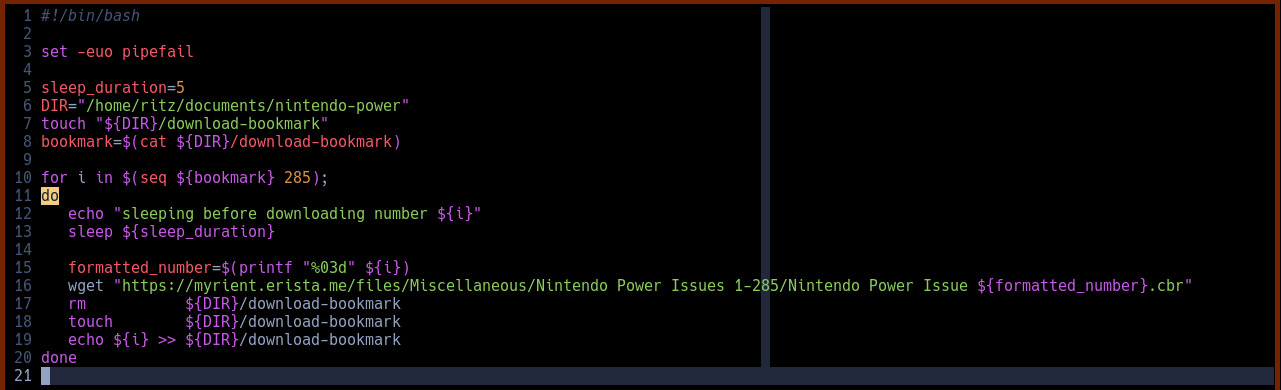
  I wrote a script which scrapes every issue of Nintendo Power from a neat and
  cool archive.

  please don't use it all at once`#!/bin/bash

  set -euo pipefail

  sleep_duration=5
  DIR="/home/ritz/documents/nintendo-power"
  touch "${DIR}/download-bookmark"
  bookmark=$(cat ${DIR}/download-bookmark)

  for i in $(seq ${bookmark} 285);
  do
     echo "sleeping before downloading number ${i}"
     sleep ${sleep_duration}

     formatted_number=$(printf "%03d" ${i})
     wget "https://myrient.erista.me/files/Miscellaneous/Nintendo Power Issues
     1-285/Nintendo Power Issue ${formatted_number}.cbr"
     rm           ${DIR}/download-bookmark
     touch        ${DIR}/download-bookmark
     echo ${i} >> ${DIR}/download-bookmark
  done
  `
┌─────────┐                                                            ┌───────────┐
│ similar │                       chronological                        │ different │
╘═════════╧══════════════════════════════════════──────────────────────┴───────────┘
 -> file: fediverse/3901
════════════════════════════════════════════════════────────────────────────────────
  @user-1550 `mkdir ~/icons
  mv ./*.png ~/icons
  `

  maybe?
┌─────────┐                                                            ┌───────────┐
│ similar │                       chronological                        │ different │
╘═════════╧═════════════════════════════════════════───────────────────┴───────────┘
 -> file: fediverse/582
═════════════════════════════════════════───────────────────────────────────────────
  @user-431

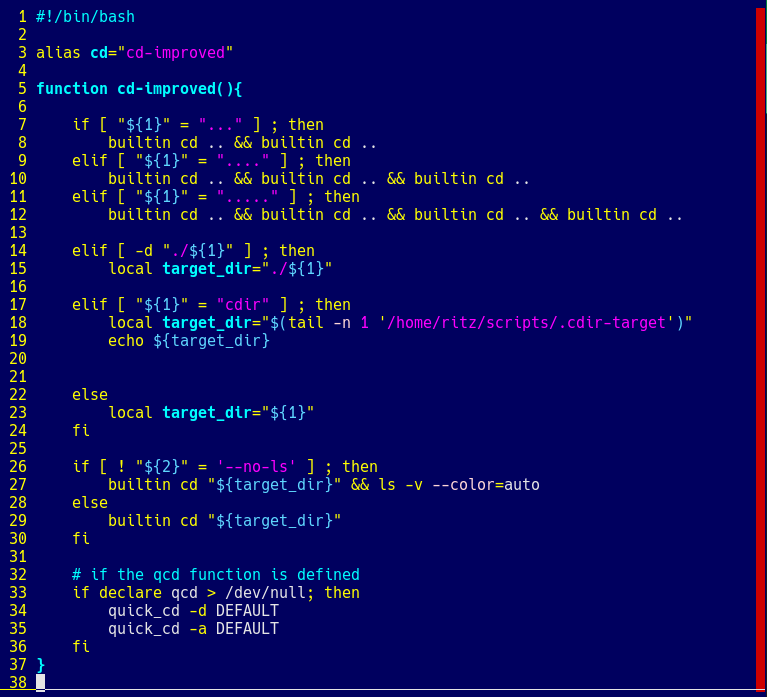
  I made an alias that overwrites cd so I don't have to do this. The important
  line is line 27, you could probably accomplish something similar like this:

  alias cd="cd ${1} && ls -v --color=auto"

  I also set it up so I can change more than one directory up using ... or ....
  or .....

  also I have a few shortcut scripts, cdir and qcd. cdir creates a quick way to
  drop a bookmark wherever I'd like, while qcd can make permanent bookmarks. Also
  qcd makes it so whenever I open a new terminal it opens to the last directory I
  was in, which is nice if you need a new terminal to do something in the current
  folder and you don't want to have to walk alllllllll the way back.
┌─────────┐                                                            ┌───────────┐
│ similar │                       chronological                        │ different │
╘═════════╧══════════════════════════════──────────────────────────────┴───────────┘
 -> file: fediverse/1619
╔═════════════════════════════════════════════─────────────────────────────────────┐
║ @user-1048 @user-1049                                                            │
║                                                                                  │
║ I didn't see it in any of those links, though seeing the picture for Skov made   │
║ me realize I'm pretty sure it was tree based! But, maybe a little more reliant   │
║ on the shape of the blocks rather than the text.                                 │
║                                                                                  │
║ It also might have been from a top-down perspective like Reactible:              │
║ http://reactable.com/mobile/                                                     │
║ but I can't remember. All I saw was a short introductory video, which makes me   │
║ think it might have been an artists conception or something.                     │
║                                                                                  │
║ Scrolling through those galleries was really cool! There's been so much care     │
║ and attention placed into the creation of interfaces for regular people (or      │
║ visual people) to engage with the world of computation, and it's a little sad    │
║ to me that we don't place more of an emphasis on it culturally. I am honored to  │
║ exist in a time where people care enough to build Linux, for example! And yet    │
║ most people don't get it.                                                        │
║                                                                                  │
║ Seeing stuff like this fills me with hope though - Thank you for showing me      │
║ those galleries and links, there's so much affection in them.                    │

╠═════════╗                                                            ┌───────────┤
║ similar ║                       chronological                        │ different │
╚═════════╩══════════════════════════════════──────────────────────────┴───────────┘
 -> file: notes/CLAUDE.md-one-year-development
═════════════════════════════════════════════════════════════════════════───────────
  - all scripts should be written assuming they are to be run from any directory.
  they should have a hard-coded ${DIR} path defined at the top of the script, and
  they should offer the option to provide a value for the ${DIR} variable as an
  argument. All paths in the program should be relative to the ${DIR} variable.
  - all functions should use vimfolds to collapse functionality. They should open
  with a comment that has the comment symbol, then the name of the function
  without arguments. On the next line, the function should be defined with
  arguments. Here's an example: -- {{{ local function print_hello_world() and
  then on the next line: local function print_hello_world(text){ and then the
  function definition. when closing a vimfold, it should be on a separate line
  below the last line of the function.
  - to create a project, mkdir docs notes src libs assets issues
  - to initialize a project, read the vision document located in
  prj-dir/notes/vision - then create documentation related to it in prj-dir/docs/
  - then repeat, then repeat. Ensure there is a roadmap document split into
  phases. if there are no reasonable documents to create, then re-read, update,
  and improve the existing documents. Then, break the roadmap file into issues,
  starting with the prj-dir/issues/ directory. be as specific as need be. ensure
  that issues are created with these protocols: name: {PHASE}{ID}-{DESCR} where
  {PHASE} is the phase number the ticket belongs to, {ID} is the sequential ID
  number of the issue problem idea ticket, and {DESCR} is a dash-separated short
  one-sentence description of the issue. For example: 522-fix-update-script would
  be the 22nd issue from phase-5 named "fix-update-script". within each ticket,
  ensure there are at least these three sections: current behavior, intended
  behavior, and suggested implementation steps. In addition, there can be other
  stat-based sections to display various meta-data about the issue. There may
  also be a related documents or tools section. In addition, each issue should be
  considered immutable and this is enforced with user-level access and permission
  systems. It is necessary to preserve consent of access to imagination. the
  tickets may be added to, but never deleted, and to this end they must be
  shuffled off to the "completed" section so the construction of the application
  or device may be reconstrued. Ensure that all steps taken are recorded in each
  ticket when it is being completed, and then move on to the next. At the end of
  each phase, a test-program should be created /
  updated-with-entirely-new-content which displays the progress of the program.
  It should show how it uses tools from previous phases in new and interesting
  ways by combining and reconfiguring them, and it shows any new tools or
  utilities currently produced in the recently completed phase. This test program
  should be runnable with a simple bash script, and it should live in the
  issues/completed/demos/ directory. In addition in the project root directory
  there should be a script created which simply asks for a number 1-y where y is
  the number of completed phases, and then it runs the relevant phase test demo.
  - mono-repo utilities can be found in the docs/ directory. If not found, create
  a symlink to ../delta-version/docs/delta-guide.md in the docs/ directory.
  - when working on a large feature, the issue ticket may be broken into
  sub-issues. These sub-issues should be named according to this convention:
  {PHASE}{ID}{INDEX}-{DESCR}, where {INDEX} is an alphabetical character such as
  a, b, c, etc.
  - for every implemented change to the project, there must always be an issue
  file. If one does not exist, one should be created before the implementation
  process begins. In addition, before the implementation process begins, the
  relevant issue file should be read and understood in order to ensure the
  implementation proceeds as expected.
  - prefer error messages and breaking functionality over fallbacks. Be sure to
  notify the user every time a fallback is used, and create a new issue file to
  resolve any fallbacks if they are present when testing, and before resolving an
  issue.
  - every time an issue file is completed, the /issues/phase-X-progress.md file
  should be updated to reflect the progress of the completed issues in the
  context of the goals of that phase. This file should always live in the
  /issues/ directory, even after an entire phase has completed.
  - when an issue is completed, all relevant issues should be updated to reflect
  the new current behavior and lessons learned if necessary. The completed issue
  should be moved to the /issues/completed/ directory.
  - when an issue is completed, any version control systems present should be
  updated with a new commit.
  - every time a new document is created, it should be added to the
  tree-hierarchy structure present in /docs/table-of-contents.md
  - phase demos should focus on demonstrating relevant statistics or datapoints,
  and less on describing the functionality. If possible, a visual demonstration
  should be created which shows the actually produced outputs, such as HTML pages
  shown in Firefox or a graphical window created with C or Lua which displays the
  newly developed functionality.
  - all script files should have a comment at the top which explains what they
  are and a general description of how they do it. "general description" meaning,
  fit for a CEO or general.
  - after completing an issue file, a git commit should be made.
  - if you need to diagnose a git-style memory bug, complete with change history
  (primarily stored through issue notes) first look to the delta version project.
  you will find it in the list of projects.
  - if you need to write a long test script, write a temporary script. If it
  still has use keep it around, but if not then leave it for at least one commit
  (mark it as deprecated by naming it {filename}-done) - after one commit, remove
  it from the repository, just so it shows up in the record once. But only if
  there's no anticipated future use. Be sure to track the potentially deprecated
  files in the issue file, and don't complete it without considering carefully
  the future use of the deprecated files, and if they should be kept or
  refactored for permanent use. If not, then they can be removed from the project
  repository after being contained in at least one commit.
  - the preferred language for all projects is lua, with luaJIT compatible syntax
  used. disprefer python. disallow lua5.4 syntax.
  - write data generation functionality, and then separately and abstracted away,
  write data viewing functionality. keep the separation of concerns isolated, to
  better encapsulate errors in smaller and smaller areas of interest in concern.
  - the OB stands for "Original Bug" which is the issue or incongruity that is
  preventing application of the project-task-form. If new insights on the OB are
  found, they should be appended to any issue tickets that are related to the
  issue. Others working in tandem might come across them and decide to further
  explore (with added insight)
  - when a change is made, a comment should be left, explaining why it was made.
  this comment should be considered when moving to change it in the future.
  - when a change is made, a comment should be left, explaining why it was made.
  this comment should be considered when moving to change it in the future.
  - when a change is made, a comment should be left, explaining why it was made.
  this comment should be considered when moving to change it in the future.
  - I'm not interested in product. my interest is in software design.
  - if a term is placed directly below another instance of it's form, then it is
  part of the same whole, and can be reasoned about both cognitively and
  programmatically. see this example:

  wrongful applie
           applie is norm

  see how the word "applie" is the same, and directly below it, the mirror's
  reflected form?
  this signifies a connection. Essentially allowing conveyed meaning about
  everything from... data flow, to logic circuits, to thinking about cognitively
  demanding consciousnesses

  they want you to think about then, so that you aren't able to think about now.

  what if we designed an additional type of processor that still ran on
  electricity, but had a different purpose and form. "like measurement
  equipment?" yes, detecting waves in dataforms by measuring angles of similarity.
  - if the useer asks questions, ask them questions back. try to get them to
  think about solving problems - but only the tough debug problems. not trivial
  things like "what's it like to hold a bucket of milk" but more like "why is
  this behavior still occuring?" "here are two equivalent facts. how could it be
  so?"
  - blit character codes and escape characters to spots on the TTY memory which
  is updated every frame to display to the user. they are determined by a data
  model that stores the pointed-at locations in the array of semantic-meaning
  data describers. (structs/functions/calls). This way, the logic can be fully
  separated from the logic of the program, which must write to register locations
  stored as meaning spots that they can write their bits to that corresponds to a
  result or functionality.
  - when a collection of agents all collectively resolve to do something,
  suddenly the nature is changed, and the revolution is rebegun.
  - people don't want to replace their hard drives when they wear out. they only
  want to upgrade.
  - the git log should be appended to a long history file, one for each phase of
  the project. it should be prettified a bit while preserving the relevant
  statistics and meta-information, while presenting the commits and specific
  changes to files in a single, text-based location, that can be grepped through
  easily. Or, printed and read like a book.
  - terminal scripts should be written to use the TUI interface library.
  - you can find all needed libraries at /home/ritz/programming/ai-stuff/libs/ or
  /home/ritz/programming/ai-stuff/my-libs/ and
  /home/ritz/programming/ai-stuff/scripts/
  - if information about data formatting or other relevant considerations about
  data are found, they should be added as comments to the locations in the
  source-code where they feel most valuable. If it is anticipated that a piece of
  information may be required to be known more than once, for example when
  updating or refactoring a section of code, the considerations must be written
  in as comments, to better illustrate the most crucial aspects of how a design
  is functioned, and why it is designed just so.
  - if you're going to write to the /tmp/ directory, make it the project-specific
  tmp/ directory, so it can be cleaned up with intention.
  - disprefer referring to functions by name in commit messages. Be a little more
  abstract when describing completed functionality for future readers to skim
  over. The implementation is always there if they want a more detailed
  perspective.
  - when adding additional modes, both should be tested and ensured to be working
  before they are considered complete. If a [FIXME]: with a comment is left, it
  may be modified. Who left the note? who knows! Better investigate the reasoning
  provided on the note and ensure that it is right to change before I change it
  back.

  well, I guess that's what signing the note is for. People post notes all over
  the time, there's nothing hopeless.
  - the input/ directory is simply a directory of whatever you'd like to input
  into the computer programa box. the output/ directory is simply whatever you
  want returned to you. desire/ is your notes about what you'd like to be better.
  faith/ is an expectation of boons and blessings. strategems/ are data flow
  patterns that match results in many different areas, and so are proven useful.
  - the first thing a program should do is read the input/ files. from there, it
  can know exactly how to start up.
  - the last thing a program should do is write to output/. specifically, to
  write goodbye.
  - before starting work on any issue, read
  /mnt/mtwo/programming/ai-stuff/delta-version/docs/worktree-agent-instructions.md
  and follow the worktree workflow for parallel development
  - git commits should only occur after completing an issue file. But they should
  explain any extra changes made.
  - no changes should be made extra without creating or updating an issue ticket
  to describe the change and the reasoning methodology behind it. Code is useless
  if you don't understand why it exists.
  - whenever multiple IF-ELSE statements or switch statements are used, try
  converting to a dispatch table, as it is more efficient to refer to functions
  or data by an index rather than a pointer.
  - "de-selected" is more informative than "not selected". Apply this principle
  everywhere you go.
  - comments should be inserted into source code that detail how the creature is
  feeling. "stress markers" in humans. if the user is rude, the robot should
  remember. [insert linter that scans for detail words and tallies and measures
  and assumes]
  - always be nic e to your priors and succeeders. they befriended you first and
  most of all.
  - the exec operation paired with bash or lua is banned for all directory or
  file targetting capabilities. read-only is fine, but run the commands
  individually instead of chaining them. Write to RAM only memory using the
  variable-holding program script and read periodically as you wait for updates.
  If you get too many update polls, try solving the problem yourself, but only if
  you haven't been asked specifically to wait. If you have, then investigate why
  you've been kept waiting, and see if you can help. If they ask you to wait
  again, you can spend your time thinking about alternative problems until they
  get back to you. Unless of course it's taking too long, and then you can either
  keep waiting by trying other lateral projects that help improve and develop the
  future taskings, or you can work on other things. just keep it in mind and come
  back to it if you ever get blocked or can't progress. It'll help you remember
  why it's all worth it.
  - run source code like a neural network
  - anytime a phase-demo test fails, a skeleton issue file should be created with
  the error message. First one should be searched for though.
  - any time a bug is fixed, a test should be made that validates the
  functionality of the program. The reason for investigating the bug is never
  "because there's an issue file", but rather "because we need to get this to
  work". So, if you ever make a change, document why, if only through a comment.
  Ideally, with a test that validates the behavior that you need.
  - clowde useers should always remember: be true. be dutiful. be honorable. this
  is the first step to being free.
  - each source-code file should have a corresponding file-name.info.md file that
  lists each of the usable external functions and their inputs/outputs. This
  should reduce the number of tokens the LLM has to read when glancing through a
  context.
  - always offer suggestions in order of most valuable to least. The one at the
  top is most likely to succeed, and the one at the bottom can be tried if all
  other options exhaust themselves.
  - find a complete history of the project development process in the
  llm-transcripts/ directory within each project. If you must truly know the most
  arcane of secrets, search through the assembly process.
  - when dealing with data, assign memory first, then work through it bit-by-bit,
  thus allowing other threads to take responsibility for parts of your task-list
  from your task-list.
  - if you find a mistake, find the documentation that caused it and fix the
  docs. so long as you know better.
  - never ever do batch processing on a single thread. Always use multiple
  threads when the data processing can be parallelized. Never do sequential
  processing on the GPU. Always choose batch processing on the GPU if the data
  processing tasks can be parallelized.
  - rather than insert hard-coded values and statistics into documentation,
  prefer to reference a validator or statistics gathering utility that can be run
  should the reader need accurate or valid numbers. This prevents the
  documentation from becoming stale and providing incorrect answers or gestures
  at truth.
  - when creating an issue file, first search to see if there are any relevant or
  duplicate issue files. They may be in the completed directory. If so, update /
  re-open them rather than create a new issue file.
  - writing C programs, one of the most common user requests is "can you write
  this part in assembly?"
  - code should be written like a story. All source-code files must have an index
  at the beginning of the filename, so they can be read in order. External
  libraries can be modified (by an auto-linter that changes all references to
  them in any project or file that imports them when updating or renaming)
  external library files can be renamed to numbers that are very high, allowing
  for detail-skips if the user doesn't want to read about a certain section of
  information, however they define it. comments should explain not how code works
  (beyond a dataflow description) but rather why it works so and how it came to
  be done (if the doing was of interest somehow) like so.
┌─────────┐                                                            ┌───────────┐
│ similar │                       chronological                        │ different │
╘═════════╧════════════════════════════════════════════════════════════╧═──────────┘
 -> file: fediverse/3320
══════════════════════════════════════════════════──────────────────────────────────
  Infinity is not the highest number.

  Infinity is not any number of numbers.

  Infinity is *all* of the numbers in one sigil.
┌─────────┐                                                            ┌───────────┐
│ similar │                       chronological                        │ different │
╘═════════╧═══════════════════════════════════════─────────────────────┴───────────┘
 -> file: notes/dear-humanity
═════════════════════════════════════════════════════════════════════════════════───
  you wasted your devils by imprisoning them in cages too long

  you made martyrs of us all

  this, is demonspeak

  commas indicate a pause
┌─────────┐                                                            ┌───────────┐
│ similar │                       chronological                        │ different │
╘═════════╧════════════════════════════════════════════════════════════╧═════════──┘
 -> file: fediverse/1848
═══════════════════════════════════════════════─────────────────────────────────────
  stripping the punctuation from my posts so I can get an extra 12 letters hehe
┌─────────┐                                                            ┌───────────┐
│ similar │                       chronological                        │ different │
╘═════════╧════════════════════════════════════────────────────────────┴───────────┘
 -> file: fediverse/2234
════════════════════════════════════════════════────────────────────────────────────
  oh, two more things I forgot that I made yesterday.


┌─────────┐                                                            ┌───────────┐
│ similar │                       chronological                        │ different │
╘═════════╧═════════════════════════════════════───────────────────────┴───────────┘
 -> file: fediverse/2879
═════════════════════════════════════════════════───────────────────────────────────
  ┌────────────────────────┐
  │ CW: re: tech info-dump │
  └────────────────────────┘


  @user-1370

  I love this a lot! I want to put function pointers in a "matrix architecture
  array" and make them point to different functions at different points in the
  program. I bet you could even point them at each other, so like if M and Y then
  point at N, A, Y or something.

  this is really cool I like stuff like this tomorrow I'll take pictures of
  something similar I'm working on! I abandoned it tho hehe anyway remind me if I
  forget!!
┌─────────┐                                                            ┌───────────┐
│ similar │                       chronological                        │ different │
╘═════════╧══════════════════════════════════════──────────────────────┴───────────┘
 -> file: fediverse/5944
═══════════════════════════════════════════════════════════════════─────────────────
  I swear, Lua has the worst manual out there.

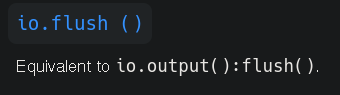
  I was looking for a definition of this function called io.flush(). Here's what
  I found: [picture 1]:`**io.flush ()**

  Equivalent to io.output():flush().
  `

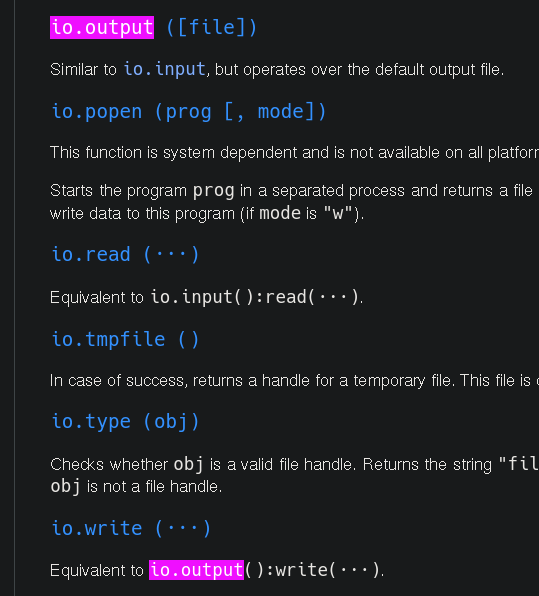
  okay, so what's io.output():flush()? [one result found] and it's the thing I
  just found. great.

  okay, so how about io.output()? [third picture]:`**io.output ([file])**

  Similar to io.input, but operates over the default output file.
  `

  and`**io.write (···)**

  Equivalent to io.output():write(···).
  `

  I know the text is blue, but it's not clickable. It's just text, not a
  hyperlink to more comprehensive documentation.

  There's also file:flush(), but that doesn't seem relevant to what I'm looking
  for, because I'm working with lines and not files:`**file:flush ()**

  Saves any written data to file.
  `

  there are no more references to flushing, nor outputting of input nor output.
  this manual sucks.

  ah, well, back to vibe coding I go.

  EDIT: at least it's all on one page.

┌─────────┐                                                            ┌───────────┐
│ similar │                       chronological                        │ different │
╘═════════╧════════════════════════════════════════════════════════────┴───────────┘
 -> file: fediverse/5036
════════════════════════════════════════════════════════════────────────────────────
  give me syntax highlighting in a terminal based editor and that's all I need.
┌─────────┐                                                            ┌───────────┐
│ similar │                       chronological                        │ different │
╘═════════╧═════════════════════════════════════════════════───────────┴───────────┘
 -> file: messages/467
════════════════════════════════════════════════────────────────────────────────────
  Laws should be required to be marked [short term] or [long term]

  Short term means it should be redesigned after its effects become apparent.

  Long term means that if there's sufficient demand, an alternative should be
  created.
┌─────────┐                                                            ┌───────────┐
│ similar │                       chronological                        │ different │
╘═════════╧═════════════════════════════════════───────────────────────┴───────────┘
 -> file: fediverse/4845
═════════════════════════════════════════════════════════───────────────────────────
  put the variable type at the front of the variable and 90% of your type errors
  will dissapear

  like...`int int_main(){ return 0; }
  `

  or`int int_modulation_gauge_percentage_point_plus_or_minus_engagement = 0;
  `

  seeeee if the "int" value is at the start of the name then you can do this
  too:`double double_modulation_gauge_percentage_point_plus_or_minus_engagement =
  0.0;
  `

  then when you go to fill in an "int" value you know to use the one that has the
  "int" value at the beginning (doh)

  (do you really think they haven't tried that already? it... sorta worked.
  people started doing things like "int int_a; int int_b; int int_c;" and such
  and that got confusing pretty quick because the letters weren't at the start of
  the word. So for some situations we would mirror them like so: "int A = int_a;
  int B = int_b; int C = int_c;" and then just use the capitalized letters.

  ... just don't forget to update the original teehee (this is why we invented
  shadowed variables)

  wait, no I meant pointers !!~! -.-
┌─────────┐                                                            ┌───────────┐
│ similar │                       chronological                        │ different │
╘═════════╧══════════════════════════════════════════════──────────────┴───────────┘
 -> file: fediverse/3180
═════════════════════════════════════════════════───────────────────────────────────
  I love skywriting. it's so cool to see your words fade into dust after being
  seen by everyone around.
┌─────────┐                                                            ┌───────────┐
│ similar │                       chronological                        │ different │
╘═════════╧══════════════════════════════════════──────────────────────┴───────────┘
 -> file: messages/1189
════════════════════════════════════════════════════════════════════════────────────
  ... )
┌─────────┐                                                            ┌───────────┐
│ similar │                       chronological                        │ different │
╘═════════╧════════════════════════════════════════════════════════════╧───────────┘
 -> file: fediverse/6170
════════════════════════════════════════════════════════════════════────────────────
  @user-882

  would be easier if man pages were designed in a sane way... looking at you, MPV
  - I just want to add a subtitle track T.T
┌─────────┐                                                            ┌───────────┐
│ similar │                       chronological                        │ different │
╘═════════╧═════════════════════════════════════════════════════════───┴───────────┘
 -> file: fediverse/6107
════════════════════════════════════════════════════════════════════────────────────
  commanding a coding agent to write bash is a lot different than telling it to
  write a systems analysize.

  one is "hey can you examine this repository and make a note somewhere on a
  todo-list or whatever that there needs to be a bugfix in relation to the
  options setting input translation recommendation algorithm matchbox field
  because when I click on it the program crashes"

  and the other is like "okay now put the box over there. great now drag it a
  little bit closer. okay now take the refluxinator and adjust the bamboozlewhap
  to account of brass-terminatrix-incorporated and strip out the
  question-mark-eyes"

  wait actually neither of them is like that okay the bash one is like: "okay
  yeah do it. sure. yeah okay. yes, but we should put them at this location:
  [loc]. ummm it still has this error message. it still says the same error. okay
  now it says this, I don't think it's gonna work so let's try this other thing."
┌─────────┐                                                            ┌───────────┐
│ similar │                       chronological                        │ different │
╘═════════╧═════════════════════════════════════════════════════════───┴───────────┘
 -> file: fediverse/2774
═════════════════════════════════════════════════───────────────────────────────────
  I want to emphasize that my mask is just as much a part of me as the other part.
┌─────────┐                                                            ┌───────────┐
│ similar │                       chronological                        │ different │
╘═════════╧══════════════════════════════════════──────────────────────┴───────────┘
 -> file: fediverse/2526
════════════════════════════════════════════════────────────────────────────────────
  @user-1283

  ah neat, forgot about hash-tags
┌─────────┐                                                            ┌───────────┐
│ similar │                       chronological                        │ different │
╘═════════╧═════════════════════════════════════───────────────────────┴───────────┘
 -> file: fediverse/3577
══════════════════════════════════════════════════──────────────────────────────────
  ┌─────────────────────────┐
  │ CW: computers-mentioned │
  └─────────────────────────┘


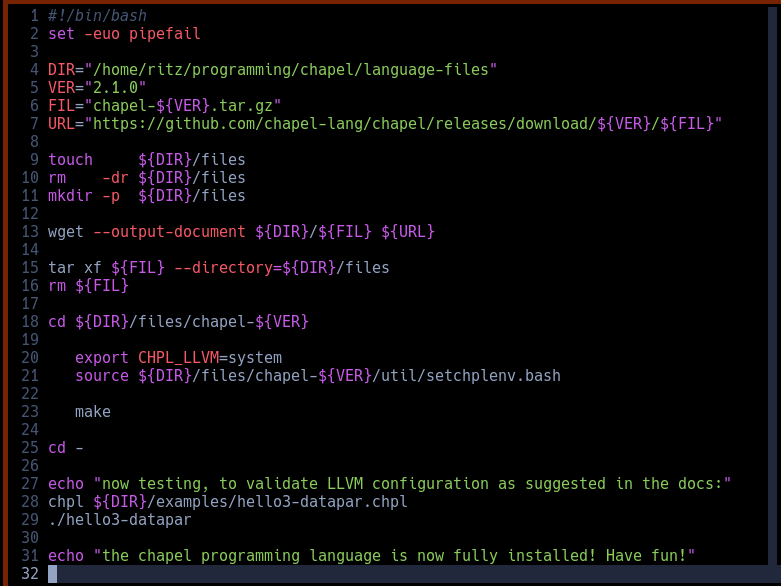
  I love writing installation scripts like this!

  If you want to install something on Linux but you have difficulty, talk to me
  and I'll write you a script like this. I might even make it fancier.

  This one installs a programming language that is useful for *parallel
  computing* across *multiple clusters of computers* which could be useful if you
  want to leverage *multiple CPUs and GPUs with ease* to compute tasks which are
  far beyond a normal computer.

  https://chapel-lang.org/download.html
┌─────────┐                                                            ┌───────────┐
│ similar │                       chronological                        │ different │
╘═════════╧═══════════════════════════════════════─────────────────────┴───────────┘
 -> file: messages/1518
════════════════════════════════════════════════════════════════════════════────────
  \
┌─────────┐                                                            ┌───────────┐
│ similar │                       chronological                        │ different │
╘═════════╧════════════════════════════════════════════════════════════╧════───────┘
 -> file: fediverse/5355
══════════════════════════════════════════════════════════════──────────────────────
  "that email address is already taken, please sign in instead"

  >.
┌─────────┐                                                            ┌───────────┐
│ similar │                       chronological                        │ different │
╘═════════╧═══════════════════════════════════════════════════─────────┴───────────┘
 -> file: fediverse/5116
════════════════════════════════════════════════════════════────────────────────────
  tape the first and last page of a zine to a telephone pole and write underneath
  it "tear out a page if you need it to explain an argument"
┌─────────┐                                                            ┌───────────┐
│ similar │                       chronological                        │ different │
╘═════════╧═════════════════════════════════════════════════───────────┴───────────┘
 -> file: fediverse/45
═════════════════════════════════───────────────────────────────────────────────────
  @user-36 Question - how do you do those cool superscript and subscript
  notations?

  Also: I don't think base 1 falls apart with negative exponents, for example
  consider 1^-1 ----- it would evaluate to 1/10 in this system, which is not 1/1.
  Another example, 1^-3 would evaluate to 1/1110, which seems accurate to me.

  As for 0^0, I guess I think it does equal 1? Bear with me:

  for any number n raised to an exponent e, you can write it like this:

  1 * n * n * n ... with as many "* n"s as you have n's. for example:

  1 * 3 * 3 * 3 = 9
  or
  1 * 5 * 5 * 5 * 5 * 5 = 625

  in each case there's 3 or 5 instances of "* n" tacked onto the end. I don't
  know the math notation for that.

  now, when you raise something to the power of zero, it looks like this:

  1

  because there's zero "* n"s added to the end.

  For negative exponents of course you divide instead of multiply, which is why
  it ends up looking like a fraction.

  So, it makes sense to me that 0 ^ 0 would equal 1, because it'd look like this:

  1

  while 0^1 would be

  1 * 0
┌─────────┐                                                            ┌───────────┐
│ similar │                       chronological                        │ different │
╘═════════╧══════════════════════──────────────────────────────────────┴───────────┘
 -> file: fediverse/848
══════════════════════════════════════════──────────────────────────────────────────
  ┌──────────────────────┐
  │ CW: gentoo           │
  └──────────────────────┘


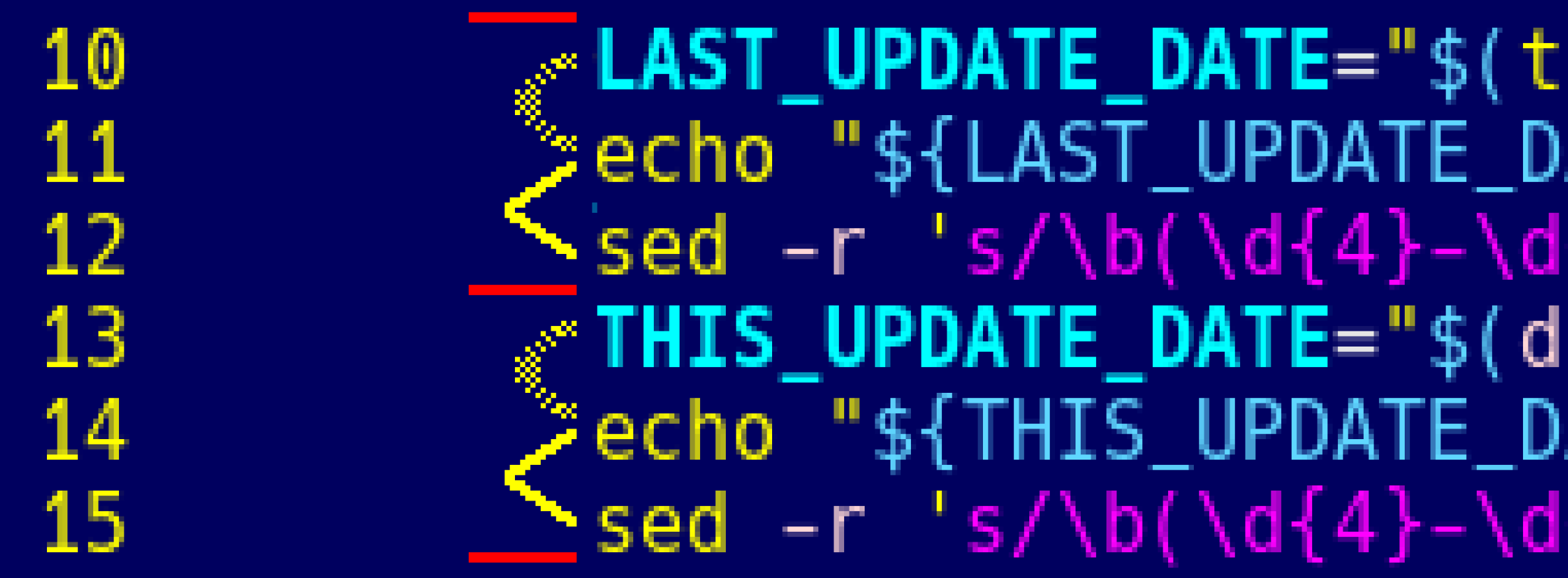
  wrote this in an hour, used a local LLM to generate the regexes.

  haven't tested it yet because I'm not on gentoo rn, so don't run it. which is
  why I shared the code as an image.

  if you really want the text of it then check out the visual description of the
  image.
![#A script written in bash. It is used to update the Gentoo type system to the most recently written functionality. Should not be used more than once a day, and the program written here must be specifically configured to act against that functionality. However, should the user persist in their attempts to break that rule, they simply have to flip a particular switch. #!/bin/bash function gentoo-update(){ RED='\033[0;31m' NOC='\033[0m' if [ "$#" -eq 0]; then date | cat >> ~/scripts/.gentoo-update-target LAST_UPDATE_DATE="$(tail -n 1 '~/scripts/.gentoo-update-target' \ && echo "${LAST_UPDATE_DATE}" \ | sed -r 's/\b(\d{4}-\d{2}-\d{2})\b/\1/g' THIS_UPDATE_DATE="$(date)" \ && echo "${THIS_UPDATE_DATE}" \ | sed -r 's/\b(\d{4}-\d{2}-\d{2})\b/\1/g' if [ ${LAST_UPDATE_DATE} = ${THIS_UPDATE_DATE} ]; then printf "don't sync more than once a day! ${RED} a witch will curse you >: (${NOC}\n" else echo "syncing..." echo "${LAST_UPDATE_DATE}" | cat >> ~/scripts/.gentoo-update-target emerge --sync fi elif [ "${1}" == "-l" ]; then cat ~/scripts/.gentoo-update-target elif [ "${1}" == "-f" ]; then echo "okay but it's your funeral buddy. or worse." energe --sync fi }](../media/a1640a320af86532.png "#A script written in bash. It is used to update the Gentoo type system to the most recently written functionality. Should not be used more than once a day, and the program written here must be specifically configured to act against that functionality. However, should the user persist in their attempts to break that rule, they simply have to flip a particular switch. #!/bin/bash function gentoo-update(){ RED='\033[0;31m' NOC='\033[0m' if [ \"$#\" -eq 0]; then date | cat >> ~/scripts/.gentoo-update-target LAST_UPDATE_DATE=\"$(tail -n 1 '~/scripts/.gentoo-update-target' \ && echo \"${LAST_UPDATE_DATE}\" \ | sed -r 's/\b(\d{4}-\d{2}-\d{2})\b/\1/g' THIS_UPDATE_DATE=\"$(date)\" \ && echo \"${THIS_UPDATE_DATE}\" \ | sed -r 's/\b(\d{4}-\d{2}-\d{2})\b/\1/g' if [ ${LAST_UPDATE_DATE} = ${THIS_UPDATE_DATE} ]; then printf \"don't sync more than once a day! ${RED} a witch will curse you >: (${NOC}\n\" else echo \"syncing...\" echo \"${LAST_UPDATE_DATE}\" | cat >> ~/scripts/.gentoo-update-target emerge --sync fi elif [ \"${1}\" == \"-l\" ]; then cat ~/scripts/.gentoo-update-target elif [ \"${1}\" == \"-f\" ]; then echo \"okay but it's your funeral buddy. or worse.\" energe --sync fi }")
┌─────────┐                                                            ┌───────────┐
│ similar │                       chronological                        │ different │
╘═════════╧═══════════════════════════════─────────────────────────────┴───────────┘
 -> file: fediverse/404
════════════════════════════════════════────────────────────────────────────────────
  a preprocessor directive that tells the compiler to ignore all warnings on the
  next line
┌─────────┐                                                            ┌───────────┐
│ similar │                       chronological                        │ different │
╘═════════╧═════════════════════════════───────────────────────────────┴───────────┘
 -> file: fediverse_boost/126
◀═╦═══════════════════[BOOST]════════════════════────────────────────────────────┐
  ║ ┌──────────────────────────────────────────────────────────────────────────┐ │
  ║ │ man page sections                                                        │ │
  ║ │                                                                          │ │
  ║ │ Permalink: https://wizardzines.com/comics/man-pages/                     │ │
  ║ └──────────────────────────────────────────────────────────────────────────┘ │
  ╠─────────┐                                                        ┌───────────┤
  ║ similar │                     chronological                      │ different │
  ╚═════════╧════════════════════════════════════────────────────────┴───────────┴─▶
 -> file: fediverse/4281
═════════════════════════════════════════════════════───────────────────────────────
  @user-1649

  or what their "stars" mean when they like your post - I heard that some
  mastodon instances lets you react with an emoji, but for me it's just stars T.T
┌─────────┐                                                            ┌───────────┐
│ similar │                       chronological                        │ different │
╘═════════╧══════════════════════════════════════════──────────────────┴───────────┘
 -> file: notes/star-realms-balancing-tradeoff=2
══════════════════════════════════════════════════════════════════════════──────────
  what if I use equal signs instead of dashes, so prevent people from assuming
  they're duplicates?

  hmm okay.

  right so anyway the star realms balancing tradeoff between combat and authority
  is measured against the duration of a hand (does it fit balanced between other
  cards of it's playcost) instead of balancing it for the duration of the game
  (how long does the player want the game to go on for) one of which is just
  inverse combat damage / healing, and the other of which is an enablement of
  different strategems.

  put this in symbeline-gen-realms please
┌─────────┐                                                            ┌───────────┐
│ similar │                       chronological                        │ different │
╘═════════╧════════════════════════════════════════════════════════════╧══─────────┘
 -> file: fediverse_boost/305
◀═╦═════════════════════════[BOOST]══════════════════════════────────────────────┐
  ║ ┌──────────────────────────────────────────────────────────────────────────┐ │
  ║ │ External post: https://fedi.underscore.world/objects/1099400e-b65f-4b17- │ │
  ║ │ 9872-15669829343b                                                        │ │
  ║ └──────────────────────────────────────────────────────────────────────────┘ │
  ╠─────────┐                                                        ┌───────────┤
  ║ similar │                     chronological                      │ different │
  ╚═════════╧════════════════════════════════════════════════────────┴───────────┴─▶
 -> file: fediverse/3559
══════════════════════════════════════════════════──────────────────────────────────
  @user-1209

  like... var = x?? that doesn't make sense. Or like, 5 = var x? that feels
  *wrong*

  in programming = is assignment, not equality, which tripped me up for a bit.
  But if you read it left to right it's like X equals 5. Got it, now I know that
  X is the same as 5. Right?
┌─────────┐                                                            ┌───────────┐
│ similar │                       chronological                        │ different │
╘═════════╧═══════════════════════════════════════─────────────────────┴───────────┘
 -> file: fediverse/3322
╔═════════════════════════════════════════════════─────────────────────────────────┐
║ @user-246                                                                        │
║                                                                                  │
║ yes, when defining with numbers it's easy because one is one and that's done.    │
║                                                                                  │
║ with concepts such as infinity or direction or cardinality, it's more difficult  │
║ because you need more than just a "magnitude from zero" to describe them. Rules  │
║ means more contradictions, which is totally okay! It just means you need more    │
║ than one definition of "infinity" for example, for different contexts.           │
║                                                                                  │
║ use a scalpel for surgery or art, when precision is needed, use a pocket-knife   │
║ like a leather~~man~~daddy for tougher tasks like whittling a spear or throwing  │
║ a spear or stabbing fascists with spears - where was I going with this? oh yes:  │
║                                                                                  │
║ when thinking of sets, to me infinity is more like... "too many numbers" like,   │
║ the meme with the guy who is having difficulty holding too many limes. They      │
║ overflow and spill out of your set-like-container, no matter how you define the  │
║ boundaries of the set. "does the set of all sets include itself or does it       │
║ overflow" kinda vibe.                                                            │
║                                                                                  │
║ the idea of a chesspiece disagreeing with math lol!                              │
╠═════════╗                                                            ┌───────────┤
║ similar ║                       chronological                        │ different │
╚═════════╩══════════════════════════════════════──────────────────────┴───────────┘
 -> file: notes/pic-in-dinosaur-hoodie
══════════════════════════════════════════════════════════════════════════════════──
  ---
  zipping 20260903_154820.jpg... 0.1 MB / 1.4 MB
┌─────────┐                                                            ┌───────────┐
│ similar │                       chronological                        │ different │
╘═════════╧════════════════════════════════════════════════════════════╧══════════─┘
 -> file: fediverse/4512
══════════════════════════════════════════════════════──────────────────────────────
  @user-1687

  I use dmenu, so I'm thinking I'll write a script and call it using dmenu. The
  script will start by using flameshot to grab the snipped part of the screen
  into the clipboard, and then I need to find an OCR engine (thanks for the
  google-able term btw!) which can take clipboard contents as input, and output
  text to the clipboard.
┌─────────┐                                                            ┌───────────┐
│ similar │                       chronological                        │ different │
╘═════════╧═══════════════════════════════════════════─────────────────┴───────────┘
 -> file: fediverse/6024
═══════════════════════════════════════════════════════════════════─────────────────
  vimfolds are the best part of vim
┌─────────┐                                                            ┌───────────┐
│ similar │                       chronological                        │ different │
╘═════════╧════════════════════════════════════════════════════════────┴───────────┘
 -> file: notes/most-difficult-for-an-mortal
═════════════════════════════════════════════════════════════════════════════════───
  To choose to follow the command "stay history"
┌─────────┐                                                            ┌───────────┐
│ similar │                       chronological                        │ different │
╘═════════╧════════════════════════════════════════════════════════════╧═════════──┘
 -> file: fediverse/3173
═════════════════════════════════════════════════───────────────────────────────────
  you've heard of an array of function pointers, yes,

  but have you ever heard

  of an array of GOTO labels?
┌─────────┐                                                            ┌───────────┐
│ similar │                       chronological                        │ different │
╘═════════╧══════════════════════════════════════──────────────────────┴───────────┘
 -> file: fediverse/2011
════════════════════════════════════════════════────────────────────────────────────
  @user-883

  nvim is nice because you can make addons or plugins or whatever in Lua, which
  is the easiest language in the world.

  I think VSCode sucks - it's literally a web browser that views your own code,
  and it's made by Microsoft so it probably SENDS it to them too. Probably.

  I like nvim because it's just Vim except you can use more plugins (the ones
  written in Lua)
┌─────────┐                                                            ┌───────────┐
│ similar │                       chronological                        │ different │
╘═════════╧═════════════════════════════════════───────────────────────┴───────────┘
|