 -> file: fediverse/1072
══════════════════════════════════════════──────────────────────────────────────────
  @user-782 @user-783

  modern problems require blunt solutions
┌─────────┐                                                            ┌───────────┐
│ similar │                       chronological                        │ different │
╘═════════╧═══════════════════════════════─────────────────────────────┴───────────┘
 -> file: fediverse/6244
═════════════════════════════════════════════════════════════════════───────────────
  numbers are one-dimensional numbers and vectors are multi-dimensional numbers,
  fight me
┌─────────┐                                                            ┌───────────┐
│ similar │                       chronological                        │ different │
╘═════════╧══════════════════════════════════════════════════════════──┴───────────┘
 -> file: fediverse/438
════════════════════════════════════════────────────────────────────────────────────
  consider: the shape of a sine wave
┌─────────┐                                                            ┌───────────┐
│ similar │                       chronological                        │ different │
╘═════════╧═════════════════════════════───────────────────────────────┴───────────┘
 -> file: fediverse/3750
═══════════════════════════════════════════════════─────────────────────────────────
  @user-1218

  so true d=(T.T)z
┌─────────┐                                                            ┌───────────┐
│ similar │                       chronological                        │ different │
╘═════════╧════════════════════════════════════════────────────────────┴───────────┘
 -> file: messages/1545
══════════════════════════════════════════════════════════════════════════════──────
  1 is just (number-waves equation for 1)
┌─────────┐                                                            ┌───────────┐
│ similar │                       chronological                        │ different │
╘═════════╧════════════════════════════════════════════════════════════╧══════─────┘
 -> file: fediverse_boost/290
◀═╦════════════════════════[BOOST]══════════════════════════─────────────────────┐
  ║ ┌──────────────────────────────────────────────────────────────────────────┐ │
  ║ │ You are an engineer                                                      │ │
  ║ │                                                                          │ │
  ║ │  #ObliqueStrategies                                                      │ │
  ║ └──────────────────────────────────────────────────────────────────────────┘ │
  ╠─────────┐                                                        ┌───────────┤
  ║ similar │                     chronological                      │ different │
  ╚═════════╧═══════════════════════════════════════════════─────────┴───────────┴─▶
 -> file: fediverse/286
═══════════════════════════════════════─────────────────────────────────────────────
  ┌──────────────────────┐
  │ CW: re: mathematics  │
  └──────────────────────┘


  @user-211 I agree! The problem is the limit as x->0 from the left and right
  trend toward different infinities, meaning it's neither -infinity nor
  +infinity. Which makes me think that it's the value that's exactly in the
  middle, AKA zero.

  Why wouldn't 1/0 be zero? Division is just inverse-multiplication, and
  multiplying anything by zero is zero. Why wouldn't division use the same rules?
  I don't understaaaaaand T.T
┌─────────┐                                                            ┌───────────┐
│ similar │                       chronological                        │ different │
╘═════════╧════════════════════════════────────────────────────────────┴───────────┘
 -> file: fediverse_boost/234
◀═╦══════════════════════[BOOST]════════════════════════─────────────────────────┐
  ║ ┌──────────────────────────────────────────────────────────────────────────┐ │
  ║ │ Question the heroic approach                                             │ │
  ║ │                                                                          │ │
  ║ │  #ObliqueStrategies                                                      │ │
  ║ └──────────────────────────────────────────────────────────────────────────┘ │
  ╠─────────┐                                                        ┌───────────┤
  ║ similar │                     chronological                      │ different │
  ╚═════════╧═══════════════════════════════════════════─────────────┴───────────┴─▶
 -> file: fediverse/3325
══════════════════════════════════════════════════──────────────────────────────────
  @user-246

  so... if infinity is the inverse of zero, then when inverted would infinity
  also be zero?

  if so, it follows that the [spectrum/dimension/cardinality/direction] that the
  inversion is occurring upon might also have other steps inbetween. Unless it's
  a binary thing, like "top and bottom" or "present and absent".

  I wonder what those steps might look like? Clearly, since infinity minus
  infinity does not equal zero, the steps inbetween (if they exist) would not be
  numbers. If they were, then one single step from inverting infinity would be 1,
  but I don't believe that would be true.

  On the topic of rings, the axioms would be things like "a ring is a ring if you
  can trace a continuous line with a length of infinity across it's
  ring-like-surface"? I wonder what the inverse of a length is... Or perhaps you
  cannot invert a length, as to do so would give you a length of zero (in this
  particular ring-like-case)
┌─────────┐                                                            ┌───────────┐
│ similar │                       chronological                        │ different │
╘═════════╧═══════════════════════════════════════─────────────────────┴───────────┘
 -> file: fediverse/30
════════════════════════════════────────────────────────────────────────────────────
  @user-33 sup
┌─────────┐                                                            ┌───────────┐
│ similar │                       chronological                        │ different │
╘═════════╧═════════════════════───────────────────────────────────────┴───────────┘
 -> file: fediverse/213
═══════════════════════════════════════─────────────────────────────────────────────
  ┌───────────────────────────────────┐
  │ CW: re: gaming-gambling-mentioned │
  └───────────────────────────────────┘


  [3] at the start of the tournament the total prize money P in the pool is
  assigned to N performance tiers, where N is the Number of attendees. at the
  top, the highest performing athlete will receive 200% of P while the lowest
  performing performance tier will be 0%. It is a non-discrete and gradual linear
  transition.
┌─────────┐                                                            ┌───────────┐
│ similar │                       chronological                        │ different │
╘═════════╧════════════════════════════────────────────────────────────┴───────────┘
 -> file: fediverse/302
═══════════════════════════════════════─────────────────────────────────────────────
  ┌──────────────────────┐
  │ CW: re: mathematics  │
  └──────────────────────┘


  @user-211 math such as SUM(as x approaches infinity)(i*x)

  this would add i, 2i, 3i, 4i, 5i, 6i, etc off into infinity. would that give
  you complex infinity? a direction orthogonal to the X axis, yet infinitely far
  in the direction of y. it'd probably have a positive and negative side too,
  just saying.
┌─────────┐                                                            ┌───────────┐
│ similar │                       chronological                        │ different │
╘═════════╧════════════════════════════────────────────────────────────┴───────────┘
 -> file: fediverse/2606
════════════════════════════════════════════════────────────────────────────────────
  ┌───────────────────────────────────────────────────┐
  │ CW: re: politics-fascism-sexual-assault-mentioned │
  └───────────────────────────────────────────────────┘


  @user-249

  sup
┌─────────┐                                                            ┌───────────┐
│ similar │                       chronological                        │ different │
╘═════════╧═════════════════════════════════════───────────────────────┴───────────┘
 -> file: messages/110
════════════════════════════════════════────────────────────────────────────────────
  The best way to program computers is to organize them according to their
  relations. Like, when x increases by 4 then y increases by 2 - basically, a
  math equation that you can continuously solve by calculating more and more
  comprehensively and deeply.
┌─────────┐                                                            ┌───────────┐
│ similar │                       chronological                        │ different │
╘═════════╧═════════════════════════════───────────────────────────────┴───────────┘
 -> file: fediverse_boost/319
◀═╦═════════════════════════[BOOST]══════════════════════════────────────────────┐
  ║ ┌──────────────────────────────────────────────────────────────────────────┐ │
  ║ │ Change nothing and continue with immaculate consistency                  │ │
  ║ │                                                                          │ │
  ║ │  #ObliqueStrategies                                                      │ │
  ║ └──────────────────────────────────────────────────────────────────────────┘ │
  ╠─────────┐                                                        ┌───────────┤
  ║ similar │                     chronological                      │ different │
  ╚═════════╧════════════════════════════════════════════════────────┴───────────┴─▶
 -> file: fediverse/303
═══════════════════════════════════════─────────────────────────────────────────────
  ┌──────────────────────┐
  │ CW: re: mathematics  │
  └──────────────────────┘


  @user-211 if the 2nd dimension is i, then what would be the third? the real
  number line, the complex plane, and the ____ space?
┌─────────┐                                                            ┌───────────┐
│ similar │                       chronological                        │ different │
╘═════════╧════════════════════════════────────────────────────────────┴───────────┘
 -> file: notes/computer-graphics
══════════════════──────────────────────────────────────────────────────────────────
  draw a line from every single pixel straight outward. The first thing it hits
  is what you render.

  okay it's more complicated than that, but it's the gist.

  here's a more detailed explanation:

  your monitor is 2560x1440p. that means there's 2560 pixels left to right, and
  1440 pixels up and down. okay so define a 3d scene programmatically - it's not
  hard, just "draw cube here with this size and rotation" and "draw a sphere here
  with this position and rotation" etc. Something simple.

  then, draw a ray trace straight out from your monitor. Not to the nearest light
  source, but to the nearest other camera. Use the length of it to determine
  distance, both indirectly (through the center node) and directly (pythagorean
  theorum style).

  Why? I dunno.

  Okay back to the original idea, if you make an array with 2560 elements and
  store arrays of size 1440 within it, then you have a simple boolean checkbox
  for each pixel. Then, whenever you create a visible entity, make sure there's a
  single boolean ticked right on the top of the entity when it's stored in the
  graph mentioned above. Find the center of the entity, draw to the top, and one
  more, and switch a boolean to "true". Then, every tick / update, cycle through
  the entire list and the first one you find that has a "true" value is where you
  draw the entity stored in the array.

  Each "sprite" has an odd shape - it doesn't exist on it's top line, except for
  one single dot right in the middle. Sorta like this:

  o o o o o o o o o o o o o o o o o o o o o o o o o o o o o o o o o o o o o o o o
  o o o o o o o o o o o o o o o o o o ->X<- o o o o o o o o o o o o o o o o o o o
  x x x x x x x x x x x x x x x x x x x x x x x x x x x x x x x x x x x x x x x x

  when scanning left to right from the top, it'd bump into the X right there in
  the middle. Inside the X is some data - an id corresponding to the sprite that
  needs to be drawn, and a displacement value - like 500 pixels or something -
  and the scanner with drop down 500 pixels, draw the sprite there (assuming a
  centered origin point), jump 500 pixels up, and keep scanning.

  each tick, right before this, the "list of entities" will scan through itself
  and for each entity it'll change the "render graph" mentioned above to have an
  X wherever the entity is stored. Whenever the camera moves, it updates the list
  too.
┌─────────┐                                                            ┌───────────┐
│ similar │                       chronological                        │ different │
╘═════════╧═══════─────────────────────────────────────────────────────┴───────────┘
 -> file: fediverse/3326
══════════════════════════════════════════════════──────────────────────────────────
  @user-246

  It's interesting to me that we can divide by infinity, but not zero. I feel
  like it's true that dividing by zero would equal infinity (or maybe zero too
  lol) but I don't know how to prove it T.T
┌─────────┐                                                            ┌───────────┐
│ similar │                       chronological                        │ different │
╘═════════╧═══════════════════════════════════════─────────────────────┴───────────┘
 -> file: fediverse_boost/233
◀═╦══════════════════════[BOOST]════════════════════════─────────────────────────┐
  ║ ┌──────────────────────────────────────────────────────────────────────────┐ │
  ║ │ Take a break                                                             │ │
  ║ │                                                                          │ │
  ║ │  #ObliqueStrategies                                                      │ │
  ║ └──────────────────────────────────────────────────────────────────────────┘ │
  ╠─────────┐                                                        ┌───────────┤
  ║ similar │                     chronological                      │ different │
  ╚═════════╧═══════════════════════════════════════════─────────────┴───────────┴─▶
 -> file: fediverse/950
══════════════════════════════════════════──────────────────────────────────────────
  @user-192

  multidimensional arrays aren't too hard, it gets a bit more complicated when
  you need multidimensional *slices*, but once you get your head around it it
  comes easier.
┌─────────┐                                                            ┌───────────┐
│ similar │                       chronological                        │ different │
╘═════════╧═══════════════════════════════─────────────────────────────┴───────────┘
 -> file: notes/20260730-184108.txt
════════════════════════════════════════════════════════════════════════════════────
  No deterministic system can solve arbitrary problems with perfect solutions.

  Hence, subjectivity.
┌─────────┐                                                            ┌───────────┐
│ similar │                       chronological                        │ different │
╘═════════╧════════════════════════════════════════════════════════════╧════════───┘
 -> file: fediverse/39
═════════════════════════════════───────────────────────────────────────────────────
  @user-36 That makes sense to me. I'll have to think about how to generalize
  that, hmmmm... It would only work for numbers that have even square roots right?
┌─────────┐                                                            ┌───────────┐
│ similar │                       chronological                        │ different │
╘═════════╧══════════════════════──────────────────────────────────────┴───────────┘
 -> file: fediverse/276
═══════════════════════════════════════─────────────────────────────────────────────
  ┌──────────────────────┐
  │ CW: mathematics      │
  └──────────────────────┘


  why the heck would -11/2 be defined but 1/0 not be? seems kinda sus to me.
  maybe it's just... not reducible, the same way that 5+i isn't?
┌─────────┐                                                            ┌───────────┐
│ similar │                       chronological                        │ different │
╘═════════╧════════════════════════════────────────────────────────────┴───────────┘
 -> file: messages/377
══════════════════════════════════════════════──────────────────────────────────────
  infinite dedication implies stagnation, don't be so quick to trust.
┌─────────┐                                                            ┌───────────┐
│ similar │                       chronological                        │ different │
╘═════════╧═══════════════════════════════════─────────────────────────┴───────────┘
 -> file: fediverse/1437
═══════════════════════════════════════════─────────────────────────────────────────
  a perpetual motion machine would appear stable to the machine in motion
┌─────────┐                                                            ┌───────────┐
│ similar │                       chronological                        │ different │
╘═════════╧════════════════════════════════────────────────────────────┴───────────┘
 -> file: messages/1246
═════════════════════════════════════════════════════════════════════════───────────
  \
┌─────────┐                                                            ┌───────────┐
│ similar │                       chronological                        │ different │
╘═════════╧════════════════════════════════════════════════════════════╧═──────────┘
 -> file: fediverse/997
╔═════════════════════════════════════════─────────────────────────────────────────┐
║ @user-727 @user-728 @user-729                                                    │
║                                                                                  │
║ I remember sitting in algebra II class when visualizing the distance between     │
║ numbers "clicked" for me. I was in a daze, I couldn't remember anything the      │
║ teacher had said, but for a moment (several months) I could remember how it had  │
║ seemed. Then I built new understandings, and my progress in math continued       │
║ relentlessly, more and more each year. it was hard, and eventually calc 1 made   │
║ me drop out of college 3 times. linear algebra was the other. (except I did      │
║ linear algebra first?) anyway, I always felt like I could *see* things           │
║ visually, from simple arithmetic to vector / pointer arithmetic, and when        │
║ necessary it was always difficult to translate it into words and forms. Like...  │
║ I don't have time to remember all these rules and operations, I have a picture   │
║ in my mind and I can't quite define it. (whatever the equation may be)           │
║                                                                                  │
║ similar events happen consistently. they still do. just a few months ago I was   │
║ thinking about redesigning integer storage in memory. never twice tho.           │
╠═════════╗                                                            ┌───────────┤
║ similar ║                       chronological                        │ different │
╚═════════╩══════════════════════════════──────────────────────────────┴───────────┘
 -> file: fediverse/1283
═══════════════════════════════════════════─────────────────────────────────────────
  @user-203

  best shape for a state to be ^_^
┌─────────┐                                                            ┌───────────┐
│ similar │                       chronological                        │ different │
╘═════════╧════════════════════════════════────────────────────────────┴───────────┘
 -> file: fediverse/6
══════════════════════════════──────────────────────────────────────────────────────
  ┌──────────────────────┐
  │ CW: Math             │
  └──────────────────────┘


  @user-5 create an array of length 7 initialized to zero. then use a for loop
  that loops 97 times and adds a random number between 1 and 20 to an array index
  that iterates through the array each time through the for loop.

  NOTE: be sure to also change the loop counter based on the random number too,
  so you allocate exactly 97 points no matter what random number you get.

  Oh and speaking of which if the loop counter
┌─────────┐                                                            ┌───────────┐
│ similar │                       chronological                        │ different │
╘═════════╧═══════════════════─────────────────────────────────────────┴───────────┘
 -> file: fediverse/1125
══════════════════════════════════════════──────────────────────────────────────────
  @user-838

  x2 scales exponentially but it will never equal 3 (using integer values of x of
  course)

  perhaps the force can do things that make the destruction of a planet seem...
  childish and arbitrary
┌─────────┐                                                            ┌───────────┐
│ similar │                       chronological                        │ different │
╘═════════╧═══════════════════════════════─────────────────────────────┴───────────┘
 -> file: messages/1518
════════════════════════════════════════════════════════════════════════════────────
  \
┌─────────┐                                                            ┌───────────┐
│ similar │                       chronological                        │ different │
╘═════════╧════════════════════════════════════════════════════════════╧════───────┘
 -> file: fediverse/5492
═══════════════════════════════════════════════════════════════─────────────────────
  @user-1844

  when words are inscribed on a viewable form
┌─────────┐                                                            ┌───────────┐
│ similar │                       chronological                        │ different │
╘═════════╧════════════════════════════════════════════════════────────┴───────────┘
 -> file: fediverse/5691
════════════════════════════════════════════════════════════════────────────────────
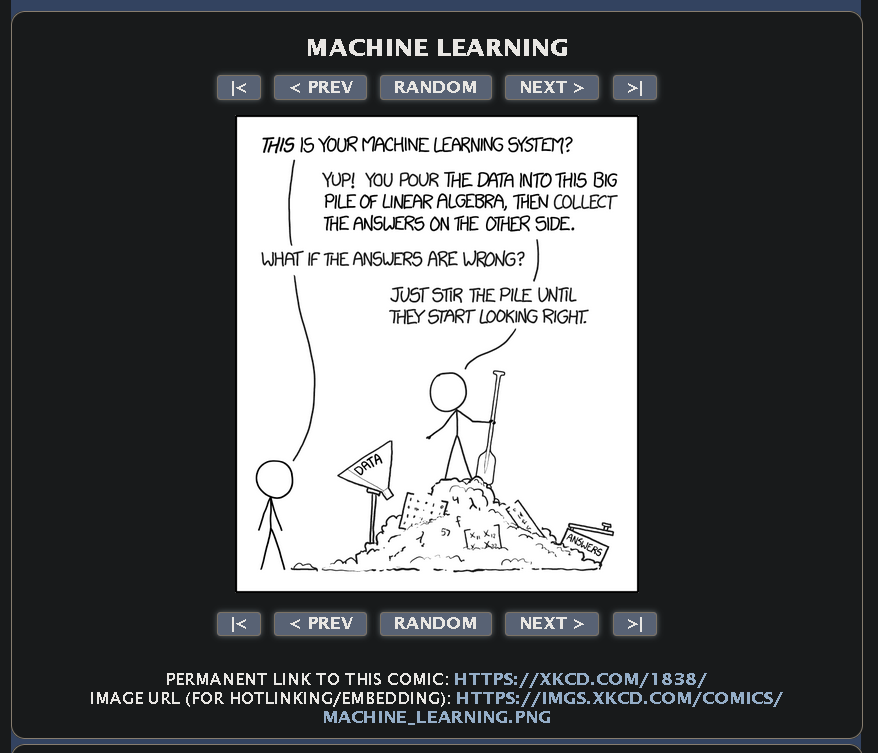
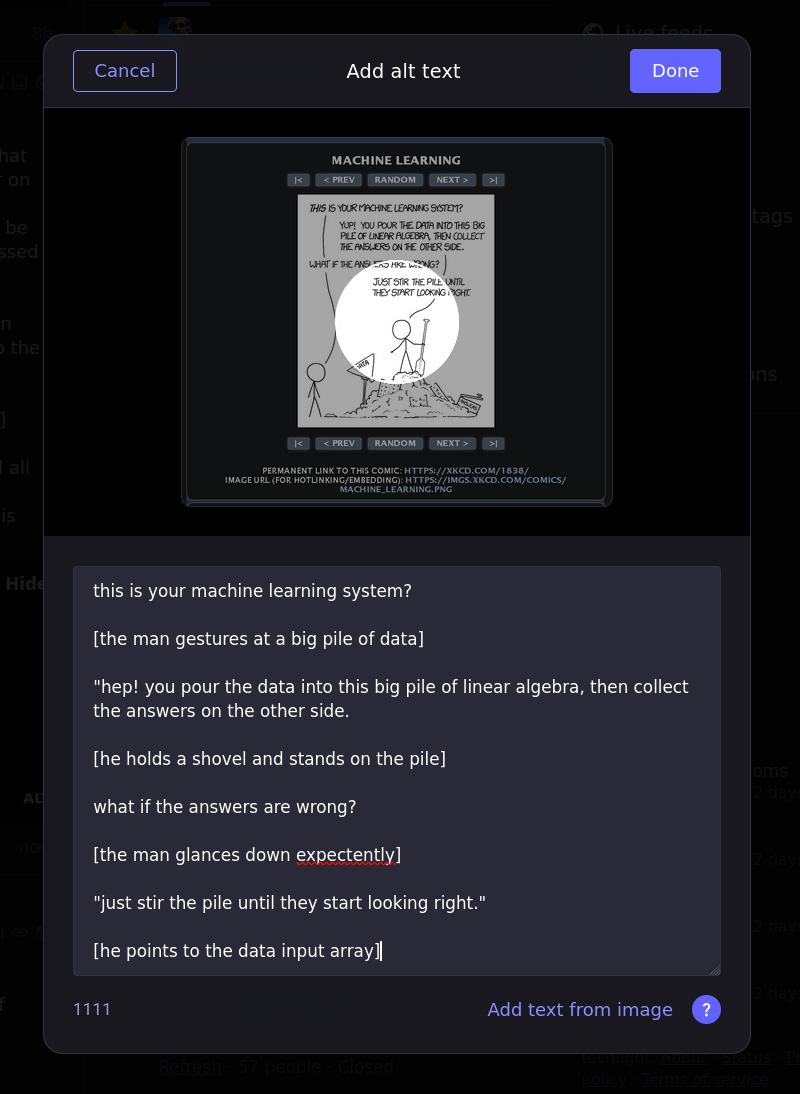
  https://xkcd.com/1838/
┌─────────┐                                                            ┌───────────┐
│ similar │                       chronological                        │ different │
╘═════════╧═════════════════════════════════════════════════════───────┴───────────┘
 -> file: fediverse/4904
═════════════════════════════════════════════════════════───────────────────────────
  @user-1751

  proportion ally, there are more.
┌─────────┐                                                            ┌───────────┐
│ similar │                       chronological                        │ different │
╘═════════╧══════════════════════════════════════════════──────────────┴───────────┘
 -> file: fediverse_boost/451
◀═╦════════════════════════════[BOOST]═════════════════════════════──────────────┐
  ║ ┌──────────────────────────────────────────────────────────────────────────┐ │
  ║ │ Take away the elements in order of apparent non-importance               │ │
  ║ │                                                                          │ │
  ║ │  #ObliqueStrategies                                                      │ │
  ║ └──────────────────────────────────────────────────────────────────────────┘ │
  ╠─────────┐                                                        ┌───────────┤
  ║ similar │                     chronological                      │ different │
  ╚═════════╧══════════════════════════════════════════════════════──┴───────────┴─▶
 -> file: notes/fourth-dimension
════════════════════════════────────────────────────────────────────────────────────
  the fourth dimension isn't time, it's timelines arrayed in a 2d grid changing
  over time like an excel document that constantly updates with different input
  data. sorta like "animate sensor data"

  there are infinite dimensions, and time is always expanding
┌─────────┐                                                            ┌───────────┐
│ similar │                       chronological                        │ different │
╘═════════╧═════════════════───────────────────────────────────────────┴───────────┘
 -> file: fediverse_boost/256
◀═╦══════════════════════[BOOST]════════════════════════─────────────────────────┐
  ║ ┌──────────────────────────────────────────────────────────────────────────┐ │
  ║ │ Go to an extreme, move back to a more comfortable place                  │ │
  ║ │                                                                          │ │
  ║ │  #ObliqueStrategies                                                      │ │
  ║ └──────────────────────────────────────────────────────────────────────────┘ │
  ╠─────────┐                                                        ┌───────────┤
  ║ similar │                     chronological                      │ different │
  ╚═════════╧═══════════════════════════════════════════─────────────┴───────────┴─▶
 -> file: fediverse/3324
══════════════════════════════════════════════════──────────────────────────────────
  @user-246

  If I follow correctly, the reason it's not is because you're dividing zero by
  two? meaning the magnitude of infinity would be zero.

  ... chat, is infinity just... zero, viewed from a different perspective?
┌─────────┐                                                            ┌───────────┐
│ similar │                       chronological                        │ different │
╘═════════╧═══════════════════════════════════════─────────────────────┴───────────┘
 -> file: messages/711
════════════════════════════════════════════════════════────────────────────────────
  https://www.desmos.com/calculator/cxayticajg
┌─────────┐                                                            ┌───────────┐
│ similar │                       chronological                        │ different │
╘═════════╧═════════════════════════════════════════════───────────────┴───────────┘
 -> file: fediverse/38
═════════════════════════════════───────────────────────────────────────────────────
  @user-36 ideally you'd convert to an arbitrary base (in this case 9) and shift
  from there, but shifting two places might work. idk I haven't thought about it.
┌─────────┐                                                            ┌───────────┐
│ similar │                       chronological                        │ different │
╘═════════╧══════════════════════──────────────────────────────────────┴───────────┘
 -> file: fediverse/1353
╔══════════════════════════════════════════────────────────────────────────────────┐
║ ┌───────────────────────────────────────────────────────┐                        │
║ │ CW: generic-content-warning-something-related-to-math │                        │
║ └───────────────────────────────────────────────────────┘                        │
║                                                                                  │
║                                                                                  │
║ warning, possible psycherwaul on the horizon.                                    │
║                                                                                  │
║ ========= stack overflow =========                                               │
║                                                                                  │
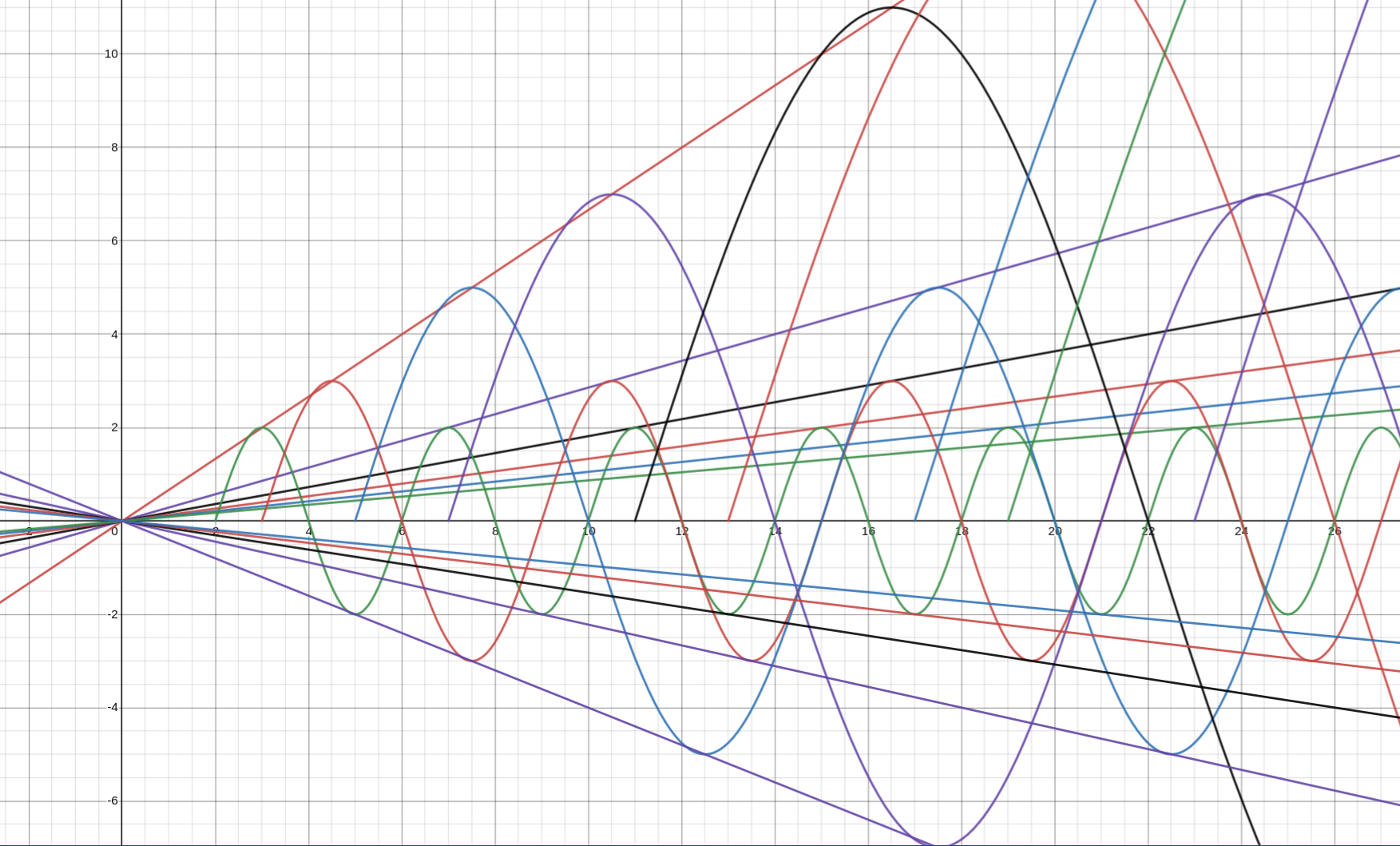
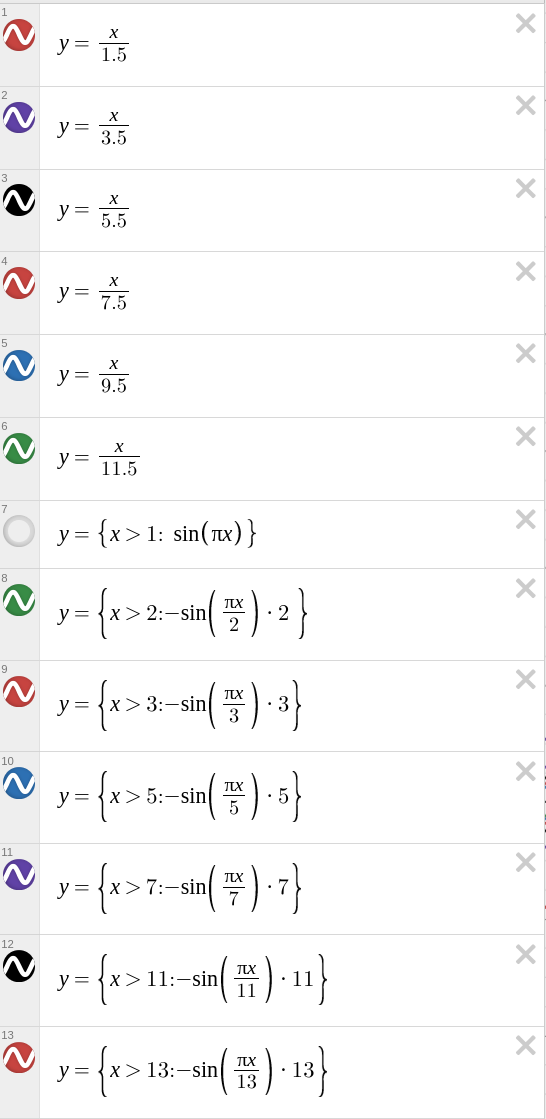
║ the straight lines are the tangent lines to the curves in a higher dimension.    │
║ if you have a way to calculate backwards from this type of tangent line to the   │
║ values of the equation, you can theoretically calculate any prime number. with   │
║ a simple equation.                                                               │
║                                                                                  │
║ well, I say simple, but that's only because I haven't written it yet. I can't    │
║ even pass calc 1. I'm too generalized I can't complete any task, only apply      │
║ myself to strange ones. Hence why capitalism optimizes away from me, and toward  │
║ people who can get degrees. T.T                                                  │
║                                                                                  │
║ https://www.desmos.com/calculator/mt6hasfcvm                                     │
║                                                                                  │
║ "what the heck that's a lot of traffic going to this one website, what's up      │
║ with that? hmmm interesting we need a                                            │
║                                                                                  │
║ ================= stack overflow =                                               │
║                                                                                  │
║ "dark physics" wild, what a coincidence what a flurry, weird how it all feels    │
║ so happenstance                                                                  │
║                                                                                  │
║ interesting that there'd be a theory, a coincidence and a [mirri? strange]       │
║                                                                                  │
║ well, it's probably n                                                            │
╠═════════╗                                                            ┌───────────┤
║ similar ║                       chronological                        │ different │
╚═════════╩═══════════════════════════════─────────────────────────────┴───────────┘
 -> file: fediverse_boost/298
◀═╦════════════════════════[BOOST]══════════════════════════─────────────────────┐
  ║ ┌──────────────────────────────────────────────────────────────────────────┐ │
  ║ │ Define an area as 'safe' and use it as an anchor                         │ │
  ║ │                                                                          │ │
  ║ │  #ObliqueStrategies                                                      │ │
  ║ └──────────────────────────────────────────────────────────────────────────┘ │
  ╠─────────┐                                                        ┌───────────┤
  ║ similar │                     chronological                      │ different │
  ╚═════════╧═══════════════════════════════════════════════─────────┴───────────┴─▶
 -> file: fediverse/128
══════════════════════════════════════──────────────────────────────────────────────
  @user-95 I'm not sure, but I once tried to design an algorithm that predicted
  prime numbers. I made this algorithm in my pursuit, but I couldn't figure out
  how to utilize it:

  https://www.desmos.com/calculator/h8oopoctnh
┌─────────┐                                                            ┌───────────┐
│ similar │                       chronological                        │ different │
╘═════════╧═══════════════════════════─────────────────────────────────┴───────────┘
 -> file: fediverse/46
═════════════════════════════════───────────────────────────────────────────────────
  @user-36 neat thanks

  when I said 1-1 = 1/10 I meant 1/1 in decimal except the denominator is in base
  1 meaning it's represented as 10 (since 10 in base 1 equals 1 in base 10. Or
  pretty much any other base.)

  I'm trying to figure out why 00 is undefined. There's a lot of math notation in
  that wikipedia article and I'm working through it bit by bit... I feel like
  there's a bug in the code of the universe and I'm trying to understand it.
  Like... why is dividing by zero undefined? That seems like a bug to me.
┌─────────┐                                                            ┌───────────┐
│ similar │                       chronological                        │ different │
╘═════════╧══════════════════════──────────────────────────────────────┴───────────┘
 -> file: fediverse/2879
═════════════════════════════════════════════════───────────────────────────────────
  ┌────────────────────────┐
  │ CW: re: tech info-dump │
  └────────────────────────┘


  @user-1370

  I love this a lot! I want to put function pointers in a "matrix architecture
  array" and make them point to different functions at different points in the
  program. I bet you could even point them at each other, so like if M and Y then
  point at N, A, Y or something.

  this is really cool I like stuff like this tomorrow I'll take pictures of
  something similar I'm working on! I abandoned it tho hehe anyway remind me if I
  forget!!
┌─────────┐                                                            ┌───────────┐
│ similar │                       chronological                        │ different │
╘═════════╧══════════════════════════════════════──────────────────────┴───────────┘
 -> file: fediverse/6359
══════════════════════════════════════════════════════════════════════──────────────
  @user-192

  it is rarely more efficient to think through a problem than it is to calculate.

  But, speed isn't everything, so think we do some more.
┌─────────┐                                                            ┌───────────┐
│ similar │                       chronological                        │ different │
╘═════════╧═══════════════════════════════════════════════════════════─┴───────────┘
 -> file: fediverse/37
═════════════════════════════════───────────────────────────────────────────────────
  This would normally just be a weird way to divide except it allows you to
  divide by zero, which is kinda cool.
┌─────────┐                                                            ┌───────────┐
│ similar │                       chronological                        │ different │
╘═════════╧══════════════════════──────────────────────────────────────┴───────────┘
 -> file: fediverse/3559
══════════════════════════════════════════════════──────────────────────────────────
  @user-1209

  like... var = x?? that doesn't make sense. Or like, 5 = var x? that feels
  *wrong*

  in programming = is assignment, not equality, which tripped me up for a bit.
  But if you read it left to right it's like X equals 5. Got it, now I know that
  X is the same as 5. Right?
┌─────────┐                                                            ┌───────────┐
│ similar │                       chronological                        │ different │
╘═════════╧═══════════════════════════════════════─────────────────────┴───────────┘
 -> file: fediverse/3322
╔═════════════════════════════════════════════════─────────────────────────────────┐
║ @user-246                                                                        │
║                                                                                  │
║ yes, when defining with numbers it's easy because one is one and that's done.    │
║                                                                                  │
║ with concepts such as infinity or direction or cardinality, it's more difficult  │
║ because you need more than just a "magnitude from zero" to describe them. Rules  │
║ means more contradictions, which is totally okay! It just means you need more    │
║ than one definition of "infinity" for example, for different contexts.           │
║                                                                                  │
║ use a scalpel for surgery or art, when precision is needed, use a pocket-knife   │
║ like a leather~~man~~daddy for tougher tasks like whittling a spear or throwing  │
║ a spear or stabbing fascists with spears - where was I going with this? oh yes:  │
║                                                                                  │
║ when thinking of sets, to me infinity is more like... "too many numbers" like,   │
║ the meme with the guy who is having difficulty holding too many limes. They      │
║ overflow and spill out of your set-like-container, no matter how you define the  │
║ boundaries of the set. "does the set of all sets include itself or does it       │
║ overflow" kinda vibe.                                                            │
║                                                                                  │
║ the idea of a chesspiece disagreeing with math lol!                              │
╠═════════╗                                                            ┌───────────┤
║ similar ║                       chronological                        │ different │
╚═════════╩══════════════════════════════════════──────────────────────┴───────────┘
 -> file: fediverse/346
════════════════════════════════════════────────────────────────────────────────────
  @user-246 or is it 010010 which == 18 in binary?
┌─────────┐                                                            ┌───────────┐
│ similar │                       chronological                        │ different │
╘═════════╧═════════════════════════════───────────────────────────────┴───────────┘
 -> file: fediverse/230
╔══════════════════════════════════════────────────────────────────────────────────┐
║ as soon as we change our exponential growth to linear, we can start measuring    │
║ our future history in hundreds of years. then thousands. we've done so much in   │
║ the past hundred years, can you imagine if we kept that rate of discovery?       │
║ that's perfectly alright for me, thank you. things change quite fast enough.     │
║ I'm glad that they're changing, but speed is an... unfortunately necessary part  │
║ of our current existence. perhaps it doesn't always have to be, but for now we   │
║ need to push forward.                                                            │
║                                                                                  │
║ one perk of linear growth is that it allows you to grow exponentially in         │
║ another direction - the direction of refactors and consistence of maintenance.   │
║ y'know, the things that open source software espouse. or at least encourage,     │
║ through their free and open sharing of code.                                     │
║                                                                                  │
║ they say the bureaucracy expands to meet the needs of the growing bureaucracy.   │
║ I think that's less necessary in the system of a computer's code. it's just a    │
║ question of how you design it - certainly you could design some spaghetti, but   │
║ what's the purpose of-                                                           │
╠═════════╗                                                            ┌───────────┤
║ similar ║                       chronological                        │ different │
╚═════════╩═══════════════════════════─────────────────────────────────┴───────────┘
 -> file: fediverse/40
═════════════════════════════════───────────────────────────────────────────────────
  @user-36 so what you're saying is I need to come up with an easier way to
  change bases? Or at least a way to digit shift in a different base than what
  you currently have. Sounds complicated.
┌─────────┐                                                            ┌───────────┐
│ similar │                       chronological                        │ different │
╘═════════╧══════════════════════──────────────────────────────────────┴───────────┘
 -> file: fediverse/6348
═════════════════════════════════════════════════════════════════════───────────────
  here's a neat function

┌─────────┐                                                            ┌───────────┐
│ similar │                       chronological                        │ different │
╘═════════╧══════════════════════════════════════════════════════════──┴───────────┘
 -> file: messages/1227
═════════════════════════════════════════════════════════════════════════───────────
  Anything that affects the set of all sets also affects the set containing
  itself.
┌─────────┐                                                            ┌───────────┐
│ similar │                       chronological                        │ different │
╘═════════╧════════════════════════════════════════════════════════════╧═──────────┘
 -> file: messages/1403
═════════════════════════════════════════════════════════════════════════───────────
  rapid

  application

  of force
┌─────────┐                                                            ┌───────────┐
│ similar │                       chronological                        │ different │
╘═════════╧════════════════════════════════════════════════════════════╧═──────────┘
 -> file: fediverse/3320
══════════════════════════════════════════════════──────────────────────────────────
  Infinity is not the highest number.

  Infinity is not any number of numbers.

  Infinity is *all* of the numbers in one sigil.
┌─────────┐                                                            ┌───────────┐
│ similar │                       chronological                        │ different │
╘═════════╧═══════════════════════════════════════─────────────────────┴───────────┘
 -> file: fediverse/36
═════════════════════════════════───────────────────────────────────────────────────
  consider:

  x = 13 / 3, what is x?

  step 1: translate 13 into base 3
  step 2: digit shift once to the right
  step 3: store underflow as remainder
  step 3: translate back to base 10

  x is 4 remainder 1
┌─────────┐                                                            ┌───────────┐
│ similar │                       chronological                        │ different │
╘═════════╧══════════════════════──────────────────────────────────────┴───────────┘
 -> file: messages/187
══════════════════════════════════════════──────────────────────────────────────────
  A family of 3-5 is absurdly small, but that's all we can manage in the 21st
  century
┌─────────┐                                                            ┌───────────┐
│ similar │                       chronological                        │ different │
╘═════════╧═══════════════════════════════─────────────────────────────┴───────────┘
 -> file: fediverse/3787
═══════════════════════════════════════════════════─────────────────────────────────
  arithmatic control flow

  If A, then B. Else C

┌─────────┐                                                            ┌───────────┐
│ similar │                       chronological                        │ different │
╘═════════╧════════════════════════════════════════────────────────────┴───────────┘
 -> file: fediverse/4084
═════════════════════════════════════════════════════───────────────────────────────
  ┌──────────────────────┐
  │ CW: re: -mentioned   │
  └──────────────────────┘


  @user-1074

  the more you try, the more you have to calculate, which is a problem, because
  endlessly recursive calculations create infinite loops, which frankly are
  impossible to compute because they defy computation! Not good, not ideal, no
  thank you, not for me, no thanks, not what I'd like.
┌─────────┐                                                            ┌───────────┐
│ similar │                       chronological                        │ different │
╘═════════╧══════════════════════════════════════════──────────────────┴───────────┘
 -> file: fediverse/375
════════════════════════════════════════────────────────────────────────────────────
  premature optimization may be the root of all evil, but like... it's fun? so
  I'm going to keep doing it. And before you ask why I'm using threads on project
  euler problems, just know that it's slightly faster this way I promise.
┌─────────┐                                                            ┌───────────┐
│ similar │                       chronological                        │ different │
╘═════════╧═════════════════════════════───────────────────────────────┴───────────┘
 -> file: fediverse/45
═════════════════════════════════───────────────────────────────────────────────────
  @user-36 Question - how do you do those cool superscript and subscript
  notations?

  Also: I don't think base 1 falls apart with negative exponents, for example
  consider 1^-1 ----- it would evaluate to 1/10 in this system, which is not 1/1.
  Another example, 1^-3 would evaluate to 1/1110, which seems accurate to me.

  As for 0^0, I guess I think it does equal 1? Bear with me:

  for any number n raised to an exponent e, you can write it like this:

  1 * n * n * n ... with as many "* n"s as you have n's. for example:

  1 * 3 * 3 * 3 = 9
  or
  1 * 5 * 5 * 5 * 5 * 5 = 625

  in each case there's 3 or 5 instances of "* n" tacked onto the end. I don't
  know the math notation for that.

  now, when you raise something to the power of zero, it looks like this:

  1

  because there's zero "* n"s added to the end.

  For negative exponents of course you divide instead of multiply, which is why
  it ends up looking like a fraction.

  So, it makes sense to me that 0 ^ 0 would equal 1, because it'd look like this:

  1

  while 0^1 would be

  1 * 0
┌─────────┐                                                            ┌───────────┐
│ similar │                       chronological                        │ different │
╘═════════╧══════════════════════──────────────────────────────────────┴───────────┘
 -> file: fediverse/472
════════════════════════════════════════────────────────────────────────────────────
  ┌──────────────────────┐
  │ CW: re: OH           │
  └──────────────────────┘


  @user-245

  T.T
┌─────────┐                                                            ┌───────────┐
│ similar │                       chronological                        │ different │
╘═════════╧═════════════════════════════───────────────────────────────┴───────────┘
 -> file: fediverse/428
════════════════════════════════════════────────────────────────────────────────────
  no thing is ineffable.
┌─────────┐                                                            ┌───────────┐
│ similar │                       chronological                        │ different │
╘═════════╧═════════════════════════════───────────────────────────────┴───────────┘
|