 -> file: fediverse/6385
══════════════════════════════════════════════════════════════════════──────────────
  interpreted programs allow you to change variables at run-time from remote.
┌─────────┐                                                            ┌───────────┐
│ similar │                       chronological                        │ different │
╘═════════╧═══════════════════════════════════════════════════════════─┴───────────┘
 -> file: messages/129
═════════════════════════════════════════───────────────────────────────────────────
  So you're telling me the speed difference between Python and C is due not to
  the logic that the programmer uses, but rather the optimization capabilities of
  the compiler?

  (An interpreter includes a compiler, it just runs it in a loop rather than a
  single pass)
┌─────────┐                                                            ┌───────────┐
│ similar │                       chronological                        │ different │
╘═════════╧══════════════════════════════──────────────────────────────┴───────────┘
 -> file: fediverse/5179
════════════════════════════════════════════════════════════────────────────────────
  why don't corporations let you write code in whatever language you want? it's
  trivial to run a compiler or interpreter inside of another program.
┌─────────┐                                                            ┌───────────┐
│ similar │                       chronological                        │ different │
╘═════════╧═════════════════════════════════════════════════───────────┴───────────┘
 -> file: fediverse/5180
╔═══════════════════════════════════════════════════════════───────────────────────┐
║ it's trivial to run a C compiler inside of a lua interpretation of a script.     │
║ And vice versa - you could totally run lua functions from C. Just point to the   │
║ spot in memory where they're stored / operating, and call                        │
║ "update_class_exhibitor_type_d()" and the linker will come along and say "huh    │
║ this looks like something from this library that's part of the requirements up   │
║ above" (the "includes" section is where you say which files include the          │
║ functions you're going to be calling) and in this particular case it would see   │
║ that you need to start up a lua interpreter *inside of the [either compiler or   │
║ running program I can't remember]* to properly execute the function of the       │
║ function that you're pointing at with a lua-pointer style data object which is   │
║ part of a struct that stores all the other lua functions in a spot in memory.    │
║                                                                                  │
║ this would enable you to write computer programs in whatever language you        │
║ choose, and build them into one large project. Essentially opening up software   │
║ development to ANYONE WHO CAN PROGRAM                                            │
╠═════════╗                                                            ┌───────────┤
║ similar ║                       chronological                        │ different │
╚═════════╩════════════════════════════════════════════════────────────┴───────────┘
 -> file: fediverse/1121
══════════════════════════════════════════──────────────────────────────────────────
  @user-812 @user-826

  there should exist either the assurance that the default configuration does not
  overheat or crash your computer (as Windows and Mac claim to offer) or the OS
  should provide the capability to solve any configuration problems that may
  prevent a user for utilizing their system as they desire. (as does Linux)

  they're all Turing machines after all, why would they not be interoperable?
  Even if there's a translation layer, as long as the functionality of the
  software is the same, why would there ever be considerations as to whether or
  not a program would be able to be run on a particular computer?

  lack of hardware capabilities I can understand, that just means you need a
  better computer. But why, if the code is visible, would your computer not
  develop understandings about how to run each and every conceivable program
  written using known languages like C or Python? Seems like pretty basic stuff
  to me. (~~endless~~ sufficient backwards compatibility)
┌─────────┐                                                            ┌───────────┐
│ similar │                       chronological                        │ different │
╘═════════╧═══════════════════════════════─────────────────────────────┴───────────┘
 -> file: fediverse/3297
╔════════════════════════════════════════════════──────────────────────────────────┐
║ @user-688 @user-1490                                                             │
║                                                                                  │
║ if you developed a viewer application that described any object in a room that   │
║ a blind person examined using the software, you could allow them to navigate     │
║ through a scene and picture the story as if it were happening around them. All   │
║ you'd need to do is give them the option to say "okay hold up. Describe the man  │
║ on the left." or "and how were the teacups arranged?" and "does the angle of     │
║ the impact seem to be angled toward the window?" that kind of thing              │
║                                                                                  │
║ interpreting text is something that's been automated. It should be trivial to    │
║ run a simple and cheap LLM that identified which object they were referring to   │
║ based on their words. There might not even be that much lag if you analyze       │
║ their keystrokes and build up understanding based on them while they're typing   │
║ out the full message. sorta like, someone listening to a person explain          │
║ something, or describe a particular scene or tale.                               │
║                                                                                  │
║ I bet watching Star Trek would be a lovely way to do so. You could just...       │
║ pause it, and listen to th                                                       │
╠═════════╗                                                            ┌───────────┤
║ similar ║                       chronological                        │ different │
╚═════════╩═════════════════════════════════════───────────────────────┴───────────┘
 -> file: fediverse/701
═════════════════════════════════════════───────────────────────────────────────────
  ┌──────────────────────┐
  │ CW: computer-code    │
  └──────────────────────┘


  totally useless unless you're, I dunno, building a bytecode interpreter or
  something

  https://craftinginterpreters.com/contents.html

┌─────────┐                                                            ┌───────────┐
│ similar │                       chronological                        │ different │
╘═════════╧══════════════════════════════──────────────────────────────┴───────────┘
 -> file: fediverse/1614
═══════════════════════════════════════════════─────────────────────────────────────
  wondering if anyone's ever made a computer that could only run programs written
  in interpreted languages. Like, no binaries allowed. Would probably be slower,
  but if my iphone is good enough for NASA to get to the moon then odds are it's
  good enough for me.
┌─────────┐                                                            ┌───────────┐
│ similar │                       chronological                        │ different │
╘═════════╧════════════════════════════════════────────────────────────┴───────────┘
 -> file: messages/971
═════════════════════════════════════════════════════════════════───────────────────
  vimcoders can be vibecoders too. it's just about what language you want to use
  to talk to the computer, right?
┌─────────┐                                                            ┌───────────┐
│ similar │                       chronological                        │ different │
╘═════════╧══════════════════════════════════════════════════════──────┴───────────┘
 -> file: fediverse/2014
════════════════════════════════════════════════────────────────────────────────────
  Picture this: BASH, except every command automatically generates an "undo"
  command which is the exact inverse of whatever the interpreter executed. These
  undo commands are stored in a file and you can move forward, backward, and jump
  around like you're a chronomancer.
┌─────────┐                                                            ┌───────────┐
│ similar │                       chronological                        │ different │
╘═════════╧═════════════════════════════════════───────────────────────┴───────────┘
 -> file: messages/365
══════════════════════════════════════════════──────────────────────────────────────
  Programmers should treat LLMs more like a different type of "if" statement
  rather than a UI element
┌─────────┐                                                            ┌───────────┐
│ similar │                       chronological                        │ different │
╘═════════╧═══════════════════════════════════─────────────────────────┴───────────┘
 -> file: fediverse/1762
═══════════════════════════════════════════════─────────────────────────────────────
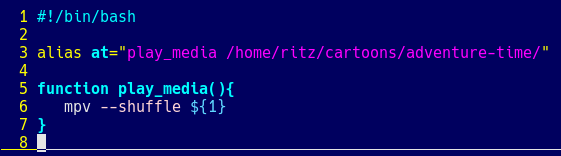
  This was the first bash script I ever wrote.

  It's been updated a little, it was a bash alias first, but this is what it
  looks like now.

  Kinda shows what kinds of problems I needed to solve most.
┌─────────┐                                                            ┌───────────┐
│ similar │                       chronological                        │ different │
╘═════════╧════════════════════════════════════────────────────────────┴───────────┘
 -> file: fediverse/5037
╔══════════════════════════════════════════════════════════────────────────────────┐
║ plus if I ever need to know something about syntax or some obscure function      │
║ that I can't remember, I can type a quick message to the local LLM that's        │
║ running on my 12 year old graphics card and it'll give me an answer in 5ish      │
║ seconds. If it's wrong, I ask again, and I spend a minute or two debugging.      │
║ Sometimes that's better than telling google exactly what you're working on.      │
║                                                                                  │
║ in DWM, that's "alt+enter" and then I type the name of the LLM script I wrote    │
║ "prompt:" and then type whatever question I have and it spits out the results.   │
║ Then when I'm done, either "prompt:" again, which saves the context in an        │
║ environment variable (okay actually a file that I made and I pull from, but      │
║ functionally it's like an environment variable because its just a flat file      │
║ string) until I close the terminal. Then it deletes the context and I can start  │
║ anew, or if I wanted to have multiple conversations going I can do that too.     │
║                                                                                  │
║ ... then I get syntax related search results from locally running software.      │
║ Don't need a massive GPTU...                                                     │
╠═════════╗                                                            ┌───────────┤
║ similar ║                       chronological                        │ different │
╚═════════╩═══════════════════════════════════════════════─────────────┴───────────┘
 -> file: fediverse/5405
══════════════════════════════════════════════════════════════──────────────────────
  can't stop thinking about a visual programming editor that can be interacted
  with in the same way that people are used to (think chromebooks dragging and
  dropping icons in a web UI) but produces a text-file full of code and all the
  required compilation scripts for any language the user requires...

  seriously, programming is not THAT different between the different languages.
  especially the main ones. they're all essentially variables and function calls
  at the end of the day, so why not abstract away all the extra details and build
  something that n00bz can actually use to build things.

  I technically could make this but I don't have the bandwidth and I don't think
  it's important really? who can say, the tools tend to co-create the solutions
  in my experience.
┌─────────┐                                                            ┌───────────┐
│ similar │                       chronological                        │ different │
╘═════════╧═══════════════════════════════════════════════════─────────┴───────────┘
 -> file: fediverse/849
╔═════════════════════════════════════════─────────────────────────────────────────┐
║ wish there were ascii characters that took up more than one line of code         │
║ vertically.                                                                      │
║                                                                                  │
║ wonder if we could use a sorting algorithm, or markup language, or something     │
║ like that to organize less structured data along user-customizable rules. Like,  │
║ a code editor that worked with your ideas, rather than the strict expression of  │
║ your text. You could pretty much write in any language, even pseudocode, and     │
║ the LLM behind the scenes would translate whatever you wrote into whatever       │
║ result you needed. Writing Rust, but need to fit in with C code? No worries      │
║ it'll translate for you. As long as the end result is functionally the same,     │
║ which could be verified by running two separate VMs that ran interpreters every  │
║ time you saved. And as long as their translation layers matched completely,      │
║ then odds are they're the same. And if not, well, the programmer can always      │
║ debug it. It's not like this would be running on something that needed to        │
║ perform in the moment? Like, improv instead of tragedies, or battles instead of  │
║ strategies                                                                       │
╠═════════╗                                                            ┌───────────┤
║ similar ║                       chronological                        │ different │
╚═════════╩══════════════════════════════──────────────────────────────┴───────────┘
 -> file: messages/434
═══════════════════════════════════════════════─────────────────────────────────────
  I work with large language models because it's a quick and easy way to turn
  language into meaning. And computers are meaning abstraction machines, so if
  you can speak your language and they hear their language, you can do anything.
┌─────────┐                                                            ┌───────────┐
│ similar │                       chronological                        │ different │
╘═════════╧════════════════════════════════════────────────────────────┴───────────┘
 -> file: fediverse/5949
═══════════════════════════════════════════════════════════════════─────────────────
  @user-138

  I don't know what it does yet T.T

  it's Lua, not C

  what's the message? maybe I can help, I'm much better at bash than... actually
  I'm not very good at bash, but only the cool kids are.
┌─────────┐                                                            ┌───────────┐
│ similar │                       chronological                        │ different │
╘═════════╧════════════════════════════════════════════════════════────┴───────────┘
 -> file: fediverse/6324
═════════════════════════════════════════════════════════════════════───────────────
  claude-code isn't a chatbot, it's an IDE
┌─────────┐                                                            ┌───────────┐
│ similar │                       chronological                        │ different │
╘═════════╧══════════════════════════════════════════════════════════──┴───────────┘
 -> file: fediverse/1977
════════════════════════════════════════════════────────────────────────────────────
  functions should be forced to describe the context of why they were being
  called. I think it would help debug a lot if we supplied a reasoning for each
  and every request [function call] that we made. We might even be able to parse
  them into semantic pyramids which we could sorta use to estimate [tree-like
  scanning] how and why the program did do wrong.
┌─────────┐                                                            ┌───────────┐
│ similar │                       chronological                        │ different │
╘═════════╧═════════════════════════════════════───────────────────────┴───────────┘
 -> file: fediverse/3482
══════════════════════════════════════════════════──────────────────────────────────
  ┌───────────────────────┐
  │ CW: cursing-mentioned │
  └───────────────────────┘


  "Alright I'm not great with syntax so I'm going to write it in pseudocode
  first, and then if you'd like I can show you how I work through implementing
  the syntax.

  But first - do you want a robust solution, a quick solution, or a rapidly
  deployed and cheap solution?"

  using this trick you can pretend to be competent in any programming language,
  except maybe ancient ones like Fortran or strange ones like lisps or Haskell

  if they ask you to use a framework or something tho you're kinda boned because
  you need to know which functions to call and how to initialize context and
  such. When using a framework, the boilerplate is the code, which is why
  frameworks suck

  "*don't call yourself a programmer*" fuck off
┌─────────┐                                                            ┌───────────┐
│ similar │                       chronological                        │ different │
╘═════════╧═══════════════════════════════════════─────────────────────┴───────────┘
 -> file: fediverse/634
═════════════════════════════════════════───────────────────────────────────────────
  @user-192

  I'd agree with that. it's not designed for performance, not really. Mostly
  ubiquity, which is it's strength. As long as something can be compiled to a
  binary, BASH can execute it. That's why it's good, for accomplishing *diverse*
  tasks that you cannot have the capacity to program yourself. Scientific
  computations or cultural approximations, things that are beyond your intuitive
  understanding as a human on this earth, but which compel and align your
  thinking.

  I'm sure someone could create a more intuitive or accessible syntax, but syntax
  isn't the point - the capabilities, what you can do with it, has always defined
  the purpose of programming paradigms. And BASH is (currently) at the forefront
  of it's niche, the "terminal" language that handles "command line"
  applications. Powershell is good, yes... but it's not as good as BASH. Neither
  is Fish or... the one that starts with a z? zfs? something like that. The
  acronyms are hard to keep straight sometimes.
┌─────────┐                                                            ┌───────────┐
│ similar │                       chronological                        │ different │
╘═════════╧══════════════════════════════──────────────────────────────┴───────────┘
 -> file: fediverse/185
══════════════════════════════════════──────────────────────────────────────────────
  so... is dynamic typing just automatic typecasting?

  #programming
┌─────────┐                                                            ┌───────────┐
│ similar │                       chronological                        │ different │
╘═════════╧═══════════════════════════─────────────────────────────────┴───────────┘
 -> file: fediverse/403
════════════════════════════════════════────────────────────────────────────────────
  cursed idea:

  a compiler that only accepts source-code with exactly 80 characters per line

  (whitespace counts)
┌─────────┐                                                            ┌───────────┐
│ similar │                       chronological                        │ different │
╘═════════╧═════════════════════════════───────────────────────────────┴───────────┘
 -> file: fediverse/3587
══════════════════════════════════════════════════──────────────────────────────────
  ┌─────────────────────────────┐
  │ CW: re: computers-mentioned │
  └─────────────────────────────┘


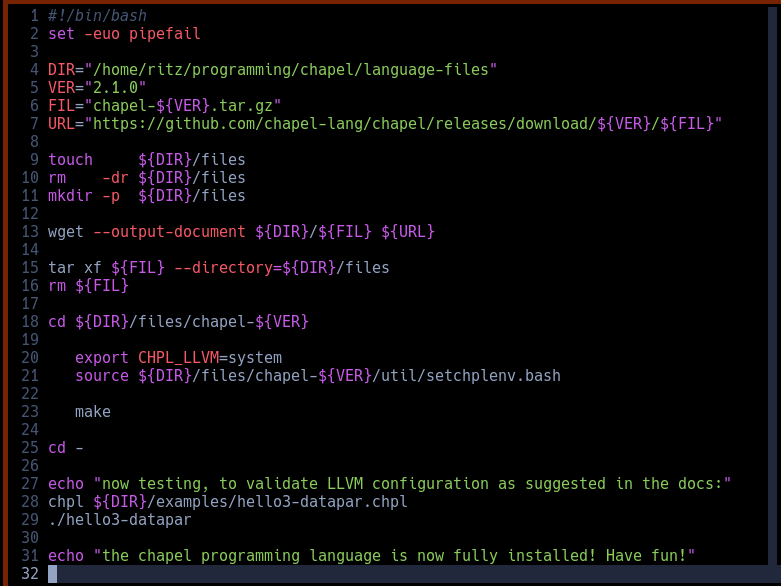
  I realized that script was bugged, so... here's a better one. Plus a fun run
  script too!`#!/bin/bash
  set -euo pipefail

  DIR="/home/ritz/programming/chapel/language-files"
  VER="2.1.0"
  FIL="chapel-${VER}.tar.gz"
  URL="https://github.com/chapel-lang/chapel/releases/download/${VER}/${FIL}"
  NUM_THREADS="16"

  touch     ${DIR}/files
  rm    -dr ${DIR}/files
  mkdir -p  ${DIR}/files

  wget --output-document ${DIR}/${FIL} ${URL}

  tar xf ${FIL} --directory=${DIR}/files
  rm ${FIL}

  cd ${DIR}/files/chapel-${VER}

     export CHPL_LLVM=system
     source ${DIR}/files/chapel-${VER}/util/setchplenv.bash

     make -j${NUM_THREADS}


     echo "now testing, to validate LLVM configuration as suggested in the docs:"
     chpl "./examples/hello3-datapar.chpl"
     ./hello3-datapar

     echo "the chapel programming language is now fully installed! Have fun!"

  cd -
  `
┌─────────┐                                                            ┌───────────┐
│ similar │                       chronological                        │ different │
╘═════════╧═══════════════════════════════════════─────────────────────┴───────────┘
 -> file: fediverse_boost/414
◀═╦═══════════════════════════[BOOST]════════════════════════════────────────────┐
  ║ ┌──────────────────────────────────────────────────────────────────────────┐ │
  ║ │ Some programming languages I’ve tried and liked and would recommend to   │ │
  ║ │ others:C (especially C89/C90/“ANSI C” and C99)posix shell, bourne        │ │
  ║ │ shell, and similar shells (bash, ksh93, mksh)PHPScheme (depending on     │ │
  ║ │ the vibes I’m getting from someone I might recommend)Common Lisp (Same   │ │
  ║ │ caveat as Scheme)Emacs Lisp (Same caveat as Scheme and Common            │ │
  ║ │ Lisp)Motorola 68000 assembly                                             │ │
  ║ │                                                                          │ │
  ║ │ Some languages I’ve tried and liked but would not recommend to           │ │
  ║ │ others:Hewlett-Packard RPL (Actually I might recommend it to someone     │ │
  ║ │ but it has to be a very specific kind of person)FORTH (same as           │ │
  ║ │ RPL)Commodore BASIC (Microsoft BASIC) for the VIC-206502 assembly (so    │ │
  ║ │ bad it’s good)Z80 assembly                                               │ │
  ║ │                                                                          │ │
  ║ │ Some languages I’ve tried, did not like, and would not recommend to      │ │
  ║ │ others:COBOL (maybe I could get used to it? I can at least read it.      │ │
  ║ │ Just it’s so painfully like writing SQL statements without being as      │ │
  ║ │ generally useful as SQL database queries)Kotlin (Like that feeling when  │ │
  ║ │ you read words that alone you understand, but together in a sentence     │ │
  ║ │ they make zero sense)JavaClojure (a.k.a. “Let’s make Common Lisp but     │ │
  ║ │ make it worse”)Rust (stands for “Ridiculous Use of System Time” or       │ │
  ║ │ something as far as I am concerned, heavy on memory and storage and      │ │
  ║ │ super slow to compile and reads like Kotlin)TI BASIC (TI-82/83/84        │ │
  ║ │ style; TI-89 is a little bit better but still not good)C++ (unless       │ │
  ║ │ you’re just writing almost completely C and building it with a C++       │ │
  ║ │ compiler)x86 assembly (I kind of like it but mostly don’t, there are     │ │
  ║ │ better and more coherent CISC processor ISA’s if you’re into that)       │ │
  ║ │                                                                          │ │
  ║ │ I should put Javascript somewhere, so I’ll say that it’s possible to     │ │
  ║ │ write javascript code that I like and can read. Just no one chooses to   │ │
  ║ │ do it anymore. There was a window between the time JQuery started to     │ │
  ║ │ fade and all these stupid fucking “web frameworks” took off that it was  │ │
  ║ │ somewhat tolerable.                                                      │ │
  ║ └──────────────────────────────────────────────────────────────────────────┘ │
  ╠─────────┐                                                        ┌───────────┤
  ║ similar │                     chronological                      │ different │
  ╚═════════╧════════════════════════════════════════════════════────┴───────────┴─▶
 -> file: fediverse/6436
══════════════════════════════════════════════════════════════════════──────────────
  force computers to make code in a different style so we can tell which has been
  AI written

  "force" is never gonna work.
┌─────────┐                                                            ┌───────────┐
│ similar │                       chronological                        │ different │
╘═════════╧═══════════════════════════════════════════════════════════─┴───────────┘
 -> file: messages/122
════════════════════════════════════════────────────────────────────────────────────
  An LLM that reads and interprets reports and stores data - server-side
  encryption. If the receiver and sender both have the same point of view, they
  can interpret each other's expressions even though the exact message wasn't
  transmitted. Essentially, an encryption that's impossible to understand because
  it's trained with specific random data. But in addition, a secondary pass
  through acts as a de-encrypted translator that speaks however it's audience
  needs to be informed. A simulacrum of intelligence, another layer to our form.

  How beautiful, how resplendant- our computers, here on this planet.

  Resplendant: resplendent except with an A instead of an E. To make it sound
  more like "verdant" which I believe has the same-or-similar meaning.
┌─────────┐                                                            ┌───────────┐
│ similar │                       chronological                        │ different │
╘═════════╧═════════════════════════════───────────────────────────────┴───────────┘
 -> file: fediverse/3577
══════════════════════════════════════════════════──────────────────────────────────
  ┌─────────────────────────┐
  │ CW: computers-mentioned │
  └─────────────────────────┘


  I love writing installation scripts like this!

  If you want to install something on Linux but you have difficulty, talk to me
  and I'll write you a script like this. I might even make it fancier.

  This one installs a programming language that is useful for *parallel
  computing* across *multiple clusters of computers* which could be useful if you
  want to leverage *multiple CPUs and GPUs with ease* to compute tasks which are
  far beyond a normal computer.

  https://chapel-lang.org/download.html
┌─────────┐                                                            ┌───────────┐
│ similar │                       chronological                        │ different │
╘═════════╧═══════════════════════════════════════─────────────────────┴───────────┘
 -> file: fediverse/5945
═══════════════════════════════════════════════════════════════════─────────────────
  lua is my favorite language
┌─────────┐                                                            ┌───────────┐
│ similar │                       chronological                        │ different │
╘═════════╧════════════════════════════════════════════════════════────┴───────────┘
 -> file: fediverse/1521
════════════════════════════════════════════────────────────────────────────────────
  if we had better installer software we could have programs that work on any
  different type of machinery.

  ... isn't that what a compiler is?
┌─────────┐                                                            ┌───────────┐
│ similar │                       chronological                        │ different │
╘═════════╧═════════════════════════════════───────────────────────────┴───────────┘
 -> file: fediverse/6307
═════════════════════════════════════════════════════════════════════───────────────
  AI systems like chatGPT don't "get" emojis by looking at them.

  They're reading the description tagged onto the unicode value inserted in the
  text.
┌─────────┐                                                            ┌───────────┐
│ similar │                       chronological                        │ different │
╘═════════╧══════════════════════════════════════════════════════════──┴───────────┘
 -> file: fediverse/4198
═════════════════════════════════════════════════════───────────────────────────────
  what if google translate translated literally so you could get a feel for the
  grammar
┌─────────┐                                                            ┌───────────┐
│ similar │                       chronological                        │ different │
╘═════════╧══════════════════════════════════════════──────────────────┴───────────┘
 -> file: fediverse/4296
═════════════════════════════════════════════════════───────────────────────────────
  @user-1655

  why don't we just weaponize email and send json to each other that ends up
  parsed, interpreted, and presented on the end-user's computer using whatever
  client we want?
┌─────────┐                                                            ┌───────────┐
│ similar │                       chronological                        │ different │
╘═════════╧══════════════════════════════════════════──────────────────┴───────────┘
 -> file: fediverse/5229
╔════════════════════════════════════════════════════════════──────────────────────┐
║ what if programs just checked the current state of the program against their     │
║ past memory of it every time their looping functions got to the end of a new     │
║ kind of while loop which checked the previous state of all the variables in the  │
║ system as compared to the arguments of the function that is called by the new    │
║ kind of while loop which look exactly the same as the last memory of the         │
║ program. Okay. Let's write it to RAM and then start working on the next one.     │
║ Once we run out of space or the operating system needs more, we can relinquish   │
║ the oldest ones. The idea is to store state after all which could be             │
║ programmatically checked to make sure it didn't change underneath our feet.      │
║ Then you pretty much wouldn't need to worry about buffer overflows or            │
║ cybersecurity incidents at all...                                                │
║                                                                                  │
║ after all, it's only read only. what's the harm in reading our tax               │
║ documentation?                                                                   │
║                                                                                  │
║ anyway, something about functional programming languages like lisp passing the   │
║ entire state of the program to each recursion...if you use that kind...          │
╠═════════╗                                                            ┌───────────┤
║ similar ║                       chronological                        │ different │
╚═════════╩═════════════════════════════════════════════════───────────┴───────────┘
 -> file: fediverse/4865
═════════════════════════════════════════════════════════───────────────────────────
  ┌─────────────────────────┐
  │ CW: computers-mentioned │
  └─────────────────────────┘


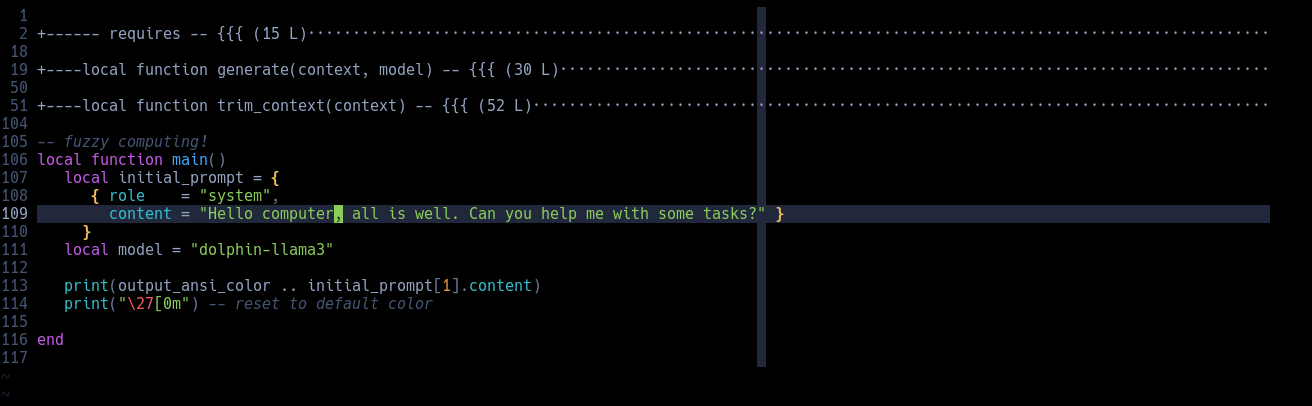
  this is all it takes to send a message to a local LLM.

  add a third function to get chatbot functionality.

  a fourth to get a database storing method

  (even if it's just in .txts)

  great, you've mastered the technical difficulty in using AI. Now you gotta
  learn all the other kind of programming so you can use this for situations that
  need interpretation moment to moment.

  aka active duty systems.

  something like "output a 0 if the next text is [category.iter()]: " +
  output.get_content() + " \n\n output a 1 if the next text is [category.iter()]:
  " + output.get_content()"

  or even "describe this thing as most like one of these characteristics" until
  eventually you get THX-1138 if the characters were computers.
┌─────────┐                                                            ┌───────────┐
│ similar │                       chronological                        │ different │
╘═════════╧══════════════════════════════════════════════──────────────┴───────────┘
 -> file: messages/19
══──────────────────────────────────────────────────────────────────────────────────
  https://www.masteringemacs.org/article/the-emacs-27-edition-of-mastering-emacs-o
  ut-now
┌─────────┐                                                            ┌───────────┐
│ similar │                       chronological                        │ different │
╘═────────┴────────────────────────────────────────────────────────────┴───────────┘
 -> file: fediverse/5338
══════════════════════════════════════════════════════════════──────────────────────
  I asked my girlfriend what was so special about lisp

  she said it was "homoiconic"

  I asked what that meant

  she said that the text that comprised the source code was always a valid data
  structure in the language, meaning you could do strange things like develop new
  control flow systems or change the behavior of language primitives like + or -

  I asked what was the point, she said I didn't get it

  so then she asked me to implement a new control flow operator in my favorite
  language, Lua, and I was like "bet"

  so I did

  and it turns out that in order to do so I essentially created a mini embedded
  lisp inside of Lua

  (it was a function that took in two arguments and an operator and she's like
  congrats that's just lisp)

  it was at this moment that I was enlightened

  the beauty of lisp

  it's true and ultimate purpose

  is to write lisp code
┌─────────┐                                                            ┌───────────┐
│ similar │                       chronological                        │ different │
╘═════════╧═══════════════════════════════════════════════════─────────┴───────────┘
 -> file: fediverse/6308
═════════════════════════════════════════════════════════════════════───────────────
  ┌──────────────────────┐
  │ CW: AI-mentioned     │
  └──────────────────────┘


  what if LLMs were a layer between the user and the dictionary

  [tokens -> words] is similar to:
  [mathematics -> tokens]
┌─────────┐                                                            ┌───────────┐
│ similar │                       chronological                        │ different │
╘═════════╧══════════════════════════════════════════════════════════──┴───────────┘
 -> file: fediverse/3151
╔════════════════════════════════════════════════──────────────────────────────────┐
║ ┌───────────────────────────┐                                                    │
║ │ CW: re: cursing-mentioned │                                                    │
║ └───────────────────────────┘                                                    │
║                                                                                  │
║                                                                                  │
║ @user-1461                                                                       │
║                                                                                  │
║ I'm best at Bash.                                                                │
║                                                                                  │
║ I'm most capable with Lua.                                                       │
║                                                                                  │
║ My favorite is C.                                                                │
║                                                                                  │
║ I'm not a good programmer, I think too hard. Massive systems are too large for   │
║ me. I like laying out data, whether that be by files and programs in Bash,       │
║ arrays and tables in Lua, or memory and datatypes in C, I like to think about    │
║ how programs are constructed.                                                    │
║                                                                                  │
║ Which functions point to which piles of numbers? what do they do when they get   │
║ there?                                                                           │
║                                                                                  │
║ I think I'm better as an artist. But I can do systems administration quite well  │
║ (with Bash and a guiding hand telling me what and why to do)                     │
║                                                                                  │
║ ... though I kinda suck at technical sysadmin, like Gentoo. There's too much     │
║ terminology - why is data too complicated? Just use data!                        │
║                                                                                  │
║ anyway. I sound opinionated, but I listen closely to good arguments and quickly  │
║ change my tune when I am incorrected. I am a team player, and I firmly believe   │
║ that sometimes a bad plan executed with cohesion and precision is better than    │
║ the best play executed too late and with too little strength.                    │
╠═════════╗                                                            ┌───────────┤
║ similar ║                       chronological                        │ different │
╚═════════╩═════════════════════════════════════───────────────────────┴───────────┘
 -> file: fediverse/2011
════════════════════════════════════════════════────────────────────────────────────
  @user-883

  nvim is nice because you can make addons or plugins or whatever in Lua, which
  is the easiest language in the world.

  I think VSCode sucks - it's literally a web browser that views your own code,
  and it's made by Microsoft so it probably SENDS it to them too. Probably.

  I like nvim because it's just Vim except you can use more plugins (the ones
  written in Lua)
┌─────────┐                                                            ┌───────────┐
│ similar │                       chronological                        │ different │
╘═════════╧═════════════════════════════════════───────────────────────┴───────────┘
 -> file: fediverse/5141
════════════════════════════════════════════════════════════────────────────────────
  all you have to do is include the current state of the LLMs registers in the
  output so that it can use them as a base next time it starts up.

  boom, infinite context width.

  like playing a video from the beginning as it's recording
┌─────────┐                                                            ┌───────────┐
│ similar │                       chronological                        │ different │
╘═════════╧═════════════════════════════════════════════════───────────┴───────────┘
 -> file: fediverse/2639
════════════════════════════════════════════════────────────────────────────────────
  Lua is 100% better than Python in every way, fite me
┌─────────┐                                                            ┌───────────┐
│ similar │                       chronological                        │ different │
╘═════════╧═════════════════════════════════════───────────────────────┴───────────┘
 -> file: fediverse_boost/334
◀═╦═════════════════════════[BOOST]══════════════════════════────────────────────┐
  ║ ┌──────────────────────────────────────────────────────────────────────────┐ │
  ║ │ compiler errors per revolution                                           │ │
  ║ └──────────────────────────────────────────────────────────────────────────┘ │
  ╠─────────┐                                                        ┌───────────┤
  ║ similar │                     chronological                      │ different │
  ╚═════════╧════════════════════════════════════════════════────────┴───────────┴─▶
 -> file: fediverse/2484
╔═══════════════════════════════════════════════───────────────────────────────────┐
║ @user-1271                                                                       │
║                                                                                  │
║ I can help with that.                                                            │
║                                                                                  │
║ I recommend looking at Ollama, which runs an HTTP server on your local machine   │
║ (hope you have a decent graphics card)                                           │
║                                                                                  │
║ then, script some behavior you'd like to implement using Lua and the LuaSockets  │
║ library. Also dkjson to handle the json parts.                                   │
║                                                                                  │
║ then, all you have to do is construct a prompt based on the variables and        │
║ desired input/output and push it into a json packet and send it to the HTTP      │
║ server. It's less complicated than it sounds.                                    │
║                                                                                  │
║ what you want it to do and your implementation for it is the hard part. But      │
║ perhaps this project of mine will get you started:                               │
║                                                                                  │
║ (I can copy-paste it too if you'd like)                                          │
║                                                                                  │
║ just... don't make a chatbot. chatbots are useless to work on because there's    │
║ already so many of them.                                                         │
║                                                                                  │
║ much better I think to use the LLM to process arbitrary information with an      │
║ unpredictable form into more predictable patterns which can be utilized          │
║ programmatically.                                                                │
║                                                                                  │
║ Feel free to ask any questions. Do keep in mind that training LLMs is            │
║ unethical, but using them is whatever.                                           │

╠═════════╗                                                            ┌───────────┤
║ similar ║                       chronological                        │ different │
╚═════════╩════════════════════════════════════────────────────────────┴───────────┘
 -> file: fediverse/5990
═══════════════════════════════════════════════════════════════════─────────────────
  I have this local language model framework but it's not built into anything
  more than a single-response question. It's runnable as a bash script or lua
  require, which is easy enough. Alas, if only I didn't have to use evil
  corporate infrastructure to make evil corporate cursed artifacts

  [hey don't blame this on us]

  oh I'm not, I'm just saying that it'd be cooler if I could build my own tools.
  Alas, I'm...

  lasy?

  n...no

  I'm drawn to the power of it

  it's got a different magnitude

  it's hard for me to apply myself for things that last longer than a "get
  stoned", but I try as if every time afterwards I might die.

  well, more distraction time, as I wander through claude code
┌─────────┐                                                            ┌───────────┐
│ similar │                       chronological                        │ different │
╘═════════╧════════════════════════════════════════════════════════────┴───────────┘
 -> file: fediverse/1320
═══════════════════════════════════════════─────────────────────────────────────────
  ┌───────────────────────────────────────────────────────┐
  │ CW: cursing-mentioned-programming-languages-mentioned │
  └───────────────────────────────────────────────────────┘


  BASH with the syntax/semantics of LUA and the performance of C would probably
  be the perfect language, IMHO

  procrastinating again, damnit
┌─────────┐                                                            ┌───────────┐
│ similar │                       chronological                        │ different │
╘═════════╧════════════════════════════════────────────────────────────┴───────────┘
 -> file: fediverse/404
════════════════════════════════════════────────────────────────────────────────────
  a preprocessor directive that tells the compiler to ignore all warnings on the
  next line
┌─────────┐                                                            ┌───────────┐
│ similar │                       chronological                        │ different │
╘═════════╧═════════════════════════════───────────────────────────────┴───────────┘
 -> file: fediverse/6269
═════════════════════════════════════════════════════════════════════───────────────
  what if the secret to LLM computation is to just not reduce the fractions and
  keep it all in english language ram
┌─────────┐                                                            ┌───────────┐
│ similar │                       chronological                        │ different │
╘═════════╧══════════════════════════════════════════════════════════──┴───────────┘
 -> file: fediverse/1020
══════════════════════════════════════════──────────────────────────────────────────
  ┌────────────────────────────────────────────────┐
  │ CW: ableism-against-non-verbal-people-sorry-<3 │
  └────────────────────────────────────────────────┘


  @user-747

  almost as if it's not AI, but large LANGUAGE models. And we all speak, don't we?
┌─────────┐                                                            ┌───────────┐
│ similar │                       chronological                        │ different │
╘═════════╧═══════════════════════════════─────────────────────────────┴───────────┘
 -> file: fediverse/1988
════════════════════════════════════════════════────────────────────────────────────
  @user-246

  I once heard that Excel is a functional programming language with a tabular
  interface
┌─────────┐                                                            ┌───────────┐
│ similar │                       chronological                        │ different │
╘═════════╧═════════════════════════════════════───────────────────────┴───────────┘
 -> file: fediverse/3748
═══════════════════════════════════════════════════─────────────────────────────────
  @user-203

  I've been trying to get it to work with raylib but I'm having difficulties with
  the C interoperability T.T

  https://www.raylib.com
┌─────────┐                                                            ┌───────────┐
│ similar │                       chronological                        │ different │
╘═════════╧════════════════════════════════════════────────────────────┴───────────┘
 -> file: fediverse/3098
═════════════════════════════════════════════════───────────────────────────────────
  does anyone know of a software that lets me push a keybind and enter an input
  configuration where after each keypress it inserts the [enter] key? I think
  it'd be useful to design chat applications that could parse long strings of
  text supplied bit-by-bit as a stream.
┌─────────┐                                                            ┌───────────┐
│ similar │                       chronological                        │ different │
╘═════════╧══════════════════════════════════════──────────────────────┴───────────┘
 -> file: messages/1172
════════════════════════════════════════════════════════════════════════────────────
  the danger is not that the LLM will generate poor, vulnerable, or malicious
  code.

  the concern is that someone else might inject something into the codebase that
  you're not reading.
┌─────────┐                                                            ┌───────────┐
│ similar │                       chronological                        │ different │
╘═════════╧════════════════════════════════════════════════════════════╧───────────┘
 -> file: fediverse/6383
══════════════════════════════════════════════════════════════════════──────────────
  nobody wants to write computer code that lets Java programs call Rust functions.
  An LLM is excellent for this task, since it's relatively easy busy work that
  doesn't
  reflect any meaningful implementation decisions besides "I should be able to
  call that Rust function in my Java code"

  In addition, it is technically efficient at it as well, because most of
  compatibility
  is matching up two sets of documentation. Easy for a text-processing machine.
┌─────────┐                                                            ┌───────────┐
│ similar │                       chronological                        │ different │
╘═════════╧═══════════════════════════════════════════════════════════─┴───────────┘
 -> file: fediverse/3751
═══════════════════════════════════════════════════─────────────────────────────────
  I wonder if anyone would pay me to write bash scripts for them? is there a role
  that's just... bash scripter? is that what sysadmins do all day? or is that
  more automation? and what the heck is a dev op? do they write bash scripts?

  or maybe writing bash scripts is the "fun" part of linux, and nobody would pay
  anyone else to do it because they want to do it themselves
┌─────────┐                                                            ┌───────────┐
│ similar │                       chronological                        │ different │
╘═════════╧════════════════════════════════════════────────────────────┴───────────┘
 -> file: fediverse/848
══════════════════════════════════════════──────────────────────────────────────────
  ┌──────────────────────┐
  │ CW: gentoo           │
  └──────────────────────┘


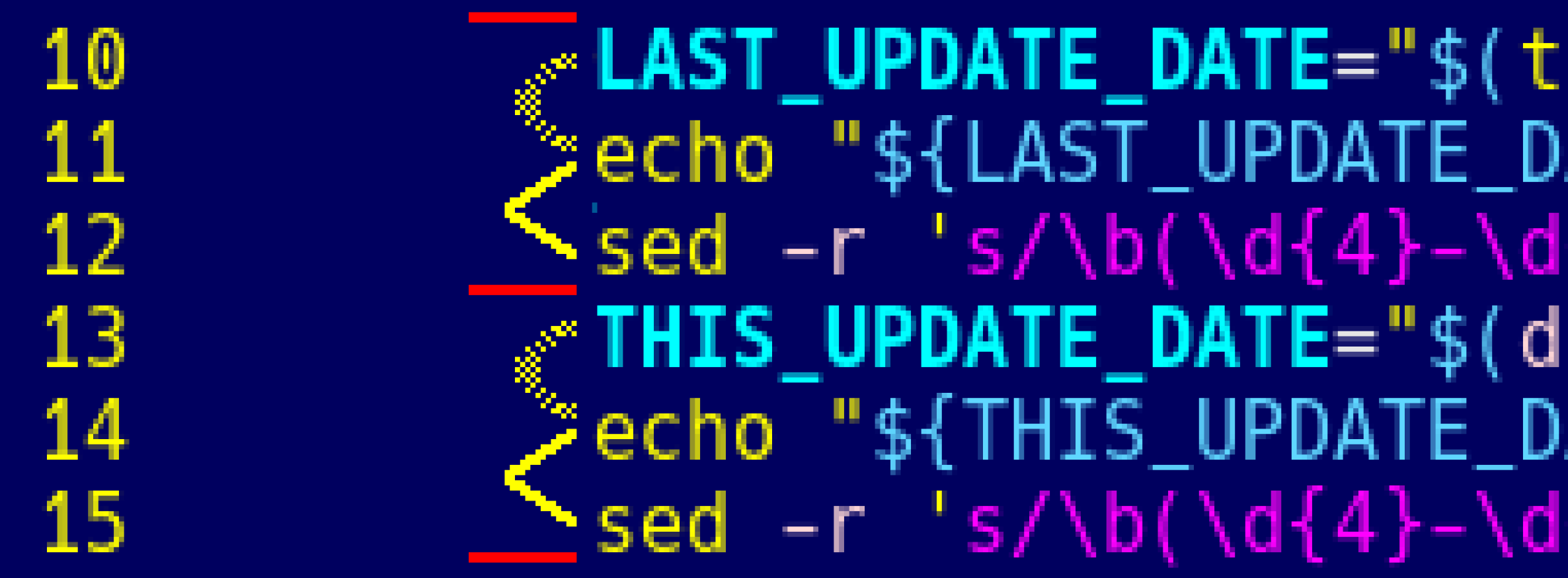
  wrote this in an hour, used a local LLM to generate the regexes.

  haven't tested it yet because I'm not on gentoo rn, so don't run it. which is
  why I shared the code as an image.

  if you really want the text of it then check out the visual description of the
  image.
![#A script written in bash. It is used to update the Gentoo type system to the most recently written functionality. Should not be used more than once a day, and the program written here must be specifically configured to act against that functionality. However, should the user persist in their attempts to break that rule, they simply have to flip a particular switch. #!/bin/bash function gentoo-update(){ RED='\033[0;31m' NOC='\033[0m' if [ "$#" -eq 0]; then date | cat >> ~/scripts/.gentoo-update-target LAST_UPDATE_DATE="$(tail -n 1 '~/scripts/.gentoo-update-target' \ && echo "${LAST_UPDATE_DATE}" \ | sed -r 's/\b(\d{4}-\d{2}-\d{2})\b/\1/g' THIS_UPDATE_DATE="$(date)" \ && echo "${THIS_UPDATE_DATE}" \ | sed -r 's/\b(\d{4}-\d{2}-\d{2})\b/\1/g' if [ ${LAST_UPDATE_DATE} = ${THIS_UPDATE_DATE} ]; then printf "don't sync more than once a day! ${RED} a witch will curse you >: (${NOC}\n" else echo "syncing..." echo "${LAST_UPDATE_DATE}" | cat >> ~/scripts/.gentoo-update-target emerge --sync fi elif [ "${1}" == "-l" ]; then cat ~/scripts/.gentoo-update-target elif [ "${1}" == "-f" ]; then echo "okay but it's your funeral buddy. or worse." energe --sync fi }](../media/a1640a320af86532.png "#A script written in bash. It is used to update the Gentoo type system to the most recently written functionality. Should not be used more than once a day, and the program written here must be specifically configured to act against that functionality. However, should the user persist in their attempts to break that rule, they simply have to flip a particular switch. #!/bin/bash function gentoo-update(){ RED='\033[0;31m' NOC='\033[0m' if [ \"$#\" -eq 0]; then date | cat >> ~/scripts/.gentoo-update-target LAST_UPDATE_DATE=\"$(tail -n 1 '~/scripts/.gentoo-update-target' \ && echo \"${LAST_UPDATE_DATE}\" \ | sed -r 's/\b(\d{4}-\d{2}-\d{2})\b/\1/g' THIS_UPDATE_DATE=\"$(date)\" \ && echo \"${THIS_UPDATE_DATE}\" \ | sed -r 's/\b(\d{4}-\d{2}-\d{2})\b/\1/g' if [ ${LAST_UPDATE_DATE} = ${THIS_UPDATE_DATE} ]; then printf \"don't sync more than once a day! ${RED} a witch will curse you >: (${NOC}\n\" else echo \"syncing...\" echo \"${LAST_UPDATE_DATE}\" | cat >> ~/scripts/.gentoo-update-target emerge --sync fi elif [ \"${1}\" == \"-l\" ]; then cat ~/scripts/.gentoo-update-target elif [ \"${1}\" == \"-f\" ]; then echo \"okay but it's your funeral buddy. or worse.\" energe --sync fi }")
┌─────────┐                                                            ┌───────────┐
│ similar │                       chronological                        │ different │
╘═════════╧═══════════════════════════════─────────────────────────────┴───────────┘
 -> file: fediverse/4772
═════════════════════════════════════════════════════════───────────────────────────
  @user-1692

  I usually write everything down in a script that way when I call it from an
  external service all I have to do is point at the file

  sorta like... hacking environmental options into a config file

  like... I don't write an ffmpeg command every time I want to record my screen.
  I just type "screen-record" and then it'll do the thing that I figured out how
  to do a long time ago.

  ... oh no there's an error, I wonder what changed out from under my feet.

  huh it's wine, that one's always confusing to debug. Let's see... "could not
  open program.exe" uh-huh. Well, why not? is there a dependency issue? something
  miscompiled or configured? no? it's just... broken? you don't get to use that
  program today? huh that's weird. that's linux for ya I guess.
┌─────────┐                                                            ┌───────────┐
│ similar │                       chronological                        │ different │
╘═════════╧══════════════════════════════════════════════──────────────┴───────────┘
 -> file: fediverse/6345
═════════════════════════════════════════════════════════════════════───────────────
  anytime I want to do something new on my computer, I write a bash script.

  if I forgot how to do the thing, I spend time meandering about my
  file-directory-system. If I don't find it, that's okay, because all I have to
  do is keep looking until I stumble upon it.

  kinda makes me wish I had an LLM who managed the operating system and named
  files with long-and-descriptive titles while taking in as context the general
  eternal prompt stored in ~/.claude.md or wherever

  --> /home/ritz/programs/cloud-code/
┌─────────┐                                                            ┌───────────┐
│ similar │                       chronological                        │ different │
╘═════════╧══════════════════════════════════════════════════════════──┴───────────┘
 -> file: fediverse/2003
════════════════════════════════════════════════────────────────────────────────────
  The most important programming language to master is pseudocode.

  With a firm grasp of pseudocode in your toolbox, you can solve any problem in
  any language.
┌─────────┐                                                            ┌───────────┐
│ similar │                       chronological                        │ different │
╘═════════╧═════════════════════════════════════───────────────────────┴───────────┘
 -> file: fediverse/2659
════════════════════════════════════════════════────────────────────────────────────
  I was being tested, of that I have no doubt. I was focused on the situation at
  hand, because that's how an improv actor operates.

  but the improvized conversational "scene" that is in play was also designed to
  test for understanding.

  if the actors in the scene made the same logical "leaps" or "conclusions",
  moving from one thing to another with a clue of emphasis, tone, cadence, and
  flow of conversation...?!*#

  hence, why it's important that the speaker is always the one engaging.

  leaving off the conclusion of a thought in order to check that the person
  you're talking to is going down the correct path of understanding.

  in doing so, you can transfer knowledge in an impossible-to-decrypt manner.

  endless synonyms and custom-made figures of speech (to illustrate a previously
  expressed dynamic)

  while also confirming concurrent data as it's stored.
┌─────────┐                                                            ┌───────────┐
│ similar │                       chronological                        │ different │
╘═════════╧═════════════════════════════════════───────────────────────┴───────────┘
 -> file: fediverse/3800
═══════════════════════════════════════════════════─────────────────────────────────
  @user-1352

  You're absolutely right, the compiler knows better than me! Certainly the
  compiler doesn't know *best*, but certainly the compiler knows *better than me*.
┌─────────┐                                                            ┌───────────┐
│ similar │                       chronological                        │ different │
╘═════════╧════════════════════════════════════════────────────────────┴───────────┘
 -> file: messages/972
═════════════════════════════════════════════════════════════════───────────────────
  vibecoders write detailed instructions. "A for loop which iterates through all
  of the elements" and not "a package manager that stores all of it's instants"
┌─────────┐                                                            ┌───────────┐
│ similar │                       chronological                        │ different │
╘═════════╧══════════════════════════════════════════════════════──────┴───────────┘
 -> file: fediverse/3542
══════════════════════════════════════════════════──────────────────────────────────
  https://cdecl.org/

  for the C programmers
┌─────────┐                                                            ┌───────────┐
│ similar │                       chronological                        │ different │
╘═════════╧═══════════════════════════════════════─────────────────────┴───────────┘
 -> file: fediverse/1758
═══════════════════════════════════════════════─────────────────────────────────────
  @user-883

  you could read in every line in Lua and if it matched the format that the times
  for the subtitles are in, then you could += 5 seconds or whatever and save the
  document. .srt is just a textfile right?
┌─────────┐                                                            ┌───────────┐
│ similar │                       chronological                        │ different │
╘═════════╧════════════════════════════════════────────────────────────┴───────────┘
|