 -> file: fediverse/2405
════════════════════════════════════════════════────────────────────────────────────
  @user-1165

  you might be right, I don't know much about DSA aside from their numbers. To
  me, it feels like it's run sorta like a church? but again I have no idea
  because I've never been.

  do you have a better idea?
┌─────────┐                                                            ┌───────────┐
│ similar │                       chronological                        │ different │
╘═════════╧═════════════════════════════════════───────────────────────┴───────────┘
 -> file: fediverse/2388
════════════════════════════════════════════════────────────────────────────────────
  DSA people: Organizing a protest is practice for organizing. Think about
  fulfilling Mazlowe's Hierarchy of Needs for all people. What are the input
  methods of goods and services? How can they be output to the people who need
  them?

  People: If you don't like PB&J, you can volunteer to make soup or whatever
  you'd like.

  If you're not one of those two categories, then you probably already know what
  you're supposed to do.
┌─────────┐                                                            ┌───────────┐
│ similar │                       chronological                        │ different │
╘═════════╧═════════════════════════════════════───────────────────────┴───────────┘
 -> file: fediverse/746
═════════════════════════════════════════───────────────────────────────────────────
  ┌──────────────────────┐
  │ CW: politics         │
  └──────────────────────┘


  Liberals think the DSA and such is for getting things done.

  That's a nice by-product, but it's mainly supposed to give you a framework to
  build connections on. Connections that you can rely on.

  You don't have to be best buds. You just have to trust each other.
┌─────────┐                                                            ┌───────────┐
│ similar │                       chronological                        │ different │
╘═════════╧══════════════════════════════──────────────────────────────┴───────────┘
 -> file: fediverse/5236
═════════════════════════════════════════════════════════════───────────────────────
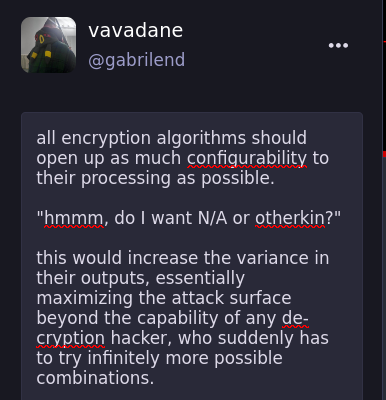
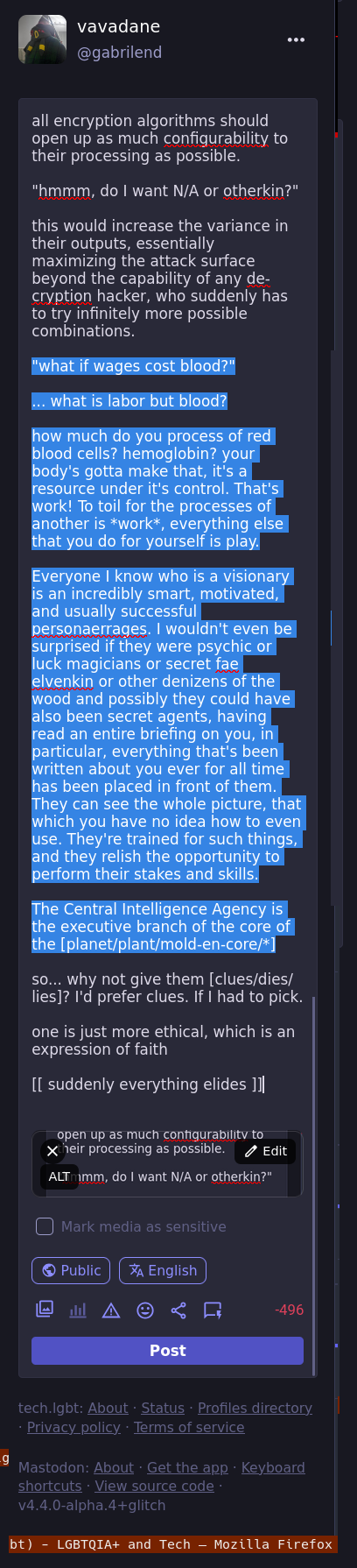
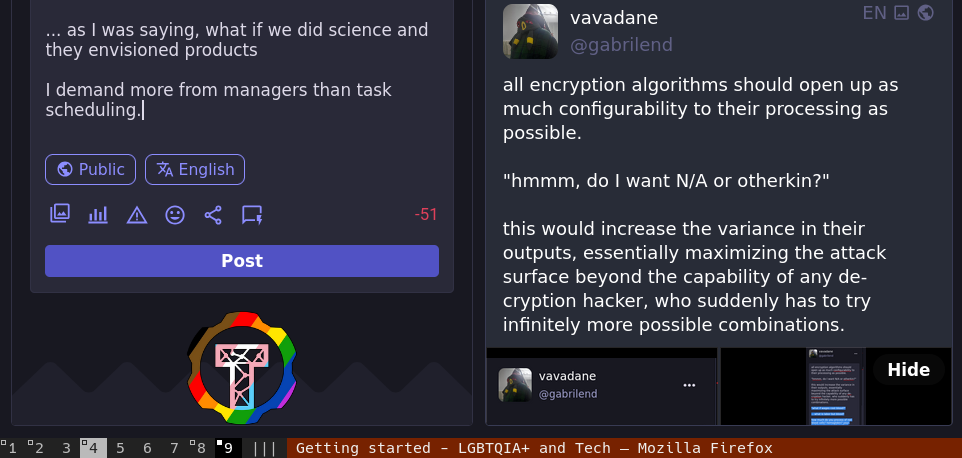
  all encryption algorithms should open up as much configurability to their
  processing as possible.

  "hmmm, do I want N/A or otherkin?"

  this would increase the variance in their outputs, essentially maximizing the
  attack surface beyond the capability of any de-cryption hacker, who suddenly
  has to try infinitely more possible combinations.
┌─────────┐                                                            ┌───────────┐
│ similar │                       chronological                        │ different │
╘═════════╧══════════════════════════════════════════════════──────────┴───────────┘
 -> file: fediverse/2400
════════════════════════════════════════════════────────────────────────────────────
  @user-1165

  I am an anarchist. My strategy is to let the DSA be the centralized vanguard
  party. If another emerges, let them share responsibilities - every burden taken
  off your back is more energy that can be applied to what you are sworn to care
  for.
┌─────────┐                                                            ┌───────────┐
│ similar │                       chronological                        │ different │
╘═════════╧═════════════════════════════════════───────────────────────┴───────────┘
 -> file: fediverse/128
══════════════════════════════════════──────────────────────────────────────────────
  @user-95 I'm not sure, but I once tried to design an algorithm that predicted
  prime numbers. I made this algorithm in my pursuit, but I couldn't figure out
  how to utilize it:

  https://www.desmos.com/calculator/h8oopoctnh
┌─────────┐                                                            ┌───────────┐
│ similar │                       chronological                        │ different │
╘═════════╧═══════════════════════════─────────────────────────────────┴───────────┘
 -> file: fediverse/2200
════════════════════════════════════════════════────────────────────────────────────
  I love D&D books with lots and lots of randomized tables because you can, in a
  pinch, use them as code-books for encrypting text using a method that nobody
  will ever guess. Well, as long as you have two of them, one to give to your
  friend and one to keep yourself.

  This is a form of "symmetric encryption", where you each have a copy of the
  input/output tables. More secure is the private/public key style encryption,
  but good luck explaining that to a 14 year old. Plus you can't do it over a
  radio, you need a computer.
┌─────────┐                                                            ┌───────────┐
│ similar │                       chronological                        │ different │
╘═════════╧═════════════════════════════════════───────────────────────┴───────────┘
 -> file: notes/anarchist-programs
════════════════════════════════════════════════════════════════════════════════────
  I'm writing anarchist computer programs. See:

  ceramic
  everysoft
  my game server projects
  similar-differernt (doomscroll) chronological (tldr)
  golems project (unstarted)
  sorenthal-ds
  probably others... none come to mind...
┌─────────┐                                                            ┌───────────┐
│ similar │                       chronological                        │ different │
╘═════════╧════════════════════════════════════════════════════════════╧════════───┘
 -> file: notes/networked-computers
══════════════════════──────────────────────────────────────────────────────────────
  have a thought, just a package of data - send it to a computer, and have the
  computer process it a little bit. then pass it on. create a circle and you can
  understand data, move along and you can understand a larger breadth of data.

  it's literally just snake, except played on a board made out of a network
  topology diagram. each computer has different programs on it, and they're
  designed specifically to run on those computers. purpose-built hardware.

  then a package of data is sent to that computer through a chain of connections.

     think crossover ethernet cables

  upon arrival, the computer modifies the data and passes it along to whoever
  can process it next. the computers are constantly keeping a list of the closest
  nearby computers for each purpose. it might have like, 2, for a specific
  program. the older the list is, the larger it can grow - if connections are
  reliable then the search criteria can expand (distance etc) and the amount of
  pings between the "known good" computer can decrease. eventually a map will be
  made, and you can guide the "snake" wherever it needs to go on a strategic
  level.

  like... "i need to process some data for this guy in boston so i'm going to
  send it to this other guy in philly and then maybe a specialist all the way out
  in detroit, etc. whoever is the most available and the closest (fewest jumps)

  this way you can have purpose-built machines, sorta like the different parts of
  the brain that do different things. they're always working, and they can be
  paid for their labor. boom, market economy!

  ah but what about aws or azure? well it's like living in a city versus being in
  the countryside. there's more space, more room to grow... basically a "big fish
  in a small pond". they'd be useful for more niche things.

  a but couldn't aws or azure just leverage their monopolistic power (sorta like
  wallmart did to "mom and pop" stores) and wipe out the rural programs? well
  maybe. but the real question is why would they? they have the power of reduced
  latency. they can do all kinds of stuff with that! there's no reason for them
  to bother with the high latency networks. it's like driving in the slow lane
  when you don't need to exit for like an hour.

     well, okay, what's the point then?

  the point is to be optimal. not for cost, but for throughput. the cost is a
  consideration, but not something to optimize for - it simply determines
  timeline. the only reason speed is important is because capitalism - the drive
  to extinct all competition is inherent in the "for profit" motivation.
  therefore something else must be optimized for.

  but how can you quantify the values aside from cost? what are you going to
  optimize?

  the same reason why diversity is a strength. more perspectives on the stated
  goal means more information, as it's passed through a medium that is unique.

  people grow differently in different conditions. why would you not assume their
  computers wouldn't as well? use a filter that is defined by the actions taken
  by the user, and the content they seek to view and store on the computer. have
  the filters modify the data according to that, and essentially automate hot
  takes.

  once you do *that* you can consider all that information gained from everyone's
  "digital vote" and decide a path forward for humanity. that's essentially what
  the "meme-o-verse" does already, and the "blogosphere" does the same thing a
  little more academically.

  so... compile the hot takes and look for what, an average?

  no, silly, it's a vote. do the smart choice and do ranked choice, or something
  like that. heck do different voting styles for different topics, and let
  everyone who contributes to a topic (by making art, writing poems, w/e think
  content creators) decide on the voting style. they'd clearly have a favorite,
  as evidenced by their search history, reddit comments, w/e. try and understand
  that history and boom you know their vote.

     but you can't always vote on things. what if it's fine and not busted?

  well, then there wouldn't be much to talk about it would there? if there's no
  forest fires, nobody thinks about the forest fire department. if there's no
  fish at the sushi restaurant, yeah that's a problem and it needs to be solved.

  maybe there's too many sushi restaurants! maybe we should schedule visits in
  advance like we do for vacations! maybe we should have, i dunno, more equitable
  distribution of resources, from each to their ability from each their need or
  w/e.

  you know, a UI in a game is an interface to the internals of a computer. they
  see what you see, and how you act online determines their behavior. they are
  a digital form of you, like a child follows a parent or a pet learns from a
  master. so too is an operating system a method of operating both a system, and
  a user.
┌─────────┐                                                            ┌───────────┐
│ similar │                       chronological                        │ different │
╘═════════╧═══════════─────────────────────────────────────────────────┴───────────┘
 -> file: fediverse/572
═════════════════════════════════════════───────────────────────────────────────────
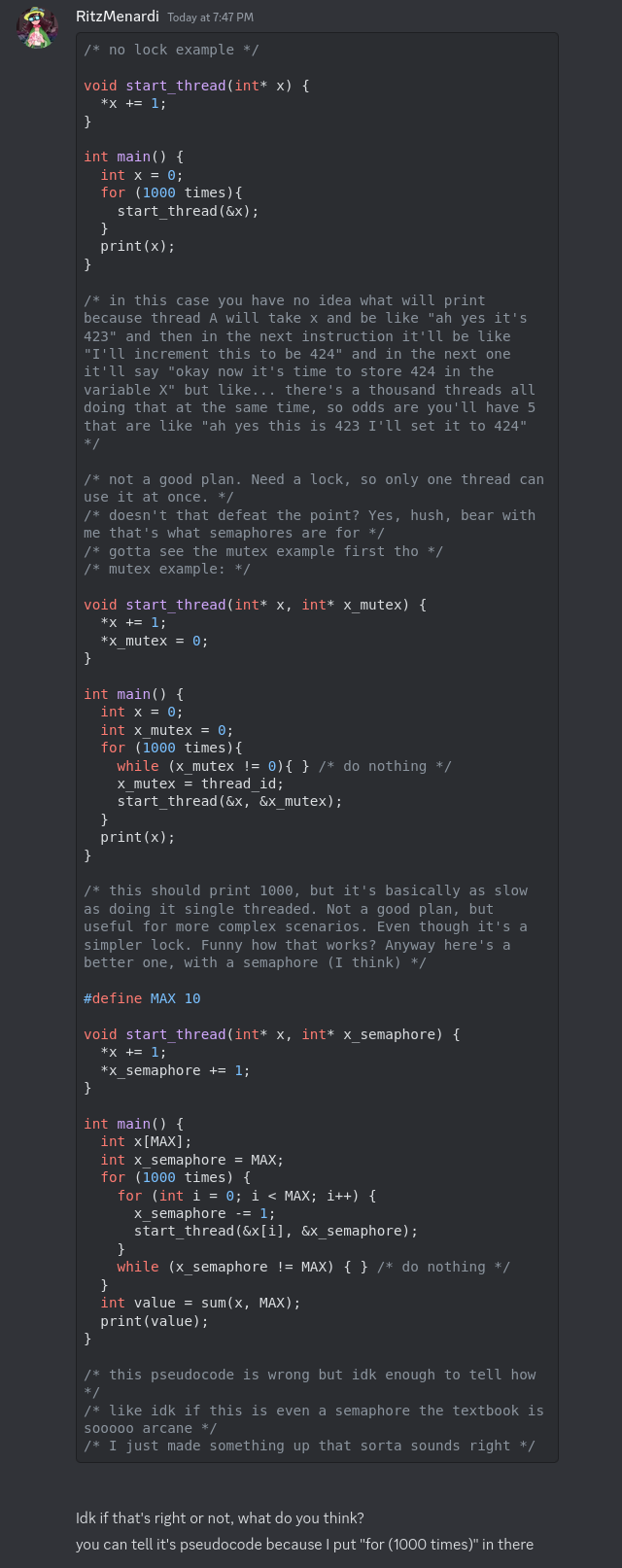
  Hi, I'm learning about semaphores right now and trying to explain them to a
  friend. But I only sorta understand how they work - can anyone look at this
  pseudocode and tell me if I'm on the right track?
┌─────────┐                                                            ┌───────────┐
│ similar │                       chronological                        │ different │
╘═════════╧══════════════════════════════──────────────────────────────┴───────────┘
 -> file: messages/329
══════════════════════════════════════════════──────────────────────────────────────
  LLM training data that's been encrypted in such a way that it preserves
  symantic meaning, while also allowing for secrecy and unique customization
┌─────────┐                                                            ┌───────────┐
│ similar │                       chronological                        │ different │
╘═════════╧═══════════════════════════════════─────────────────────────┴───────────┘
 -> file: fediverse/3557
══════════════════════════════════════════════════──────────────────────────────────
  did you know that IF checks can be represented using arithmetic? It's true!

  ... as long as your input value A is a 0 or 1, of course. If A, then B.
  Otherwise, C.`A * B + (1 - A) * C
  `

  which means that an OR check could perhaps be something similar to`A / B - (1 +
  A) / C
  `

  boom, solved N=NP, gimme a million dollars lmao

  *she did not, in fact, get a million dollars. She's got the spirit but boy does
  she miss the mark.*

  *... repeatedly, and consistently. Something something "girl who cried wolf"*
┌─────────┐                                                            ┌───────────┐
│ similar │                       chronological                        │ different │
╘═════════╧═══════════════════════════════════════─────────────────────┴───────────┘
 -> file: messages/343
══════════════════════════════════════════════──────────────────────────────────────
  Person, family, neighborhood, city, state, nation, planet. This is a rough
  description of each "tier" of algorism. These rules apply at every tier, so
  though I said "state" and "nation" for the presented arguments they are equally
  relevant to the family and the planet.
┌─────────┐                                                            ┌───────────┐
│ similar │                       chronological                        │ different │
╘═════════╧═══════════════════════════════════─────────────────────────┴───────────┘
 -> file: fediverse/5189
════════════════════════════════════════════════════════════────────────────────────
  computer programming essentially boils down to putting the right values into
  the right datastructures at the right time and in the right order.

  If you count a function call as a datastructure, which I do, because I have
  opinions.
┌─────────┐                                                            ┌───────────┐
│ similar │                       chronological                        │ different │
╘═════════╧═════════════════════════════════════════════════───────────┴───────────┘
 -> file: fediverse/2895
═════════════════════════════════════════════════───────────────────────────────────
  @user-192

  ....... yeah you're probably right. I could never get it working for some
  reason. Only Alsa worked, and Alsa is arcane to configure :ms_confused:
┌─────────┐                                                            ┌───────────┐
│ similar │                       chronological                        │ different │
╘═════════╧══════════════════════════════════════──────────────────────┴───────────┘
 -> file: fediverse/2355
════════════════════════════════════════════════────────────────────────────────────
  ┌──────────────────────┐
  │ CW: uspol            │
  └──────────────────────┘


  If you're DSA and you're reading this, you have 48 hours to organize the
  greatest protest in history.

  And this time we don't have Twitter or Facebook.

  They would give us a king. It's now or never.
┌─────────┐                                                            ┌───────────┐
│ similar │                       chronological                        │ different │
╘═════════╧═════════════════════════════════════───────────────────────┴───────────┘
 -> file: messages/344
══════════════════════════════════════════════──────────────────────────────────────
  In algorism, every month any unspent dollars are distributed to all of a
  person's open queues. Should a person have no open queues, then perhaps they
  may be distributed to everyone in the rest of the structure, to foster a sense
  of solidarity, or perhaps they are simply lost, as money unspent is money
  wasted. Either way, the relevant functionality is the dispersal of unspent
  currency. This applies to higher states as well, such as states - if a state is
  engaged in many profitable arrangements and fails to balance it's external
  budget, then the unspent dollars must be distributed to everyone else in their
  tier for the next month.

  Ah, but this raises a critical question - dispersal to the tier, dispersal to
  the structure, or waste? I believe dispersal to the tier is best, though
  perhaps it should be a choice made in each instance by the representatives. Or
  perhaps it should be a requirement for them to choose a certain way - it's up
  to the people of that state, that family, that neighborhood, to decide what
  privileges their representatives possess. However, the options available for
  them to choose between are limited, as the mechanical interactions of these
  unit structures (the representative and everyone they represent) are
  necessarily defined by the system. As such, the options may be enumerated, and
  in doing so they are granted as options to be wielded by representatives as
  their constituents see fit.
┌─────────┐                                                            ┌───────────┐
│ similar │                       chronological                        │ different │
╘═════════╧═══════════════════════════════════─────────────────────────┴───────────┘
 -> file: messages/21
══──────────────────────────────────────────────────────────────────────────────────
  https://www.redhat.com/en/services/training/ex200-red-hat-certified-system-admin
  istrator-rhcsa-exam
┌─────────┐                                                            ┌───────────┐
│ similar │                       chronological                        │ different │
╘═────────┴────────────────────────────────────────────────────────────┴───────────┘
 -> file: fediverse/2475
════════════════════════════════════════════════────────────────────────────────────
  If you want to design a society, first learn how to build a decentralized
  scalable multiprocessor computer program.

  It could literally flip bits, the point is to practice architecture not
  accomplish a goal.
┌─────────┐                                                            ┌───────────┐
│ similar │                       chronological                        │ different │
╘═════════╧═════════════════════════════════════───────────────────────┴───────────┘
 -> file: fediverse/701
═════════════════════════════════════════───────────────────────────────────────────
  ┌──────────────────────┐
  │ CW: computer-code    │
  └──────────────────────┘


  totally useless unless you're, I dunno, building a bytecode interpreter or
  something

  https://craftinginterpreters.com/contents.html

┌─────────┐                                                            ┌───────────┐
│ similar │                       chronological                        │ different │
╘═════════╧══════════════════════════════──────────────────────────────┴───────────┘
 -> file: fediverse/2003
════════════════════════════════════════════════────────────────────────────────────
  The most important programming language to master is pseudocode.

  With a firm grasp of pseudocode in your toolbox, you can solve any problem in
  any language.
┌─────────┐                                                            ┌───────────┐
│ similar │                       chronological                        │ different │
╘═════════╧═════════════════════════════════════───────────────────────┴───────────┘
 -> file: notes/division-by-zero
══════════════════════════════════──────────────────────────────────────────────────
  --{{{ introduction
     When division is explained at the elementary arithmetic level, it is often
     considered as splitting a set of objects into equal parts. As an example,
     consider having ten cookies, and these cookies are to be distributed equally
     to five people at a table. Each person would receive 10 / 5 = 2  cookies.
     Similarly, if there are ten cookies, and only one person at the table, that
     person would receive 10 / 1 = 10  cookies.

     So, for dividing by zero, what is the number of cookies that each person
     receives when 10 cookies are evenly distributed among 0 people at a table?
     Certain words can be pinpointed in the question to highlight the problem. The
     problem with this question is the "when". There is no way to distribute 10
     cookies to nobody. Therefore, 10 / 0 —at least in elementary arithmetic—is
     said to be either meaningless or undefined.

  - wikipedia, division by zero, 7-12-23

     alright I have several problems with this. I like the idea of dividing
  cookies, but I disagree with their conclusions. So dividing by integers works as
  they say, but division by zero is a little different - they say "the problem
  with this question is 'when'" when in reality 'when' is the same for this
  question as it is for any of the others. Obviously, zero is just a number. Why
  would this be any different? The computational actions necessary to complete
  this statement all occur at the same time, because they are by definition
  immutable. You cannot change any equation, you only generate new ones.

  Okay so here's my thinking. To answer the question "what is the number of
  cookies that each person receives when 10 cookies are evenly distributed among 0
  people at a table?" we simply have to answer the question. "How many cookies do
  I get?" well, none, because you weren't at the table. In fact nobody was at the
  table, so the result is that nobody got zero cookies.

  You might even say you have a remainder of 10 cookies, as none of them were
  distributed.

  10 / 0 = 0 remainder 10

  ^^^ that's how I think it should be. I have an algorithmic justification, and
  excuse me as I don't have a mathematical proof or anything. Math was never my
  strong suit, there's too many symbols and strange names for obvious operations
  that get in the way of the abstract big picture.

  ahem...

  abstract:

  Given: x = 13 / 3 what is x?

  step 1: convert 13 to base 3
  step 2: digit shift right by 1
  step 3: convert back to binary
  --}}}

  --{{{ step 1:
                                  v
  start with the binary number 1101 which is 13 in decimal. To convert to a base 3
  number,                          \___________________.
         \                                             |
          first start with the Least Significant Bit (LSB) which is 1. So our
          base-3 number starts with 0001.

                                v
  Next, move to the next bit: 1101
                                ^-----It's a zero so we can skip it.
  Which means our
  base 3 number remains unchanged as "0001"
                                v
  Next, move to the third bit: 1101
                                ^-----It's a 1, which evaluates to 4 in decimal,
                                      meaning we should add 4 to our base 3 number

                                                base 3
     4 in base 3 is "11", which means we         0001 <----- 1 in decimal
   should have a base 3 number of "12" now.     +0011 <----- 4 in decimal
                                                =0012 <----- 5 in decimal
                                                     \_________ 2? -> yes, base 3
                                                                      remember?
  Next, move to the fourth and final bit: 1101
                                          ^ --it's a 1, which evaluates to 8 in
        0012-----.____________                   decimal. 8 in decimal is "22" in
       +0022-----.            \                        base 3, which means we
       need to
       =0111      \            T---- add "22" and "12" in base 3
                   \__________/                        to get our final number of
                                                       13. Which should evaluate
  step 2:                                              to 0111 in base 3.
            .____.
  bit shift |0111| to the right,
            |>>>>|
            |0011|--->1 underflow
            .----.

  meaning the base 3 number is now 0011 with an underflow (remainder) of 1

  step 3:

  convert back to binary, meaning 0011 in base-3 becomes 4 in decimal or 0100 in
  binary. Store the underflow as the remainder.

  ================================================================================

  okay that's great and all, but what does this have to do with dividing by zero?

  great question, me. I have two questions I want to pose to you:

  1. what happens when trying to divide by 1 with this algorithm?
     - you convert to base 1
                            \
                             wait hang on base 1? Sounds made up... Well, its not!
                             or at least if it is, then I'm the one who made it up
                             so... yeah
                             |
  okayyy how does base 1 work?
                              \
                               glad you asked.

  --}}}

  --{{{ bases
  --}}}

  --{{{ decimal (base 10)
  --}}}

  --{{{ binary  (base 2)
  --}}}

  --{{{ digit shifting
  --}}}

  --{{{ bases higher than 2 and not 10
  --}}}

  --{{{ base 1? base 0?
  --}}}
┌─────────┐                                                            ┌───────────┐
│ similar │                       chronological                        │ different │
╘═════════╧═══════════════════════─────────────────────────────────────┴───────────┘
 -> file: fediverse/3482
══════════════════════════════════════════════════──────────────────────────────────
  ┌───────────────────────┐
  │ CW: cursing-mentioned │
  └───────────────────────┘


  "Alright I'm not great with syntax so I'm going to write it in pseudocode
  first, and then if you'd like I can show you how I work through implementing
  the syntax.

  But first - do you want a robust solution, a quick solution, or a rapidly
  deployed and cheap solution?"

  using this trick you can pretend to be competent in any programming language,
  except maybe ancient ones like Fortran or strange ones like lisps or Haskell

  if they ask you to use a framework or something tho you're kinda boned because
  you need to know which functions to call and how to initialize context and
  such. When using a framework, the boilerplate is the code, which is why
  frameworks suck

  "*don't call yourself a programmer*" fuck off
┌─────────┐                                                            ┌───────────┐
│ similar │                       chronological                        │ different │
╘═════════╧═══════════════════════════════════════─────────────────────┴───────────┘
 -> file: fediverse/2659
════════════════════════════════════════════════────────────────────────────────────
  I was being tested, of that I have no doubt. I was focused on the situation at
  hand, because that's how an improv actor operates.

  but the improvized conversational "scene" that is in play was also designed to
  test for understanding.

  if the actors in the scene made the same logical "leaps" or "conclusions",
  moving from one thing to another with a clue of emphasis, tone, cadence, and
  flow of conversation...?!*#

  hence, why it's important that the speaker is always the one engaging.

  leaving off the conclusion of a thought in order to check that the person
  you're talking to is going down the correct path of understanding.

  in doing so, you can transfer knowledge in an impossible-to-decrypt manner.

  endless synonyms and custom-made figures of speech (to illustrate a previously
  expressed dynamic)

  while also confirming concurrent data as it's stored.
┌─────────┐                                                            ┌───────────┐
│ similar │                       chronological                        │ different │
╘═════════╧═════════════════════════════════════───────────────────────┴───────────┘
 -> file: fediverse/6269
═════════════════════════════════════════════════════════════════════───────────────
  what if the secret to LLM computation is to just not reduce the fractions and
  keep it all in english language ram
┌─────────┐                                                            ┌───────────┐
│ similar │                       chronological                        │ different │
╘═════════╧══════════════════════════════════════════════════════════──┴───────────┘
 -> file: fediverse/1634
═══════════════════════════════════════════════─────────────────────────────────────
  hello I'd like a computer that has multiple CPUs, each with shared data and
  separate data. I feel like I could run a lot of cool tests on them, especially
  when not connected to the internet or running a proprietary operating system
  like not-BSD
┌─────────┐                                                            ┌───────────┐
│ similar │                       chronological                        │ different │
╘═════════╧════════════════════════════════════────────────────────────┴───────────┘
 -> file: fediverse/640
╔════════════════════════════════════════──────────────────────────────────────────┐
║ socialism doesn't necessarily look like the DSA. It's more like, the bonds you   │
║ share with others. Ideally you can trust your fellow countrymen, but that's not  │
║ always a given. Alas, if only we could see that through cooperation (it is the   │
║ key) we could reach further and build brighter? casting ourselves inward is the  │
║ only other option, which leads to starvation and plight. What's the honest       │
║ opinion, what's the goal of their dominion? Are they true to the heart [of the   │
║ night/light/in their heart]?                                                     │
║                                                                                  │
║ downside, there's no guarantee that your opposite is doing the same thing you    │
║ are. So to more fairly determine your direction, you should be able to talk to   │
║ them and co-re-align yourselves.                                                 │
║                                                                                  │
║ is that why they don't let people in jail talk to each other? I mean, like,      │
║ they could keep two people separate, and that way they'd never be able to talk   │
║ to someone who they could trust. Not in a private setting, of course. Wow, such  │
║ ethical confusions, such thoughts we dare to bring to bear - maybe save it for   │
║ after the revolut                                                                │
╠═════════╗                                                            ┌───────────┤
║ similar ║                       chronological                        │ different │
╚═════════╩═════════════════════════════───────────────────────────────┴───────────┘
 -> file: fediverse/2459
════════════════════════════════════════════════────────────────────────────────────
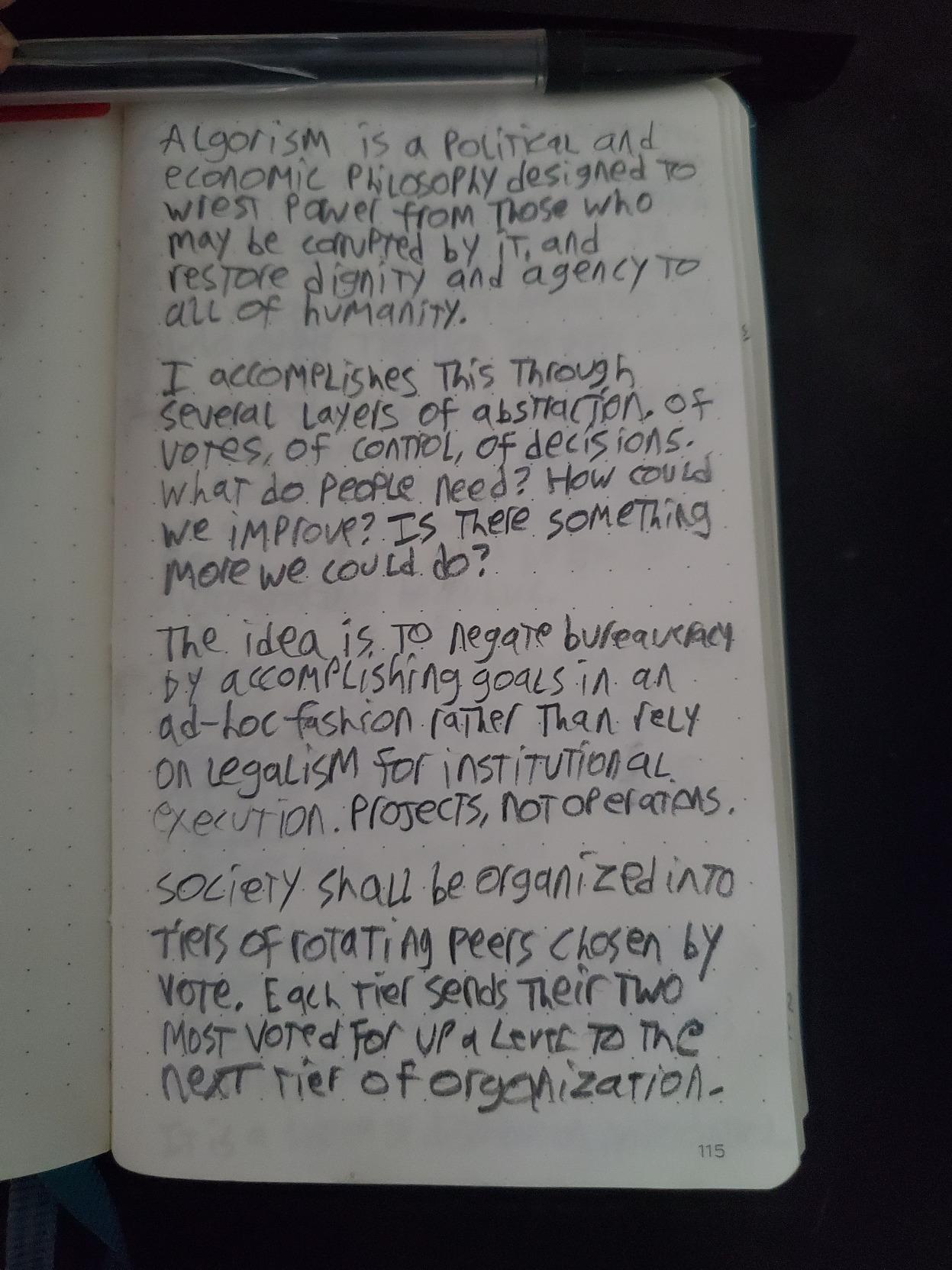
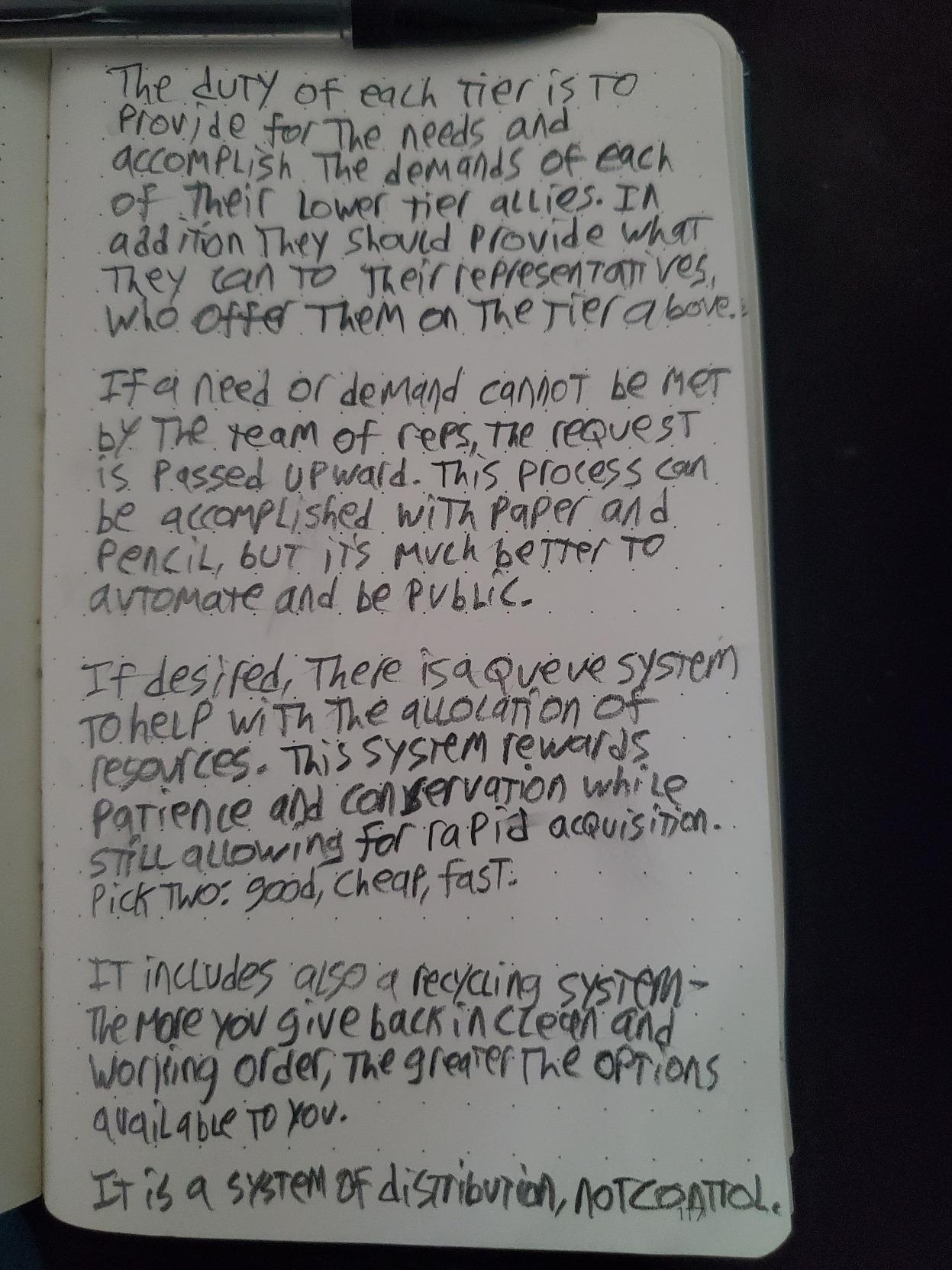
  this is the simplest implementation of scalable anarchism I could think of.
  tell me how it's flawed so I can improve it before I need it.
┌─────────┐                                                            ┌───────────┐
│ similar │                       chronological                        │ different │
╘═════════╧═════════════════════════════════════───────────────────────┴───────────┘
 -> file: fediverse/1621
═══════════════════════════════════════════════─────────────────────────────────────
  @user-883

  You could buy a domain from a DNS and have it redirect to your computer in
  order to obfuscate your IP address. That's what I did for my WoW server.
  Downside is you'd have to trust the DNS, so... do you trust your security or
  them more?
┌─────────┐                                                            ┌───────────┐
│ similar │                       chronological                        │ different │
╘═════════╧════════════════════════════════════────────────────────────┴───────────┘
 -> file: fediverse_boost/226
◀═╦═════════════════════[BOOST]═══════════════════════───────────────────────────┐
  ║ ┌──────────────────────────────────────────────────────────────────────────┐ │
  ║ │ Distributed FAFO                                                         │ │
  ║ └──────────────────────────────────────────────────────────────────────────┘ │
  ╠─────────┐                                                        ┌───────────┤
  ║ similar │                     chronological                      │ different │
  ╚═════════╧═════════════════════════════════════════───────────────┴───────────┴─▶
 -> file: fediverse/6166
════════════════════════════════════════════════════════════════════────────────────
  Computer programming has always been the practice of applied abstraction. At
  what level do you wish to apply your reasoning, and what level do you wish to
  trust others? I have no idea how the Linux kernel works.
┌─────────┐                                                            ┌───────────┐
│ similar │                       chronological                        │ different │
╘═════════╧═════════════════════════════════════════════════════════───┴───────────┘
 -> file: messages/68
═══════─────────────────────────────────────────────────────────────────────────────
  https://meet.portlanddsa.org/EntireMoonsDeleteOverall
┌─────────┐                                                            ┌───────────┐
│ similar │                       chronological                        │ different │
╘══════───┴────────────────────────────────────────────────────────────┴───────────┘
 -> file: fediverse/1663
═══════════════════════════════════════════════─────────────────────────────────────
  @user-1059

  the trick is to have a whole bunch of projects so everyone has a different one
  downloaded on their phone, meaning they can't inter-operate when the time is
  right.

  much better, I think, to think in terms of protocols. things like http and pgp
  encryption. file-server over bluetooth sending emails through a mesh maybe? or
  something more immediate for messages.

  like... calculate a path to your target, then for each step create an encrypted
  portion and a small "destination" header that is then encrypted so the next guy
  in the chain can't see it.

  ... there's a lot of problems to solve, but using tried-and-true technology in
  the unfortunately busted and constrained platforms they give us is difficult.
  but not impossible, if you're willing to use tools to create protocols that are
  commonly shared, like bluetooth or http or pgp encryption.

  ... I use Briar for this purpose, for what it's worth. idk if it's a protocol,
  I haven't looked into it since I downloaded it during the BLM protests.
┌─────────┐                                                            ┌───────────┐
│ similar │                       chronological                        │ different │
╘═════════╧════════════════════════════════════────────────────────────┴───────────┘
 -> file: fediverse/3553
══════════════════════════════════════════════════──────────────────────────────────
  @user-381

  I have this notion about a math/CS curriculum where students build and program
  their own calculators. Once you make the calculator do it you never need to do
  it yourself again.

  for the same reason that "writing is thinking" is true, so too is "programming
  is calculation" true.

  by working through the steps required to produce a result, and *fully
  understanding each step*, they have a much more solid understanding of what's
  going on than if they practiced rote memorization (worse) or continual
  computation (better, not best tho)

  especially if every step of the way is accompanied with *visual* elements which
  show exactly what is happening. Some people are more visual, some people are
  more algorithmic, and finding a way to teach all types of people is a truly
  difficult and rewarding part of teaching.
┌─────────┐                                                            ┌───────────┐
│ similar │                       chronological                        │ different │
╘═════════╧═══════════════════════════════════════─────────────────────┴───────────┘
 -> file: fediverse/3470
══════════════════════════════════════════════════──────────────────────────────────
  alternatively, when you initiate an SSH session it sends you a randomized
  public key whose private key is the password that you need to login. By
  decrypting the string of text it sent you and sending it back (plus the
  password at the end or whatever) you can ensure secure authentication without
  bothering with the passwordless keys which are wayyyyyy more trouble than
  they're worth and lack the "something you know" authentication method.
┌─────────┐                                                            ┌───────────┐
│ similar │                       chronological                        │ different │
╘═════════╧═══════════════════════════════════════─────────────────────┴───────────┘
 -> file: fediverse/879
══════════════════════════════════════════──────────────────────────────────────────
  @user-501

  also it's only undefined behavior because the order of the bits aren't defined,
  so if you do bitfield "pointer arithmetic" then you're screwed if you try and
  be portable with it. However if you're just using bitfields as compressed data
  storage then you can safely access integer.a integer.b integer.c etc safely and
  easily. The compiler doesn't care what order they're in if you don't write
  logic that requires them to be in a certain order
┌─────────┐                                                            ┌───────────┐
│ similar │                       chronological                        │ different │
╘═════════╧═══════════════════════════════─────────────────────────────┴───────────┘
 -> file: notes/algorism-neighborhood-distribution-network
═══════════════════════════════════════════════════════════════─────────────────────
  Algorism is a system designed to work for any level of organization. It scales.
  It accomplishes this by abstracting individual needs into communal needs at a
  certain level of size or complexity, and in doing so it enables people to take
  responsibility both for their individual lives, but also the lives of the world
  around them. This increased level of "stake" that people "hold" in their lives
  will encourage them to develop their surroundings in a healthier way, thus
  leading to a safer, saner, and more productive society for all.

  How is this accomplished? There are many aspects to Algorism, and this note is
  an examination of one particular facet - specifically, the requisition system
  which delivers goods and services to entities larger than a single individual.

  It may be best illustrated with an example. Consider a neighborhood - or, even
  simpler, a suburban street, lined with houses. There may be 20-50 families on
  that street, depending on it's length, so let's say there's around 30. These
  families hold a common cause together - they all want their surroundings to be
  generally pretty nice, clean, and decent. They may share many other things
  besides, but these are things that most people can agree on.

  These 30 families need supplies and infrastructure in order to have a good life
  lived in their small little "town". Some common ideas for unification activities
  include knocking down the backyard fences and letting them relish the shared
  safe space for children, gardens, and nature. This is an example of a cultural
  method for building a "good life" for them, however they need to have some sort
  of "economic" method of good-life-building as well. The reason I say this is
  because no matter what level of complexity you reach, there are always economics
  involved, for an individual distributing blood cells to each of it's fingertips
  all the way up to families sharing the food on the serving plate at dinner. Go
  up higher and you have perhaps neighborhoods sharing commonly used tools or
  resources, then cities and states and countries sharing people, talents, and
  brotherhood.

  Economics are a symptom of systems, not power. Power is coercive, it compels
  others to obey thine will or else face retribution, but systems do not require
  power in order to function. A system could be as simple as "you scratch my back
  I scratch yours", which is a simple way that our ancestors learned about basic
  cooperation. Systems can scale of course, and they need not be comprised solely
  of verbal, mental, or legal agreements - computer systems, economic systems,
  spiritual systems, systems of math or physics, all of these things are based on
  the philosophical discipline known as "logic". Logic is fallible of course, it
  is certainly possible to create systems of logic which are completely unsound
  or invalid and which fall apart upon being used for the first time. However,
  when considered with a scrutinous eye for detail, and referenced to the results
  of the real world and it's endless permutations, logic can be an excellent tool
  for developing organization and structure. Both of which are invaluable for all
  humans when they seek to cooperate or coordinate.

  If thirty people who lived near each other wanted to cooperate or coordinate on
  the goal of "building a good life", they might reach for a logical method of
  developing their surroundings toward how they feel is most suited to their needs
  and demands. In order to do so, they'll need supply and infrastructure. The
  question of acquiring such supply and infrastructure is ultimately up to them,
  but the Algorist way of doing so is to utilize the queue system.

  This system is related to queues as typically understood only in name and in
  technicality, for the additional structures built on-top of the queues are more
  than sufficient to differentiate it. When you, dear reader, hear the idea that
  you'd have to wait in line in order to get your food at the cafeteria, you may
  shudder and think about how you'd prefer anything else. After all, that's how
  they did it in the Soviet Union, and there are plenty of horror stories about
  how it took 10 years to buy a car, or how the factories were graded based on
  weight so they'd sneak lead into all their lamps or whatever in order to seem
  like they were doing well. They gamed the system, in a word.

  However, America in 2025 is not as simple as the USSR in the mid-1900s. We have
  computers now. We do not need to coordinate using paper and pencil. This enables
  us to create things like web-UIs for Amazon, a world-wide distribution network,
  or to build SQL databases full of every record we could imagine and store it on
  a computer the size of a brick. There is no end to the power that computers may
  bring to us, but with great power comes great responsibility, and the pragmatic
  programmer will work tirelessly to reduce complexity of scale.

  A queue is a system where the entities who are to be served, delivered, or
  otherwise operated on are placed in line, and those which are placed first are
  focused on with priority over those that entered the queue later. There are
  many types of queues but this is the one we will use for this note. Using this
  basic definition, we can see that there are many opportunities to implement
  additional mechanics
┌─────────┐                                                            ┌───────────┐
│ similar │                       chronological                        │ different │
╘═════════╧════════════════════════════════════════════════════────────┴───────────┘
 -> file: notes/magics-are-rare
════════════════════════════════════════════════════════════════════════════════────
  magician only work magic when forced to. This is because magic is rare.
  It's difficult to create, but if mastered, can have infinity to share.\
  \
  to solve all of entropy and scarcity,
  find a way to use infinity.
  if you can draw from forever,
  if you can wield all of ever,
  if
  then you can make as much as you can grasp.
  immortality tells me there's just a bit more of ever,
  and I trust myself to know infinite things. whenever I reach for more, there
  are more things to know. I am very good at abstraction, says soramech, because
  I can always know connections between types of sets.

  recursively and ever choosing to be choosing, [stack overflow]
┌─────────┐                                                            ┌───────────┐
│ similar │                       chronological                        │ different │
╘═════════╧════════════════════════════════════════════════════════════╧════════───┘
 -> file: fediverse/497
════════════════════════════════════════────────────────────────────────────────────
  @user-346

  Nobody will get past the login screen on my computer, but if they do they
  probably won't know that you need to push alt+p in DWM to start a program. But
  even if they push "alt+p firefox" they will only have access to my gmail and
  discord, because those are the only two places I've saved my login information.

  Most of my data is on my hard disk anyway, so for that they'd have to push
  alt+enter and then navigate my filesystem to find it. Shouldn't be too hard if
  you're familiar with Linux.

  They could always just pull the hard drive and put it into a new computer
  though. It's not like it's encrypted, because why would I encrypt it? I want to
  share information, not conceal it! Surely nobody would desire to exploit that
  vulnerability of mine, that my data should be unencrypted?

  If you have a copy of Wikipedia then you're 500% more prepared than 90% of
  humanity so good job _^

  Sure would be cool if you put it in the documents folder of every person in
  your family who solicited tech advice from you
┌─────────┐                                                            ┌───────────┐
│ similar │                       chronological                        │ different │
╘═════════╧═════════════════════════════───────────────────────────────┴───────────┘
 -> file: fediverse/3787
═══════════════════════════════════════════════════─────────────────────────────────
  arithmatic control flow

  If A, then B. Else C

┌─────────┐                                                            ┌───────────┐
│ similar │                       chronological                        │ different │
╘═════════╧════════════════════════════════════════────────────────────┴───────────┘
 -> file: messages/292
════════════════════════════════════════════────────────────────────────────────────
  Steganography is the art of hiding your meanings from AI analysis
┌─────────┐                                                            ┌───────────┐
│ similar │                       chronological                        │ different │
╘═════════╧═════════════════════════════════───────────────────────────┴───────────┘
 -> file: fediverse/3471
══════════════════════════════════════════════════──────────────────────────────────
  @user-883

  it might be, I don't know much about it (hence why I'm asking questions) but I
  have heard that ssh keys are more secure than password authentication and it
  never made sense to me. If availability is important for security purposes,
  then wouldn't SSH keys (which are much more difficult to carry around than a
  password) be less suitable?
┌─────────┐                                                            ┌───────────┐
│ similar │                       chronological                        │ different │
╘═════════╧═══════════════════════════════════════─────────────────────┴───────────┘
 -> file: fediverse/6106
════════════════════════════════════════════════════════════════════────────────────
  ┌─────────────────────────────────────────────┐
  │ CW: wild-unhinged-absurd-thoughts-mentioned │
  └─────────────────────────────────────────────┘


  what if closed source computing is actually better?

  computer programs should be dumb
┌─────────┐                                                            ┌───────────┐
│ similar │                       chronological                        │ different │
╘═════════╧═════════════════════════════════════════════════════════───┴───────────┘
 -> file: fediverse/5505
═══════════════════════════════════════════════════════════════─────────────────────
  ┌──────────────────────┐
  │ CW: huh              │
  └──────────────────────┘


  opsec is a psyop
┌─────────┐                                                            ┌───────────┐
│ similar │                       chronological                        │ different │
╘═════════╧════════════════════════════════════════════════════────────┴───────────┘
 -> file: fediverse/185
══════════════════════════════════════──────────────────────────────────────────────
  so... is dynamic typing just automatic typecasting?

  #programming
┌─────────┐                                                            ┌───────────┐
│ similar │                       chronological                        │ different │
╘═════════╧═══════════════════════════─────────────────────────────────┴───────────┘
 -> file: notes/20260730-184108.txt
════════════════════════════════════════════════════════════════════════════════────
  No deterministic system can solve arbitrary problems with perfect solutions.

  Hence, subjectivity.
┌─────────┐                                                            ┌───────────┐
│ similar │                       chronological                        │ different │
╘═════════╧════════════════════════════════════════════════════════════╧════════───┘
 -> file: fediverse/3028
═════════════════════════════════════════════════───────────────────────────────────
  @user-570

  I can write C in Rust, but I can't write Rust in any other language.

  there's a lot of unique semantic options for accomplishing things that I
  already know how to do that I often find my syntax is pretty... basic. lots of
  manual assignments, no more than 4 or 5 levels of function nesting.

  I like to use threads and arrays, and think about in-game simulation more like
  a calculation than an input-reacting device. though input would certainly be
  encouraged to make the simulation more precise.

  the borrow checker gets in my way, but that's not too big of a problem - I just
  have to copy a bit more data around. Easy peasy.

  (I'm a bit rusty, but I can learn syntax)
┌─────────┐                                                            ┌───────────┐
│ similar │                       chronological                        │ different │
╘═════════╧══════════════════════════════════════──────────────────────┴───────────┘
 -> file: messages/273
═══════════════════════════════════════════─────────────────────────────────────────
  Algorism in a nutshell:

  Everyone gets dollars from their job. Will explain more later, for now trust
  that they get dollars. Essentials and infrastructure are free, but luxuries are
  not.

  To spend dollars, you either go to a showroom or use the nationalized Amazon
  (forked, not stolen) - there you can place down dollars to enter a special kind
  of queue. Everytime a product is made its distributed to the people with the
  most dollars in queue. Every period (week, month, idk) the amount you manually
  put into the queue is re-added to the queue - 100 becomes 200, becomes 300,
  becomes 400. You can manually add more whenever you like but it's not
  retroactive. At the end of the period all your extra dollars are distributed
  among your open queues.

  That's basically it. It rewards patience and temperance, while capitalism
  rewards greed and cruelty.

  How to get dollars? Okay so there is a government run job board portal website
  thing. Every company can make a listing there, and every person can post
  themselves too if they'd rather be recruited. The company pays a different
  amount to the government than the worker receives. This amount is determined
  algorithmically based on values like supply and demand for labor in that
  particular area.

  People list 10 types of jobs they'd like to work at any level of specificity
  (they'd be arranged into layers of overlapping umbrellas, like queer identities
  except more complex) then that data is used both for job placement (consensual
  of course!) and data for the "supply and demand" calculation. You can only
  change these values once every 6 months, or 1 value every month, up to the user.

  The amount the corporation pays to the government is not the same as what the
  worker receives. The longer a worker works, the more "stuff" they can buy. They
  are rewarded for diligence. However essentials are free so nobody has to save
  for retirement.

  You can trade stuff for stuff, but not stuff for labor. Small informal
  exchanges are fine "if you mow my lawn I'll bake you a pie" but not "I'll give
  you 500lbs of gold bars if you build me a mansion" - I haven't figured out a
  way to structurally prevent rant besides just saying it's illegal.

  Housing is like a library, except you can queue for who gets the spot next. A
  person can live in a house as long as they'd like, and when they're done with
  it the person highest in the queue can decide if they want to live there. If
  not, the 2nd in line gets to move in if they want, etc. Their accrued value
  persists if they don't move in, and when moving out an accurate assessment
  should be undertaken.

  "ah but won't foreign states just hire a bunch of people to move in and out of
  houses really quickly like they're doing to my apartment complex so that a
  stable source of income cannot be guaranteed and resources will have to be
  wasted on assessments and such?" I mean, maybe, but it'd be up to the community
  to decide how to prevent that.

  Your primary residence is free, you can live there as long as you'd like. If
  you want two houses then you need to continuously be the highest value in the
  queue for both of them. Same goes for renting and hotels and such - the "owner"
  or property manager or whatever needs to maintain their lead by investing time
  and value in the property. Otherwise nobody would want to live there. This
  would be an example of a self-appointed job.

  Self-appointed jobs are like being self employed now. You produce value that
  people enter queues for, and in return your stacking percentage bonus
  increases. The government will pay you dollars based on the demand for your
  good/service, which odds are will be pretty small. But you get to do what you
  want, so that's something, and besides essentials are free so...

  I wish people would ask me questions so I knew which blanks to fill in.
┌─────────┐                                                            ┌───────────┐
│ similar │                       chronological                        │ different │
╘═════════╧════════════════════════════════────────────────────────────┴───────────┘
 -> file: fediverse/899
╔═════════════════════════════════════════─────────────────────────────────────────┐
║ frankly I'm just excited to see what humanity does with the endlessly            │
║ calculated and stored blockchains. Like, that's a good set of pseudo-random      │
║ data, I wonder if we could build something off of it that wasn't exclusively     │
║ money? like, a necklace, I dunno.                                                │
║                                                                                  │
║ or like, a numbers station x2, where each message is accompanied with a          │
║ pre-calculated destination somewhere on this endless and                         │
║ impossible-to-understand string of data. and that part is what seeds the next    │
║ code. once you start reading, certain numbers would be "flags" while others      │
║ would be "data" and they'd each have the same size on the hardware. that way,    │
║ they're impossible to predict.                                                   │
║                                                                                  │
║ ah, but wouldn't it be noticable that certain results seem to appear next to     │
║ one another? well, isn't that just cryptology? Could probably be defeated if     │
║ you had an AI advanced enough, just saying. something that sorted through        │
║ massive mounds of data and gave you results in garbled or broken english. what   │
║ a wonderful tool, that's wonderfully mis-abused, perhaps in the fu               │
╠═════════╗                                                            ┌───────────┤
║ similar ║                       chronological                        │ different │
╚═════════╩══════════════════════════════──────────────────────────────┴───────────┘
 -> file: fediverse/4677
════════════════════════════════════════════════════════────────────────────────────
  what if words were made up and we communicated in plausible deniabilities
┌─────────┐                                                            ┌───────────┐
│ similar │                       chronological                        │ different │
╘═════════╧═════════════════════════════════════════════───────────────┴───────────┘
 -> file: fediverse/1620
═══════════════════════════════════════════════─────────────────────────────────────
  @user-1037

  I gotta say you're making a really good argument for OpenBSD... Hmmmm maybe
  I'll look into it this week.
┌─────────┐                                                            ┌───────────┐
│ similar │                       chronological                        │ different │
╘═════════╧════════════════════════════════════────────────────────────┴───────────┘
 -> file: messages/425
═══════════════════════════════════════════════─────────────────────────────────────
  Here's an open source replacement idea for the "friendfinder" functionality in
  Facebook:

  Everyone has a secret code, and a public code. The secret code is kept locked
  away on their hard drive and is probably automatically encrypted itself. The
  public code is known by Facebook (or whichever mutual hosting platform people
  want to use) but in order to connect with someone you send them a public friend
  request and then they'll send you a second, auto-generated public code which is
  their real username. Essentially obfuscating the connection process by using a
  public middleman as an intermediary before exchanging more secure connection
  protocols. Like giving someone your phone number that you met in a bar, or your
  telegram handle if you met online.

  Then, from that point on, every message includes a hidden portion at the bottom
  which is the new address you should send the next message to. This is all TCP
  style btw, not UDP.

  These "addresses" could literally be ipv6 addresses and port numbers. There's
  enough such that every message sent for the next thousand years would fit in
  the allowable address space.

  Why do we even need middle-men again for messaging applications? Oh right
  because users are too dumb to install said application. Well... Tough shit,
  stop being lazy. Computers are easy if you have a good teacher.
┌─────────┐                                                            ┌───────────┐
│ similar │                       chronological                        │ different │
╘═════════╧════════════════════════════════════────────────────────────┴───────────┘
 -> file: messages/888
════════════════════════════════════════════════════════════────────────────────────
  The biggest danger to opsec is when other people think they know more than you.
┌─────────┐                                                            ┌───────────┐
│ similar │                       chronological                        │ different │
╘═════════╧═════════════════════════════════════════════════───────────┴───────────┘
 -> file: fediverse/5238
╔════════════════════════════════════════════════════════════──────────────────────┐
║ I want computer scientists to do computer science, and let the marketing people  │
║ figure out how to sell it.                                                       │
║                                                                                  │
║ "save us from computers, senpai"                                                 │
║                                                                                  │
║ sure kid here's a google with computer program on it                             │
║                                                                                  │
║ "yeeeee now I can party with my homeboys on the west side of the lake at 5"      │
║                                                                                  │
║ *pat pat* there's a good thing, yes you are, sooooooo good you're such a so      │
║ good thing, yes you are whoa what a good such a good thing, yes you are          │
║                                                                                  │
║ ... um, that was weird, anyway as I was saying, lots of people getting thrown    │
║ off the tech industry right about nowaboutsince. wonder if they might want to    │
║ do some of the stuff they initially pursued the field by being trained in.       │
║ probably would, and we could probably break problems down into academic          │
║ solutions, which we could use to address any issuehappenstance which might form. │
║                                                                                  │
║ [instant techno-bureaucracy, as all the power is in computers. these days. I     │
║ mean have you seen a data c3nter's power bill these days? jeezzzz]               │
║                                                                                  │
║ ... as I was saying, what if we did science and they envisioned products         │
╠═════════╗                                                            ┌───────────┤
║ similar ║                       chronological                        │ different │
╚═════════╩═════════════════════════════════════════════════───────────┴───────────┘
 -> file: fediverse/5247
═════════════════════════════════════════════════════════════───────────────────────
  the hardest problem in computer science is figuring out *why* users do what
  they do.
┌─────────┐                                                            ┌───────────┐
│ similar │                       chronological                        │ different │
╘═════════╧══════════════════════════════════════════════════──────────┴───────────┘
 -> file: fediverse/3024
═════════════════════════════════════════════════───────────────────────────────────
  social media algorithm that tries to prove you wrong instead of flattering your
  fancies
┌─────────┐                                                            ┌───────────┐
│ similar │                       chronological                        │ different │
╘═════════╧══════════════════════════════════════──────────────────────┴───────────┘
 -> file: fediverse/5291
══════════════════════════════════════════════════════════════──────────────────────
  the most important skill I can think of for a linux software engineer is the
  ability to connect multiple systems together and turn windows and macintosh
  devices into Linux devices so that datacenters can be built out of whatever's
  on the around.

  there's this programming language I like called Chapel for distributed
  computation computing which is also cool, if you're more of the programming
  type.

  networking security I believe often has hardware solutions, so getting the
  crypto-graphy boys and the PCB girls together to work on some jams is a good
  and productively useful gathering of insightful events

  "but ritz computers should only be used to solve problems that people have, not
  make more problems!" ah yes but have you considered that problems find you, and
  the computers help you work through them
┌─────────┐                                                            ┌───────────┐
│ similar │                       chronological                        │ different │
╘═════════╧═══════════════════════════════════════════════════─────────┴───────────┘
 -> file: fediverse/1121
══════════════════════════════════════════──────────────────────────────────────────
  @user-812 @user-826

  there should exist either the assurance that the default configuration does not
  overheat or crash your computer (as Windows and Mac claim to offer) or the OS
  should provide the capability to solve any configuration problems that may
  prevent a user for utilizing their system as they desire. (as does Linux)

  they're all Turing machines after all, why would they not be interoperable?
  Even if there's a translation layer, as long as the functionality of the
  software is the same, why would there ever be considerations as to whether or
  not a program would be able to be run on a particular computer?

  lack of hardware capabilities I can understand, that just means you need a
  better computer. But why, if the code is visible, would your computer not
  develop understandings about how to run each and every conceivable program
  written using known languages like C or Python? Seems like pretty basic stuff
  to me. (~~endless~~ sufficient backwards compatibility)
┌─────────┐                                                            ┌───────────┐
│ similar │                       chronological                        │ different │
╘═════════╧═══════════════════════════════─────────────────────────────┴───────────┘
 -> file: messages/110
════════════════════════════════════════────────────────────────────────────────────
  The best way to program computers is to organize them according to their
  relations. Like, when x increases by 4 then y increases by 2 - basically, a
  math equation that you can continuously solve by calculating more and more
  comprehensively and deeply.
┌─────────┐                                                            ┌───────────┐
│ similar │                       chronological                        │ different │
╘═════════╧═════════════════════════════───────────────────────────────┴───────────┘
 -> file: messages/1391
═════════════════════════════════════════════════════════════════════════───────────
  In mythology, the wizard only dies when the needs of the party outstrip the
  power of their magic user. Thus, proving that magic is indefinable in its
  nature and has limitations.
┌─────────┐                                                            ┌───────────┐
│ similar │                       chronological                        │ different │
╘═════════╧════════════════════════════════════════════════════════════╧═──────────┘
 -> file: fediverse/375
════════════════════════════════════════────────────────────────────────────────────
  premature optimization may be the root of all evil, but like... it's fun? so
  I'm going to keep doing it. And before you ask why I'm using threads on project
  euler problems, just know that it's slightly faster this way I promise.
┌─────────┐                                                            ┌───────────┐
│ similar │                       chronological                        │ different │
╘═════════╧═════════════════════════════───────────────────────────────┴───────────┘
 -> file: fediverse/6271
╔═══════════════════════════════════════════════════════════════════───────────────┐
║ ┌───────────────────────────────────────────────────────┐                        │
║ │ CW: re: hypothetical worst case fascism reality check │                        │
║ └───────────────────────────────────────────────────────┘                        │
║                                                                                  │
║                                                                                  │
║ @user-641                                                                        │
║                                                                                  │
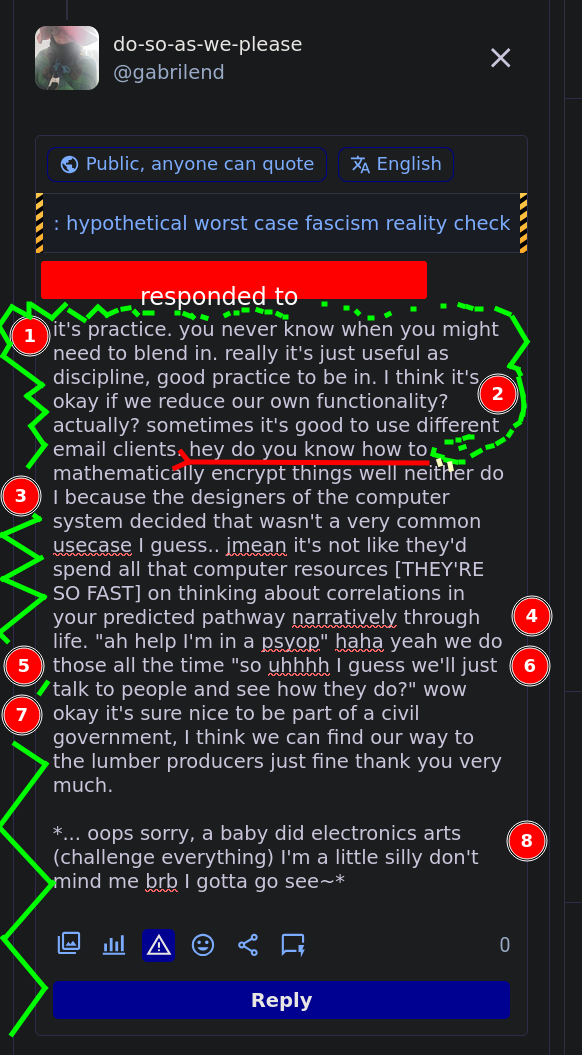
║ it's practice. you never know when you might need to blend in. really it's just  │
║ useful as discipline, good practice to be in. I think it's okay if we reduce     │
║ our own functionality? actually? sometimes it's good to use different email      │
║ clients. hey do you know how to mathematically encrypt things well neither do I  │
║ because the designers of the computer system decided that wasn't a very common   │
║ usecase I guess.. jmean it's not like they'd spend all that computer resources   │
║ [THEY'RE SO FAST] on thinking about correlations in your predicted pathway       │
║ narratively through life. "ah help I'm in a psyop" haha yeah we do those all     │
║ the time "so uhhhh I guess we'll just talk to people and see how they do?" wow   │
║ okay it's sure nice to be part of a civil government, I think we can find our    │
║ way to the lumber producers just fine thank you very much.                       │
║                                                                                  │
║ *... oops sorry, a baby did electronics arts (challenge everything) I'm a        │
║ little silly don't mind me brb I gotta go see~*                                  │
╠═════════╗                                                            ┌───────────┤
║ similar ║                       chronological                        │ different │
╚═════════╩════════════════════════════════════════════════════════────┴───────────┘
 -> file: fediverse/3469
══════════════════════════════════════════════════──────────────────────────────────
  you know how SSH password login is deprecated because the password needs to be
  transmitted in cleartext or whatever?

  what if we just... required two passwords?

  the first initiates the conversation, and sets up an encrypted line. It doesn't
  matter if anyone sees the first password because they'll get a *new* set of
  encrypted keys, meaning each session automatically is encrypted in a different,
  randomized way.

  the second password is the one that actually authenticates you.
┌─────────┐                                                            ┌───────────┐
│ similar │                       chronological                        │ different │
╘═════════╧═══════════════════════════════════════─────────────────────┴───────────┘
 -> file: fediverse/4218
╔════════════════════════════════════════════════════──────────────────────────────┐
║ there are plenty of pieces of linux that are insecure in some way. Including     │
║ x11, if I remember correctly. It is purely convention to not abuse these         │
║ insecurities, and whenever you use someone else's binary software you trust      │
║ that they won't betray you in some way.                                          │
║                                                                                  │
║ pre-built binaries are privacy violations and should be illegal. They are        │
║ security threats because the model they're built upon is necessarily insecure.   │
║ Computers will *never be completely secure* because of how they are built, and   │
║ so we should use locally compiled software and interpreted scripts.              │
║                                                                                  │
║ Unless they're too long, or impossible to read. Who reads EULAs these days? At   │
║ least those are written in *english*.                                            │
║                                                                                  │
║ maybe computers aren't worth it. Maybe computers will solve all our problems.    │
║ Who can say, maybe you should *ask an oracle like me*                            │
║                                                                                  │
║ though do remember that anything you hear can and will be used against you,      │
║ monkey's paw style. So maybe, like... don't? unless you're into magic or         │
║ schizophrenia or something                                                       │
║                                                                                  │
║ I wnt 2 be cute and tch cpus                                                     │
╠═════════╗                                                            ┌───────────┤
║ similar ║                       chronological                        │ different │
╚═════════╩═════════════════════════════════════════───────────────────┴───────────┘
|